
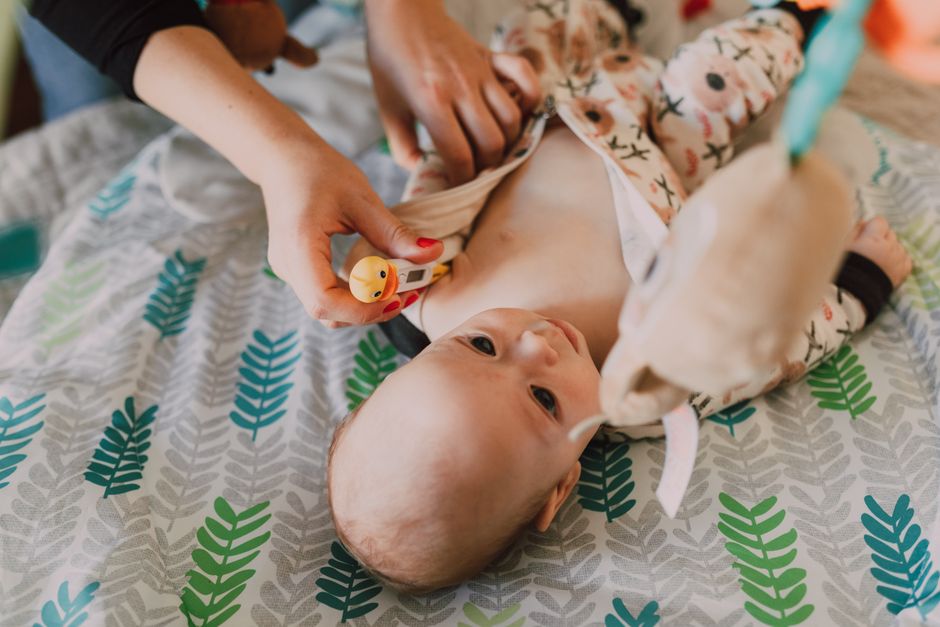
A newborn’s temperature is a vital sign, and getting it right matters for their safety. A normal rectal temperature for a newborn is between 97.9°F (36.6°C) and 100.4°F (38°C). The most accurate way to measure it is with a digital rectal thermometer, and you should call your pediatrician immediately if the reading reaches 100.4°F (38°C) or higher, as this is considered a fever in a baby under 3 months old.
Why Is a Newborn’s Temperature Different From an Older Child’s?
Newborns do not regulate their body temperature the way older children and adults do. Their bodies are small, and they do not have much insulating body fat. The system that controls temperature, called the hypothalamus, is still maturing.
Because of this, newborns lose heat quickly when they are cold. They also can get too hot if they are overdressed or in a warm room. This is why keeping a newborn in a neutral thermal environment—not too hot and not too cold—is a core part of newborn care.
Their bodies also respond to infection differently. Newborns may not show obvious signs of illness. A fever is often the only early warning sign of a serious bacterial infection, which is why the threshold to call a doctor is so low.
What Is the Normal Temperature Range for a Newborn?
A newborn’s temperature is considered normal when it falls between 97.9°F (36.6°C) and 100.4°F (38°C). This range applies when measured rectally, which is the gold standard for infants.
Axillary (armpit) readings run lower than rectal readings. A normal armpit temperature is typically around 97.6°F (36.4°C). If an armpit reading shows 99°F (37.2°C) or higher, it may indicate a fever, but a rectal reading is needed for confirmation.
Here is a quick reference for where to measure and what numbers mean:
| Measurement Site | Normal Range | Fever Threshold |
|---|---|---|
| Rectal (most accurate) | 97.9°F – 100.4°F (36.6°C – 38°C) | 100.4°F (38°C) or higher |
| Axillary (armpit) | Approximately 97.6°F (36.4°C) | 99°F (37.2°C) or higher on the thermometer, confirm rectally |
Ear thermometers are not reliable for newborns under 3 months because their ear canals are too small. Temporal artery (forehead) scanners are also not recommended for newborns because their skin blood flow changes quickly.
What Should A Newborns Temp Be When Measured Rectally?
Rectal temperature is the only method pediatricians trust for newborns. The normal rectal range is 97.9°F (36.6°C) to 100.4°F (38°C).
To take a rectal temperature, place your baby on their back with their knees bent. Apply a small amount of petroleum jelly to the tip of a digital thermometer. Insert the tip no more than half an inch into the rectum. Hold it in place until the thermometer beeps.
Do not use a glass mercury thermometer. If it breaks, the baby could be exposed to mercury. Use a digital thermometer designed for rectal use and label it clearly so it is never used orally.
Clean the thermometer with rubbing alcohol or soap and warm water before and after each use.




When Is a Newborn’s Temperature Too Low?
A temperature below 97.9°F (36.6°C) rectally is considered hypothermia in a newborn. This can happen if the baby is in a cold room, is undressed for too long, or is not feeding enough.
Signs of low body temperature in a newborn include cool skin, sluggishness, poor feeding, and a weak cry. Premature babies and babies with low birth weight are at higher risk.
If your baby’s temperature drops below the normal range, warm them with skin-to-skin contact and add a layer of clothing. If the temperature does not rise or the baby is lethargic, seek medical care right away. Low body temperature can be a sign of infection or low blood sugar.
What Does a Fever Mean in a Newborn?
A rectal temperature of 100.4°F (38°C) or higher is a fever in a newborn. This is a medical emergency in a baby under 3 months old.
Newborns have immature immune systems. A fever can be the only sign of a serious bacterial infection such as a urinary tract infection, bacteremia, or meningitis. These infections can worsen quickly and require immediate medical evaluation.
If your newborn has a fever, do not give any fever-reducing medicine without a doctor’s instruction. Acetaminophen dosing for newborns is weight-based and must be ordered by a pediatrician. Do not use ibuprofen in babies under 6 months old unless a doctor directs it.
Call your pediatrician or go to the emergency department immediately if the rectal temperature is 100.4°F (38°C) or higher. The doctor will likely run tests to find the cause, including blood work, urine tests, and possibly a spinal tap.
How Do I Know If My Newborn Is Too Hot or Too Cold?
Touch is not a reliable way to judge a newborn’s temperature. Hands and feet are often cooler than the rest of the body, even when the baby is fine. The best check is feeling the baby’s chest or back. It should feel warm, not hot or cool.
A newborn who is too hot may be fussy, flushed, and sweating. A newborn who is too cold may be quiet, pale, and have cool extremities. These are signs to check the temperature with a thermometer.
Room temperature for a newborn should be kept between 68°F and 72°F (20°C to 22°C). Dress the baby in one more layer than an adult would wear comfortably in the same room. A lightweight sleep sack is safer than loose blankets, which pose a suffocation risk.
What Causes a Newborn’s Temperature to Fluctuate?
Body temperature in newborns naturally varies a little throughout the day. It tends to be lower in the early morning and higher in the late afternoon. This is normal and not a cause for concern.
Other factors can raise a newborn’s temperature temporarily. Overbundling, a warm bath, or being in a hot room can push a temperature up. This is sometimes called “overheating” rather than a true fever. If you remove a layer or move to a cooler room and recheck the temperature after 15 to 20 minutes, it should come down.
Feeding can also slightly raise a baby’s temperature. This is not dangerous, but it is why some pediatricians recommend waiting about 20 minutes after a feeding before taking a temperature.
Vaccinations can cause a low-grade fever in the 24 to 48 hours after the shot. This is a normal immune response, but you should still report any fever to your pediatrician if the baby is under 3 months old.
When Should I Call the Doctor?
Call your pediatrician immediately if your newborn has a rectal temperature of 100.4°F (38°C) or higher. Do not wait to see if it goes down on its own.
Also call if the temperature is below 97.9°F (36.6°C) rectally and does not improve with warming. Call if the baby is feeding poorly, is unusually sleepy, has a change in color, or is breathing fast.
Trust your instinct. If you feel something is wrong, call. Pediatricians expect calls about fevers and temperature concerns in newborns. This is not an overreaction.
No home remedy should replace a medical evaluation when a newborn has a fever. Sponging with cool water, alcohol rubs, or cold baths are dangerous and should never be used. These methods can cause shivering, which actually raises body temperature, and can drop the temperature too fast.
Frequently Asked Questions
What temperature is a fever in a newborn?
A rectal temperature of 100.4°F (38°C) or higher is a fever in a newborn. This requires immediate medical attention for a baby under 3 months old.
What is a normal armpit temperature for a newborn?
A normal armpit (axillary) temperature for a newborn is about 97.6°F (36.4°C). If the armpit reading is 99°F (37.2°C) or higher, confirm it with a rectal thermometer.
Can a newborn have a fever from being overdressed?
Yes, overbundling can raise a newborn’s temperature temporarily. Remove a layer and recheck the temperature after 15 to 20 minutes to see if it drops.
What should I do if my newborn’s temperature is low?
Warm the baby with skin-to-skin contact and an extra layer of clothing. If the temperature stays below 97.9°F (36.6°C) rectally or the baby is lethargic, seek medical care.
