
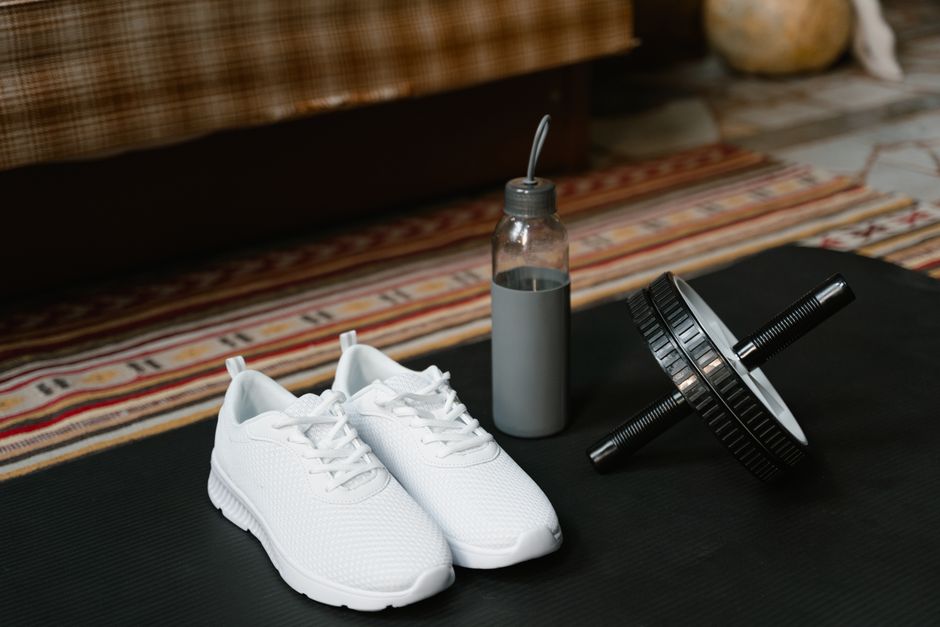
For most home workouts, a supportive athletic shoe with a flat, stable sole is your best bet. Running shoes work well for cardio and jumping, while flat-soled trainers are better for lifting and balance work. If your workout is low-impact — yoga, stretching, mobility — barefoot or a minimal shoe is often fine. The right choice depends on what you’re doing and what surface you’re on.
Your feet are the base of every movement you make. What you put on them changes how force travels up through your ankles, knees, and hips. Getting this right at home matters more than most people think, because home floors are often harder or softer than gym surfaces and you don’t have a trainer watching your form.
What Shoes Should I Wear For A Home Workout?
Match the shoe to the workout, not to whatever is by the door. A shoe built for running is designed to absorb impact and roll you forward. That’s helpful on a treadmill. It’s less helpful when you’re doing squats or standing on one leg.
Here’s a simple way to think about it:
- Cardio, jumping, dance, HIIT: A cushioned athletic shoe with good shock absorption. Running shoes or cross-trainers fit here.
- Strength training, lifting: A flat, firm sole with minimal cushioning. Some people use flat-soled sneakers or even lift in socks if the floor is safe.
- Yoga, Pilates, balance work: Barefoot or a minimal shoe lets your toes spread and grip. This helps your foot sense the ground.
- Low-impact walking or stretching: Comfortable athletic shoes or barefoot, depending on the floor.
The reason comes down to how your foot interacts with the ground. Cushioning protects you from impact but reduces stability. A firm sole gives you a solid platform but transmits more force. You’re trading one benefit for another, so the workout decides which trade you want.
Why Does Cushioning Matter For Jumping And Cardio?
When you jump, land, or run in place, your body absorbs several times your body weight in force with each footfall. Shoes with midsole cushioning spread that force over a longer time, which lowers the peak stress on your joints.
Research on running shoes consistently shows that cushioning reduces impact forces compared with barefoot running on hard surfaces. That’s why a cushioned shoe makes sense for high-impact home workouts, especially on concrete or tile floors covered by thin mats.
One thing worth knowing: more cushioning isn’t always better. Very soft, very thick soles can feel unstable during side-to-side movement and can make balance harder. A moderate amount of cushioning with a wide, stable base is usually the practical choice for mixed home workouts.
Why Do Flat Shoes Help With Lifting?
When you squat or deadlift, you want your foot planted firmly and your weight spread evenly. A thick, soft sole compresses under load, which can make you feel wobbly and shift your weight forward.
A flat, firm sole keeps your heel down and gives you a stable base. This is why many lifters wear flat-soled shoes or go shoeless for certain lifts. The firm platform lets your legs do the work instead of your shoe absorbing it.
This is established practice in strength training, though it’s worth being clear: the evidence comparing shoe types for injury prevention in recreational lifters is limited. The stability benefit is real and easy to feel. Claims that one specific shoe prevents injury are not well supported.
Should You Work Out Barefoot At Home?
Barefoot training is reasonable for yoga, Pilates, balance work, and some strength exercises. Your feet have thousands of nerve endings that sense pressure and position. Going barefoot lets those sensors work without a layer in between.
For high-impact activities, barefoot is a different story. Without cushioning, landing forces hit your feet and joints directly. On a hard floor, that adds up. Most people are better off with a cushioned shoe for jumping and running in place.
If you have diabetes, nerve damage in your feet, or poor circulation, talk to your doctor before training barefoot. Foot injuries in people with reduced sensation can go unnoticed and become serious. This is a case where general advice doesn’t cover everyone.
What About The Floor You’re Standing On?
Your home surface changes the equation. Carpet softens impact but can make balance work harder because the surface gives way under you. Hardwood and tile are firm and stable but unforgiving on your joints during high-impact moves.
A few practical adjustments:
- On concrete or tile, use a thicker mat for floor exercises and wear cushioned shoes for jumping.
- On carpet, wear firmer shoes for lifting so you’re not sinking in.
- For balance work, a firm surface is easier to learn on than a soft one.
A common mistake is doing high-impact workouts on a thin yoga mat over a hard floor. The mat barely dents the impact. Cushioned shoes do far more to protect your joints in that setup.
How Should Home Workout Shoes Fit?
Fit matters as much as type. A shoe that’s too tight restricts toe movement and can cause blisters and pressure points. Too loose and your foot slides, which raises your risk of rolling an ankle during side-to-side moves.
You want roughly a thumb’s width of space between your longest toe and the front of the shoe when you’re standing. Your foot swells during exercise, so try shoes later in the day and with the socks you’ll actually wear.
Replace workout shoes when the midsole breaks down. A worn-out sole loses its cushioning and stability even if the upper still looks fine. A common sign is when the shoe feels flat or your joints ache after workouts they used to handle easily.
Do You Need Special Shoes For Home Workouts?
No. For most people, a supportive athletic shoe you already own is enough. You don’t need a separate shoe for every activity, and expensive doesn’t mean better.
What you do need is a shoe that matches your main activity. If you mostly do HIIT and cardio, a running shoe or cross-trainer covers it. If you mostly lift, a flatter shoe helps. If you do a bit of everything, a cross-trainer is a reasonable middle ground because it balances cushioning with stability.
Some marketing pushes shoes designed for specific workouts with claims about performance and injury prevention. The honest position: shoe choice can affect comfort and stability, but no shoe has been shown to prevent injuries across the board. Comfort and a stable fit are the reliable priorities.
Frequently Asked Questions
Can I wear running shoes for lifting at home?
You can, but their soft, thick soles compress under weight and reduce stability. A flatter, firmer shoe is a better choice for squats and deadlifts.
Is it better to work out barefoot or with shoes at home?
Barefoot works well for yoga, balance, and some strength work because it lets your feet sense the ground. For jumping and high-impact cardio, cushioned shoes protect your joints better.
What shoes are best for a home HIIT workout?
A cushioned athletic shoe with a stable base, such as a cross-trainer or running shoe, handles the mix of jumping and side-to-side movement well. Avoid very soft or very thick soles that feel unstable.
How often should I replace my workout shoes?
Replace them when the midsole feels flat or your joints ache after normal workouts. There’s no single reliable mileage rule that fits everyone, so watch for lost cushioning and stability.
