
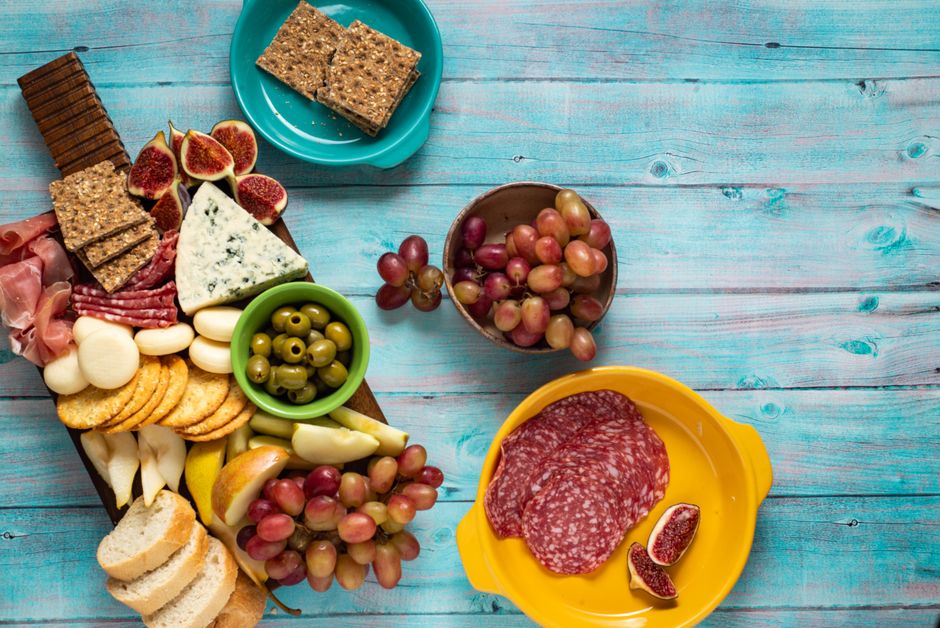
Salami is made from ground or chopped meat—most often pork, sometimes beef or a mix—mixed with salt, curing agents, spices, and a starter culture, then stuffed into a casing and fermented and dried over time. That fermentation and drying process is what turns raw seasoned meat into the firm, sliceable, shelf-stable product you buy at the deli. The exact recipe varies widely by region, but those core steps define what salami is.
What Salami Is Made Of
The ingredient list for traditional salami is short: meat, salt, curing salt, sugar, spices, and a bacterial starter culture. The meat is ground or chopped fine, then combined with these ingredients and packed into a casing—either natural (animal intestine) or synthetic.
Salt does more than season. It pulls moisture out of the meat and creates an environment where harmful bacteria struggle to grow. Curing salt, which contains sodium nitrite, serves a specific food-safety function: it inhibits the bacteria that cause botulism, a serious and potentially fatal illness. This is not a minor detail. Nitrite in cured meats is there for a reason, and its role in preventing dangerous bacterial growth is well established.
Sugar feeds the starter culture bacteria during fermentation. Spices—black pepper, garlic, fennel, paprika, and others—give each regional style its character. Some salami also includes wine, vinegar, or specific molds applied to the casing surface.
How Is Salami Made Step by Step?
The process moves through several distinct stages, each doing something specific to the meat.
- Grinding and mixing: Meat and fat are ground to the desired texture, then combined with salt, curing salt, sugar, spices, and starter culture.
- Stuffing: The mixture is packed into casings, which shape the salami and control moisture loss.
- Fermentation: The salami hangs in a temperature- and humidity-controlled environment. Lactic acid bacteria consume sugar and produce acid, which drops the pH of the meat. This acidification is what gives salami its tangy flavor and helps preserve it.
- Drying and aging: Over weeks or months, the salami loses moisture. The exterior dries faster than the interior, creating a firm outer layer. The interior gradually firms up as water content drops.
Some salami is also smoked before or during aging. The length of aging varies enormously—from a few weeks for some styles to several months for others. Longer aging generally means firmer texture and more concentrated flavor, though the relationship is not perfectly linear.
Why Does Salami Not Need Refrigeration?
Traditional salami is shelf-stable because of a combination of low moisture, high salt, low pH from fermentation, and the presence of nitrite. Together these conditions make it very difficult for most spoilage and disease-causing bacteria to grow.
This is why a whole salami can hang in a cool pantry for months. Once you slice it, though, the exposed surface changes the equation. Sliced salami has more surface area and loses the protective casing barrier, so it should be refrigerated after cutting. The USDA recommends refrigerating sliced deli meats and keeping them for no more than a few days, though whole cured salami keeps far longer.
One clarification that often gets lost: shelf-stable does not mean the product is sterile. It means the conditions prevent the growth of harmful organisms under normal storage. Once those conditions change—by slicing, by leaving it in a warm humid place, or by contamination—the safety margin narrows.





What Is the Difference Between Salami and Other Cured Meats?
Salami is a fermented, dried sausage. That distinguishes it from several products people often group together.
| Product | Key Process | Fermented? | Typical Texture |
|---|---|---|---|
| Salami | Fermented and air-dried | Yes | Firm, sliceable |
| Prosciutto | Salt-cured, air-dried whole muscle | No | Thin, silky slices |
| Bologna | Cooked, emulsified | No | Soft, uniform |
| Pepperoni | Fermented and dried, often smoked | Yes | Firm, slightly smoky |
| Mortadella | Cooked, emulsified with fat cubes | No | Soft, studded with fat |
Pepperoni is technically a type of salami, though in the US it is treated as its own category. Prosciutto is made from a single muscle, not ground meat, and is not fermented. Bologna and mortadella are cooked, not dried, which is why they have a very different texture and must be refrigerated.
Is Salami Healthy?
Salami is a processed meat. The World Health Organization classifies processed meats—including salami, bacon, ham, and hot dogs—as Group 1 carcinogens, meaning there is sufficient evidence that they cause colorectal cancer in humans. This classification is based on decades of research and is not controversial in the scientific community.
That does not mean eating salami once causes cancer. It means that regular, long-term consumption of processed meats is associated with an increased risk of colorectal cancer. The risk appears to rise with the amount consumed. The American Institute for Cancer Research recommends limiting processed meat intake and eating little, if any, on a regular basis.
Salami is also high in sodium and saturated fat. A typical 1-ounce serving of dry salami contains roughly 400–500 mg of sodium, though this varies by brand and style. For someone watching blood pressure or heart health, that matters.
There is no version of salami that is a health food. It is a traditional preserved meat with a long history and a distinct place in many cuisines. The evidence supports treating it as an occasional food, not a daily staple.
What About Nitrates and Nitrites in Salami?
This topic generates more confusion than almost any other in food science. The concern is real but often misdirected.
Sodium nitrite is added to cured meats to prevent botulism. Without it, the risk of a serious foodborne illness rises significantly. During curing and cooking, nitrites can form nitrosamines—compounds that are carcinogenic in animal studies. However, the levels of nitrosamines in cured meats have dropped substantially over the past few decades due to changes in processing and the addition of ascorbic acid (vitamin C), which inhibits nitrosamine formation.
There is also a widespread claim that “nitrate-free” or “uncured” salami is safer. This is misleading. Those products typically use celery powder or beet juice, which naturally contain nitrates. The nitrates are converted to nitrites by bacteria—either in the product or in your body. The final chemical exposure is similar. The labeling difference is regulatory, not necessarily safety-related.
Some research suggests that the majority of dietary nitrates actually come from vegetables, not cured meats, and that the health effects depend heavily on the food matrix and individual diet. The evidence here is complex and not fully settled.
How Should Salami Be Stored and Handled?
Whole, dry salami can be stored at cool room temperature for weeks or longer, depending on the style and packaging. Once cut, wrap it tightly and refrigerate. Sliced salami from the deli should be refrigerated and used within a few days.
If mold appears on the surface of a whole salami, it is often harmless—many salami styles are intentionally coated with beneficial mold. But if the mold is fuzzy, green, or black, or if the salami smells off, discard it. Do not try to cut away mold from sliced salami; throw the package out.
For people who are pregnant, immunocompromised, or at higher risk for foodborne illness, some clinicians recommend avoiding uncooked cured meats unless they are heated until steaming. This is because Listeria, a bacteria that can cause serious illness, can occasionally survive in cured meats. The evidence for this risk in salami specifically is limited, but the precaution is common in clinical practice for high-risk groups.
Frequently Asked Questions
Is salami raw?
Traditional salami is not cooked with heat, but it is fermented and dried, which preserves it and makes it safe to eat. Some commercial salami is also cooked or smoked during processing.
What meat is salami made from?
Most salami is made from pork, though beef, venison, and poultry versions exist. The type of meat affects flavor and fat content but not the basic process.
Is salami the same as pepperoni?
Pepperoni is a type of fermented, dried salami, usually made with paprika and often smoked. In the US it is marketed as a separate product, but technically it belongs to the salami family.
Can you eat salami when pregnant?
Many clinicians advise pregnant women to avoid uncooked cured meats like salami unless heated until steaming, due to a small risk of Listeria. Check with your healthcare provider for guidance specific to your situation.
