
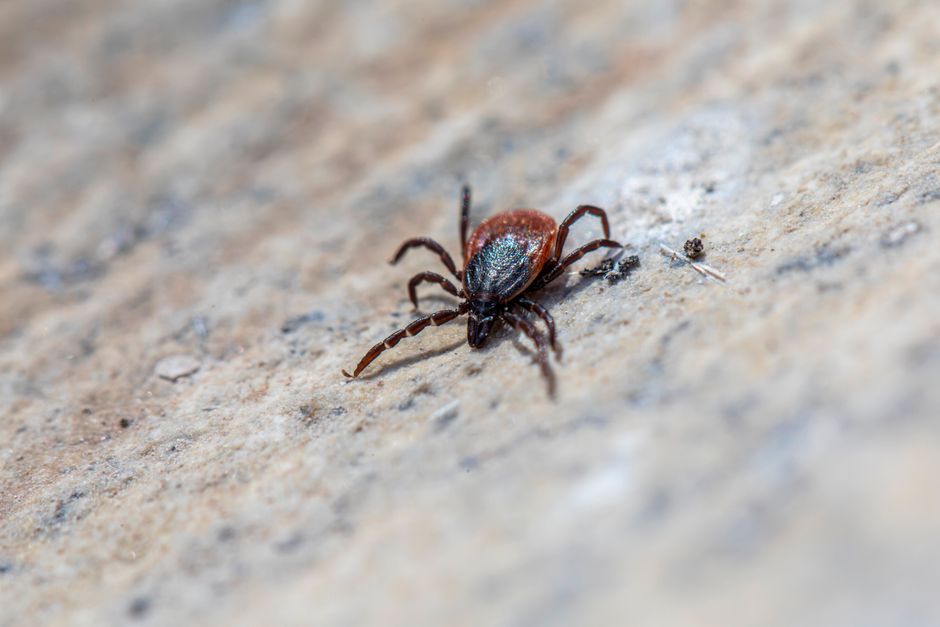
Ticks are not insects. They are arachnids, close relatives of spiders, and that matters for repellent choices because many insect repellents do not work against them. The most reliable repellents for skin are DEET and picaridin, both supported by years of comparative testing. For yards, the best approach is making the environment hostile to ticks — keeping grass short, clearing leaf litter, and creating dry barriers between woods and lawn — rather than relying on sprays alone.
What Actually Repels Ticks on Skin?
Two active ingredients have the strongest track record: DEET and picaridin. Both are supported by decades of comparative testing, and both work by interfering with the tick’s ability to detect the carbon dioxide and body heat that guide it toward a host.
DEET has been studied more than any other repellent. Concentrations from about 20% to 50% are effective, and higher concentrations mainly extend how long protection lasts rather than how well it works. A 20% product might last a few hours. A 30% or higher product lasts longer. The Centers for Disease Control and Prevention recognizes DEET as an effective tick repellent.
Picaridin, sometimes listed as icaridin, is a synthetic compound modeled on a natural substance found in pepper plants. It performs comparably to DEET against ticks in most testing, does not damage plastics or synthetic fabrics the way DEET can, and has far less odor. It is also recognized by the CDC.
Permethrin is a different category entirely. It is not applied to skin. It is applied to clothing, boots, and gear, where it kills ticks on contact rather than just repelling them. This distinction trips people up constantly.
Is Permethrin Safe to Put on Skin?
No. Permethrin is designed for fabrics, not skin. Products sold for clothing treatment carry explicit warnings against skin application, and that guidance exists for good reason.
When permethrin is applied to clothing and allowed to dry, it binds to the fabric fibers. Ticks that crawl across treated fabric are killed or incapacitated before they can reach skin. This is why treating a full outfit — shirt, pants, socks, boots — creates a protective barrier that no skin repellent can match on its own.
Pre-treated clothing is available commercially and retains effectiveness through many washings, according to manufacturer testing. Home treatment kits also exist. Either way, the fabric must dry completely before you wear it.
The combination of permethrin-treated clothing plus a DEET or picaridin repellent on exposed skin is the approach most often recommended by public health agencies for people entering tick habitat.
What About Natural and Botanical Repellents?
The evidence here is genuinely limited. Some plant-derived oils show repellent activity in laboratory tests against certain tick species, but results are inconsistent and protection times are usually short.
Oil of lemon eucalyptus is registered with the Environmental Protection Agency as a repellent, and it has shown effectiveness against mosquitoes. Its track record against ticks specifically is weaker and less consistent than DEET or picaridin.
Essential oils like cedarwood, geraniol, and rosemary appear in many natural tick products. Some laboratory studies suggest repellent effects, but no large human field trials have confirmed reliable, lasting protection against ticks at the concentrations found in consumer products. That gap between lab results and real-world performance matters.
If you choose a botanical product, understand that you may need to reapply it more often, and that its protection window is likely shorter. No botanical repellent currently matches the documented performance of DEET or picaridin against ticks.
How Should You Apply Tick Repellent Correctly?
Application technique matters as much as the product. Ticks often crawl upward from the feet and legs, searching for a place to attach. That means your lower body deserves the most attention.
- Apply repellent to exposed skin, but not under clothing.
- Spray clothing and gear with permethrin, and let them dry before wearing.
- Do not spray repellent directly on your face. Spray your hands first, then apply.
- Use enough to cover skin evenly. Light misting is not enough.
- Reapply according to the product label, especially after sweating or getting wet.
- Wash treated skin with soap and water when you come inside.
One detail people miss: ticks do not jump or fly. They quest — they climb to the tip of a blade of grass or a leaf and reach out with their front legs, waiting to grab onto something that brushes past. This is why treating your shoes, socks, and pant legs is so important. It intercepts them at the point of contact.
What Repels Ticks in Your Yard?
Yard control works differently from skin repellent. You are not repelling ticks from a person. You are removing the conditions ticks need to survive.
Ticks require moisture and shade. They dry out quickly in direct sun and low humidity. A well-maintained, dry, sunny lawn is naturally less hospitable than a shaded, overgrown one.
The most effective yard measures, according to extension services and public health guidance, include:
- Keep grass mowed short, especially near the house and along paths.
- Clear leaf litter, brush, and tall weeds from the yard edge.
- Create a dry gravel or woodchip barrier between lawn and wooded areas.
- Keep playground equipment, picnic tables, and seating away from tree lines and brush.
- Trim shrubs and low branches to let more sunlight in.
- Stack woodpiles neatly in a dry area, off the ground if possible.
- Discourage deer and rodents, which are common tick hosts, from settling near the home.
These steps reduce tick habitat. They do not eliminate ticks. No yard method eliminates ticks entirely.
Do Yard Sprays and Tick Tubes Work?
Professional and DIY yard treatments exist, and the evidence for them varies. Some acaricides — pesticides that target ticks and mites — reduce tick numbers in treated areas for a period of time after application. Their effect is temporary and depends on correct timing and coverage.
Tick tubes are a different approach. They contain permethrin-treated cotton that mice and other small rodents collect for nesting material. The idea is that the treated cotton kills ticks feeding on the rodents. Some studies have shown reductions in tick numbers in treated areas. Other studies have shown little or no effect. The evidence is mixed, and results appear to depend heavily on local rodent populations and how the tubes are placed.
No yard treatment is a substitute for personal protection. Even a well-treated yard can harbor ticks, and the steps that reduce habitat are the ones with the most consistent support.
Which Repellent Lasts Longest?
Duration depends on the active ingredient, its concentration, and conditions. Sweat, humidity, and rubbing all shorten protection time.
Higher concentrations of DEET last longer than lower ones. Picaridin at 20% provides protection comparable to DEET at similar concentrations in most testing. Permethrin on clothing can remain effective through multiple washings, depending on the product and how it was applied.
There is no single answer that applies to everyone. The honest position is that no repellent lasts all day under heavy sweating or rain. Reapplication is part of the process, not a sign the product failed.
What Should You Do After Being Outdoors?
Check yourself. A full-body tick check within a few hours of coming inside catches most ticks before they attach, and it catches attached ticks before they have time to transmit disease.
Pay attention to warm, hidden areas: behind the knees, in the groin, under the arms, in and around the ears, inside the belly button, and in the hair. Showering soon after being outdoors can help wash off unattached ticks and makes a full check easier.
If you find an attached tick, remove it promptly with fine-tipped tweezers, pulling straight up with steady pressure. Do not twist or crush it. Clean the bite area with rubbing alcohol or soap and water. The longer a tick stays attached, the greater the chance of disease transmission, so prompt removal matters.
Watch for symptoms in the weeks after a bite — fever, rash, muscle aches, or fatigue. Not all tick bites cause illness, and not all tick-borne diseases produce the same symptoms. If you feel unwell after a bite, tell a healthcare provider about the bite and when it happened.
Frequently Asked Questions
What is the best repellent for ticks on skin?
DEET and picaridin have the strongest evidence for effectiveness against ticks. Both are recognized by the CDC, and higher concentrations of each extend protection time rather than improving how well they work.
Does permethrin work on skin?
No. Permethrin is applied to clothing and gear, not skin, and it kills ticks on contact rather than repelling them. Products sold for clothing treatment carry explicit warnings against skin application.
What is the best way to keep ticks out of my yard?
Keeping grass short, removing leaf litter, and creating a dry barrier between lawn and woods reduces tick habitat most reliably. Yard sprays and tick tubes may help but their effects are temporary or inconsistent.
Do natural repellents like essential oils work against ticks?
Some plant oils show repellent activity in laboratory tests, but protection times are short and no large human field trials have confirmed reliable, lasting protection. No botanical repellent currently matches DEET or picaridin against ticks.
