
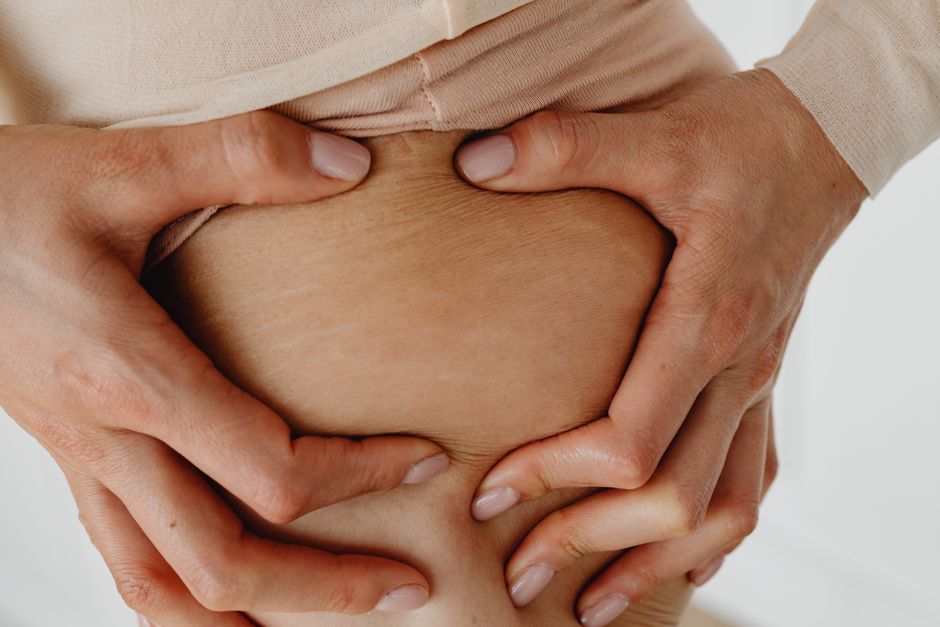
Crepey skin is what happens when the skin’s support structure — collagen, elastin, and the underlying fat layer — thins out over time. The surface becomes loose, finely wrinkled, and papery, often on the neck, arms, and under the eyes. You cannot rebuild that structure back to age 25, but a small number of proven steps can improve how it looks and slow how fast it progresses.
What Is Crepey Skin, Exactly?
Crepey skin is not the same as a deep wrinkle or a sagging jowl. It is a texture change. The skin looks thin and crinkled, like crepe paper, and it moves loosely when you pinch it.
Dermatologists describe it as a combination of three things happening at once: the top layer of skin (the epidermis) gets thinner, the middle layer (the dermis) loses collagen and elastin, and the fat layer underneath shrinks. Any one of these alone would change how skin looks. Together they produce that fragile, crinkled surface.
It most often shows up on the neck, the backs of the hands, the upper arms, and around the eyes and mouth. These areas have thinner skin to begin with and get more sun exposure than most of the body. That combination matters.
What Really Causes Crepey Skin?
Sun exposure is the single largest driver. Ultraviolet radiation breaks down collagen and elastin fibers in the dermis and damages the cells that produce new collagen. This process is called photoaging, and it is distinct from the natural aging that happens in skin protected from the sun.
That distinction is not minor. Dermatology research has long shown that skin on chronically sun-exposed areas — like the face and forearms — develops more wrinkles and texture change than skin on the buttocks or inner arm, even in the same person at the same age. If you want to understand why crepey skin appears where it does, sun exposure explains most of the pattern.
Natural aging adds to it. After roughly age 20, collagen production in the skin declines gradually. Elastin fibers become fragmented and less able to snap back. The subcutaneous fat layer thins, especially on the hands, arms, and face.
Other factors that contribute:
- Smoking — narrows blood vessels and reduces oxygen and nutrient delivery to skin. It also accelerates collagen breakdown.
- Genetics — how fast your skin ages is partly inherited. Some people develop crepey texture decades earlier than others.
- Rapid weight loss — when fat under the skin shrinks quickly, skin that stretched to accommodate it may not retract fully.
- Menopause — estrogen supports collagen and skin thickness. When estrogen drops, skin thins measurably.
- Dehydration — does not cause crepey skin on its own, but dry skin looks and feels more crepey because the surface is less plump.
One common claim worth correcting: drinking more water does not reverse crepey skin. Hydration supports overall skin health, but the structural changes behind crepey texture happen in the dermis and fat layer, not in how much water you drink. No clinical evidence shows that increasing water intake rebuilds collagen or reverses crepey texture.
Can Crepey Skin Actually Be Reversed?
Reversed is a strong word. Improved is more accurate. No topical product or at-home routine rebuilds the dermis back to a younger state. What some treatments can do is stimulate new collagen production, thicken the skin, and improve texture — to varying degrees.
The honest position: results depend on the treatment, how much sun damage exists, and individual skin biology. Some people see meaningful improvement. Others see modest change. Nobody gets their 25-year-old skin back.
What does not work, despite marketing claims:
- Firming creams that claim to “rebuild collagen” without evidence of collagen-stimulating ingredients
- Collagen supplements marketed specifically for skin firmness — the evidence here is limited and mixed
- Body lotions with “anti-aging” labels that contain only moisturizers
Moisturizers do help crepey skin look better temporarily. They plump the outer layer by trapping water, which smooths the appearance of fine crinkles for hours. That is a real effect. It is also temporary and does not change the underlying structure.




What Treatments Have Real Evidence Behind Them?
Several treatments have clinical evidence for improving skin texture and stimulating collagen. They vary in how invasive they are and how much they cost.
Topical retinoids
Prescription tretinoin and over-the-counter retinol are among the best-studied topical ingredients for photoaged skin. Research has consistently shown that retinoids increase collagen production and improve fine wrinkles and skin texture over months of regular use. Results take time — typically several months — and skin often needs a gradual adjustment period because retinoids can cause irritation and peeling at first.
Retinoids work on the surface and upper dermis. They are not going to fix loose skin from fat loss or significant elastin damage. But for early crepey texture and sun-related changes, they have the strongest evidence base of any topical option.
Laser and light-based treatments
Fractional lasers, intense pulsed light, and radiofrequency devices create controlled injury in the dermis. The skin responds by producing new collagen. Studies show improvement in skin texture and wrinkling after a series of treatments. Results are not permanent, and maintenance sessions are usually needed.
These procedures carry real risks — redness, swelling, pigment changes, and in some cases scarring. They should be done by a qualified dermatologist or physician, not at a spa.
Microneedling
Microneedling creates tiny punctures in the skin to trigger collagen production. Some studies show improvement in skin texture and fine lines. Results are generally less dramatic than lasers, but the procedure has a lower risk profile. Evidence quality varies, and the skill of the practitioner matters.
Injectable fillers and fat grafting
When crepey skin is caused largely by fat loss — common on the backs of the hands and in the face — injectable fillers or fat grafting can restore volume. This improves the appearance of the skin by adding structural support underneath it. It does not change the skin itself. Results last months to years depending on the material used.
What about creams with peptides or growth factors?
Some studies suggest certain peptides may support collagen production. The evidence is much weaker than for retinoids. Growth factor products have some early evidence, but formulations vary widely and regulation is limited. These are not equivalent to prescription retinoids.
What Can You Do At Home That Actually Helps?
Sun protection is the most important thing you can do, and it is not close. Daily sunscreen on exposed areas slows the collagen breakdown that drives crepey skin. This is well established. If you do nothing else, do this.
Beyond sun protection:
- Use a retinoid — start with an over-the-counter retinol if you have not used one before. Apply at night. Expect some initial dryness.
- Moisturize regularly — this improves appearance temporarily and supports the skin barrier. It does not reverse structural damage.
- Do not smoke — and if you do, quitting is one of the few interventions that measurably improves skin over time.
- Avoid extreme, rapid weight loss — gradual weight loss gives skin more time to adjust.
- Sleep on your back — repeated pressure and stretching on the same areas of the face and neck may contribute to creasing over years. The evidence here is not strong, but the mechanism is plausible and the risk is zero.
Be skeptical of any product or device that promises to “reverse” crepey skin. The word reverse implies restoring what was lost. Nothing available today does that. Some things improve it. Many things do nothing.
Does Diet Or Hydration Make A Difference?
Nutrition supports skin health, but no diet has been shown to reverse crepey skin. That said, severe nutritional deficiencies do affect skin integrity, and adequate protein intake matters because collagen is a protein.
Vitamin C is required for collagen synthesis. This is established biochemistry. A deficiency impairs collagen production and causes skin problems. Whether taking extra vitamin C beyond what you need improves skin in healthy people is not well established.
Collagen supplements are widely marketed for skin. The evidence is mixed and generally low quality. Some small studies suggest possible improvement in skin elasticity, but results are inconsistent and the studies are often funded by supplement companies. No clinical evidence currently confirms that collagen supplements reverse crepey skin.
Water intake matters for overall health. It does not reverse crepey skin. The structural changes happen in the dermis and fat layer, and drinking more water does not rebuild either.
When Should You See A Dermatologist?
See a dermatologist if you want to explore prescription treatments, laser procedures, or fillers. A dermatologist can also assess whether what you are seeing is actually crepey skin or something else.
Some skin conditions can look like crepey texture but have different causes — including certain connective tissue disorders, severe nutritional deficiencies, and rare skin diseases. If skin changes appear suddenly, are accompanied by other symptoms, or affect only one area of the body, that warrants a medical evaluation rather than a cosmetic approach.
For most people, crepey skin is a cosmetic concern, not a medical one. That does not make it trivial — it affects how people feel about their appearance, and that is valid. But it is worth knowing what is achievable and what is not before spending money on treatments that cannot deliver.
Frequently Asked Questions
Can crepey skin be reversed naturally?
No natural remedy has been shown to reverse crepey skin. Sun protection, retinoids, and moisturizers can improve its appearance and slow progression, but they do not rebuild lost collagen and elastin.
What is the best treatment for crepey skin on the neck?
Prescription retinoids and laser treatments have the strongest evidence for improving skin texture on the neck. The neck skin is thinner than facial skin, so treatments should be performed by a dermatologist experienced with this area.
Does drinking water help crepey skin?
No. Drinking more water does not rebuild collagen, elastin, or the fat layer that cause crepey texture. Hydration supports overall health, but it will not reverse structural skin changes.
At what age does crepey skin usually start?
Crepey skin most commonly becomes noticeable in the 40s and 50s, though sun exposure and genetics can cause it earlier. Menopause often accelerates skin thinning due to declining estrogen.
