
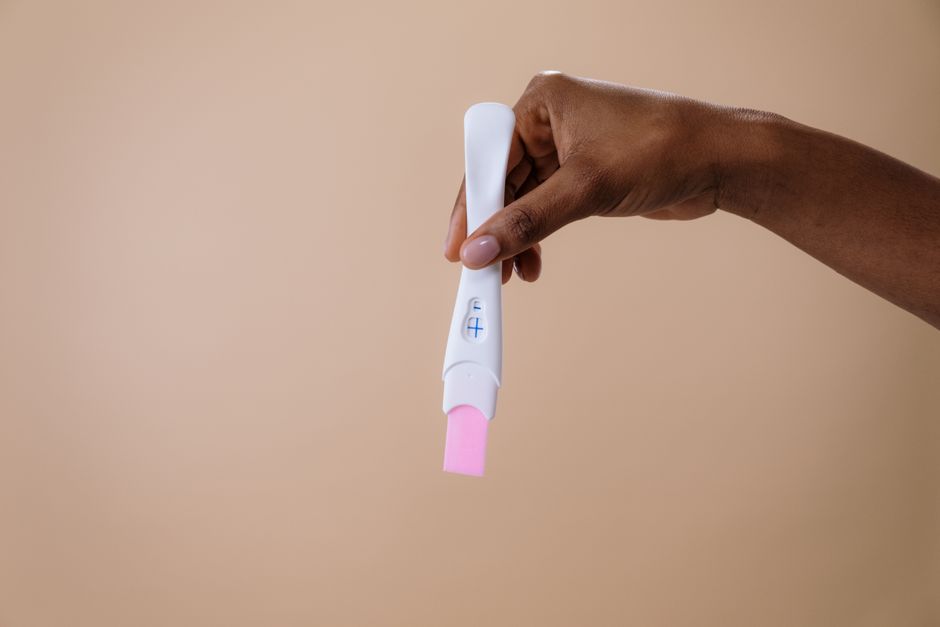
A home pregnancy test is a simple urine test that detects a hormone called human chorionic gonadotropin (hCG), which the body makes after a fertilized egg implants in the uterus. For most people, any test approved by the FDA works well if used correctly and at the right time. The best test for your situation depends on how early you are testing, how clearly you want the result displayed, and whether cost or convenience matters more to you.
The differences between brands are smaller than the marketing suggests. What actually drives an accurate result is timing, proper use, and reading the test within the window the instructions specify. This guide explains how these tests work, what the evidence does and does not show, and how to choose one that fits your circumstances.
How do home pregnancy tests actually work?
All urine pregnancy tests rely on the same basic chemistry. They use antibodies that bind to hCG, a hormone produced by the developing placenta shortly after an embryo implants in the uterine lining.
hCG first appears in urine a few days after implantation. Implantation itself usually happens about 6 to 12 days after ovulation, though the timing varies. That means a test taken very early can be negative even in a pregnancy that is progressing normally. The hormone level roughly doubles every two to three days in early pregnancy, which is why waiting a few extra days can turn a negative into a positive.
There are two main formats:
- Strip or cassette tests use a line to show a result. One line means negative, two lines means positive. A faint second line still counts as a positive.
- Digital tests read the same chemistry but display words like “Pregnant” or “Not pregnant,” which removes the guesswork of interpreting faint lines.
Some digital tests also estimate how many weeks since ovulation, based on hCG concentration. That estimate is approximate, not a precise dating tool.
What pregnancy test is best for your situation?
There is no single best test for everyone. The right choice depends on when you are testing and what you value.
If you are testing early, before a missed period, look for a test labeled for early detection. These are typically more sensitive to lower hCG levels. Sensitivity is usually stated on the package. A test able to detect around 10 to 25 mIU/mL of hCG is more sensitive than one that needs a higher level. Some tests advertise very early detection, but no test can detect a pregnancy before implantation has occurred.
If you want a clear, easy-to-read answer and cost is less of a concern, a digital test may suit you better. It removes the ambiguity of deciding whether a line is “faint but there.”
If cost matters or you plan to test repeatedly, standard line tests and strip tests are inexpensive and work well when used correctly. Buying several cheap tests and testing over a few days can be more informative than one expensive test taken too early.
For anyone with a known medical condition, taking fertility medication, or with a history of pregnancy loss, it is reasonable to discuss testing and follow-up with a clinician rather than relying on a home result alone.
Does test sensitivity really matter?
Sensitivity matters most when you test early. It refers to the lowest hCG level a test can detect. A more sensitive test can pick up a pregnancy a day or two sooner than a less sensitive one.
But sensitivity has limits. A highly sensitive test used too early will still read negative if hCG has not yet risen enough. And a very sensitive test used after the ideal window can occasionally pick up trace hCG from other sources, though this is uncommon.
The practical takeaway: sensitivity helps at the margins, but timing and correct use matter more. Testing a day or two after a missed period gives the most reliable home result for most people.
When should you take a pregnancy test?
The most reliable time to test at home is after a missed period. By then, hCG levels are usually high enough for standard tests to detect reliably.
If you test before your missed period, use an early-detection test and understand that a negative result is less conclusive. Waiting a few days and retesting is reasonable if your period still does not arrive.
First-morning urine is often recommended because it is more concentrated, which can help when hCG levels are still low. This matters more for early testing than for testing after a missed period.
Follow the instructions on the package for how long to wait before reading the result. Reading a test too late can produce a faint line that is not a true positive, sometimes called an evaporation line. Reading too early can miss a positive that would have appeared.
Can a home test be wrong?
Home pregnancy tests are generally accurate when used correctly, but false results do happen. Understanding why helps you interpret a result sensibly.
A false negative is the more common error. It usually means you tested too early, your urine was dilute, or you did not follow the instructions. Testing again in a few days often resolves it.
A false positive is less common but possible. Certain medical conditions and some fertility treatments that contain hCG can cause a positive result without a pregnancy. Rarely, an early pregnancy loss can produce a positive test that later turns negative. If a result does not match your situation, a clinician can confirm with a blood test.
Home tests cannot tell you whether a pregnancy is progressing normally, cannot detect an ectopic pregnancy, and cannot confirm the location of a pregnancy. Those questions require medical evaluation.
What should you do after a positive result?
A positive home test is a strong signal, but it is not a diagnosis. The next step is to contact a healthcare provider to arrange follow-up.
Clinicians typically confirm pregnancy and, depending on your history and symptoms, may use blood tests or ultrasound. Seek prompt medical care for symptoms such as severe abdominal pain, heavy bleeding, or dizziness, because these can signal problems that need urgent attention.
If you take medications or have a chronic condition, tell your provider early so they can review what is safe during pregnancy. Do not start or stop any medication based on a home test alone.
What about the claims on the box?
Packaging often emphasizes speed, early detection, and clarity. Those features are real, but they do not change the underlying chemistry. No home test can detect a pregnancy before implantation, and no test can guarantee a result earlier than hCG allows.
Claims about “99% accuracy” typically refer to accuracy under ideal conditions in studies, not to every real-world use. Used too early or incorrectly, any test can be wrong. The honest position is that a well-made, FDA-cleared test used at the right time is reliable, and brand differences are modest.
Frequently Asked Questions
How early can a home pregnancy test detect pregnancy?
Some early-detection tests can pick up hCG a few days before a missed period, but results are less reliable that early. Testing after a missed period gives the most dependable home result.
Are digital pregnancy tests more accurate than line tests?
No, digital and line tests use the same hCG chemistry and are generally similar in accuracy. Digital tests mainly make the result easier to read.
Can I get a false positive on a home pregnancy test?
False positives are uncommon but possible, and can be caused by certain medical conditions or fertility treatments containing hCG. A clinician can confirm with a blood test.
Does it matter what time of day I take a pregnancy test?
First-morning urine is often recommended because it is more concentrated, which helps with early testing. After a missed period, timing of day matters less.
