
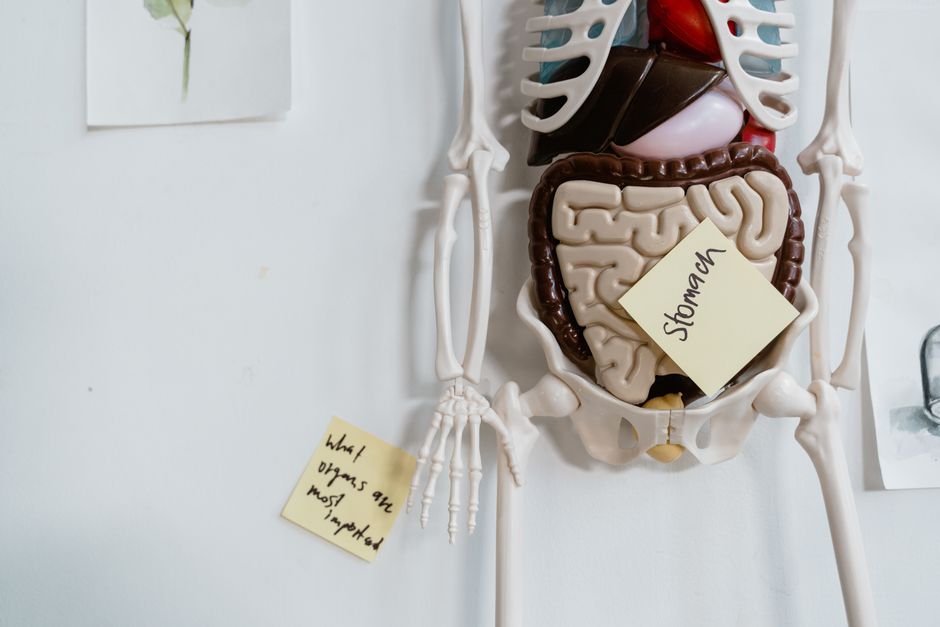
The digestive system is a long, continuous tube that runs from your mouth to your anus, plus a handful of organs that sit outside that tube and help it work. The main organs are the mouth, esophagus, stomach, small intestine, and large intestine. The accessory organs are the liver, gallbladder, and pancreas. Together they turn food into fuel your body can use.
Most people picture the stomach as the center of digestion. It is really more of a holding and mixing tank. The small intestine does most of the actual absorbing, and it is roughly 20 feet long in an average adult.
What organs make up the digestive system?
The digestive system is divided into two groups. The first is the gastrointestinal tract itself, the hollow tube food travels through. The second is the accessory organs, which produce substances that get added into that tube but are not part of the path food takes.
The gastrointestinal tract, in order, includes:
- The mouth
- The pharynx (throat)
- The esophagus
- The stomach
- The small intestine
- The large intestine (colon)
- The rectum and anus
The accessory organs are the liver, gallbladder, and pancreas. The liver is the largest internal organ in the body and produces bile, a fluid that helps break down fat. The gallbladder stores that bile and releases it when fat enters the small intestine. The pancreas makes digestive enzymes and also produces insulin and other hormones.
Some sources also list the teeth, tongue, and salivary glands as part of the digestive system, which is accurate. They all play a role in the first stage of digestion.
What does each organ actually do?
Digestion is a chain of steps, and each organ handles a specific part of it. Here is what each one contributes.
Mouth and salivary glands
Digestion starts before you swallow. Chewing breaks food into smaller pieces, and saliva moistens it into a soft mass. Saliva contains an enzyme called salivary amylase, which begins breaking down starches. This is why a piece of bread starts to taste slightly sweet if you hold it in your mouth long enough.
Esophagus
The esophagus is a muscular tube about 10 inches long. It moves food to the stomach using wave-like muscle contractions called peristalsis. Gravity helps, but it is not required — the esophagus can move food downward even if you are lying down.
Stomach
The stomach is a muscular sac that churns food and mixes it with strong acid and enzymes. This acid kills many bacteria and starts breaking down proteins. The stomach absorbs very little of the food itself. Its main job is to turn a meal into a semi-liquid paste called chyme and release it into the small intestine in controlled amounts.
Small intestine
The small intestine is where most nutrient absorption happens. It has three sections — the duodenum, jejunum, and ileum. Its inner lining is covered in tiny finger-like projections called villi, which greatly increase the surface area available to absorb nutrients. Bile and pancreatic enzymes enter at the top of the small intestine to finish breaking down fats, proteins, and carbohydrates.
Large intestine
The large intestine, or colon, absorbs water and electrolytes from what is left. It also houses trillions of bacteria that make up the gut microbiome. These bacteria ferment some undigested fiber and produce certain vitamins, including vitamin K and some B vitamins. What remains after this process becomes stool.
Rectum and anus
The rectum stores stool until it is ready to leave the body. The anus is the muscle ring at the end of the tract that controls its release.
Liver, gallbladder, and pancreas
These three organs do not touch your food directly. The liver processes nutrients absorbed from the intestine and produces bile. The gallbladder concentrates and stores bile until a fatty meal triggers its release. The pancreas sends digestive enzymes into the small intestine and releases hormones that regulate blood sugar.
How long is the digestive system from start to finish?
The full length of the digestive tract in an adult is often cited as about 30 feet. That figure varies a lot between people and depends partly on muscle tone — the tract is longer in a relaxed state after death than in a living person. Treat it as a rough estimate, not a fixed measurement.
Transit time — how long food takes to travel the whole route — is also variable. It is commonly described as somewhere between one and three days, but this differs widely based on diet, fiber intake, hydration, activity, and individual biology. There is no single normal number.
One clarification worth making: the small intestine is called “small” because of its narrow diameter, not its length. It is actually the longest part of the digestive tract. The large intestine is wider but much shorter, at roughly 5 feet.
Which organs are often confused with digestive organs?
Several organs sit near the digestive tract but are not part of it. The spleen, for example, sits close to the stomach but belongs to the immune and blood-filtering systems. The kidneys sit behind the digestive organs and filter blood. The bladder stores urine.
The appendix is a small pouch attached to the start of the large intestine. It is technically part of the digestive tract, though its function in humans is not fully understood. Some research suggests it may serve as a reservoir for gut bacteria, but this remains an area of active study rather than settled fact.
The gut is also closely tied to the nervous system through what is often called the enteric nervous system — a network of neurons embedded in the walls of the digestive tract. It can function independently of the brain, which is why it is sometimes called the “second brain.” That term is a popular label rather than a scientific one, but the underlying anatomy is real.
How do the organs work together to digest a meal?
Digestion is coordinated, not sequential in isolation. A meal triggers a chain of signals that prepares each organ before food even arrives.
The sight or smell of food starts saliva production and prepares the stomach. When food reaches the stomach, stretch receptors signal the pancreas and gallbladder to get ready. As chyme enters the small intestine, hormones are released that slow stomach emptying so the intestine has time to absorb nutrients.
This coordination is why digestive problems can show up far from their source. A problem with the pancreas can cause symptoms that feel like a stomach issue. A blocked bile duct can affect how fat is absorbed throughout the whole tract.
What are the most common digestive conditions?
Digestive complaints are extremely common. Some of the most frequently seen conditions include:
- Gastroesophageal reflux disease (GERD) — stomach acid flows back into the esophagus, causing heartburn
- Irritable bowel syndrome (IBS) — a functional disorder causing abdominal pain and changes in bowel habits
- Peptic ulcers — open sores in the stomach or small intestine lining, often linked to H. pylori infection or long-term use of certain pain medications
- Gallstones — hardened deposits in the gallbladder that can block bile flow
- Inflammatory bowel disease (IBD) — includes Crohn’s disease and ulcerative colitis, both involving chronic inflammation
- Constipation — slow transit or difficulty passing stool
These conditions differ widely in cause and treatment. IBS and IBD, despite similar names, are distinct conditions with different mechanisms and management. IBS does not cause visible inflammation or permanent damage to the tract. IBD does.
When should you see a doctor about digestive symptoms?
Most digestive symptoms are temporary and not a sign of serious disease. Some warrant medical attention.
See a doctor if you have blood in your stool, unexplained weight loss, persistent vomiting, severe abdominal pain, difficulty swallowing, or a major change in bowel habits that lasts more than a few weeks. These can have many causes, and most are not dangerous, but they deserve evaluation.
This is general information, not a diagnosis or a substitute for medical advice. If something feels wrong and is not improving, getting it checked is reasonable.
Frequently Asked Questions
What are the 7 main organs of the digestive system?
The main organs are the mouth, esophagus, stomach, small intestine, large intestine, rectum, and anus. The liver, gallbladder, and pancreas are accessory organs that support digestion but are not part of the food pathway.
What is the largest organ in the digestive system?
The liver is the largest internal organ in the body and the largest accessory organ of digestion. The small intestine is the longest part of the digestive tract itself.
Does the stomach absorb nutrients?
The stomach absorbs very little. Its main roles are to store food, break it down mechanically and chemically, and release it gradually into the small intestine, where most absorption happens.
Is the appendix part of the digestive system?
Yes, the appendix is attached to the large intestine and is considered part of the digestive tract. Its function in humans is not fully understood, and some research suggests it may serve as a reservoir for gut bacteria.
