
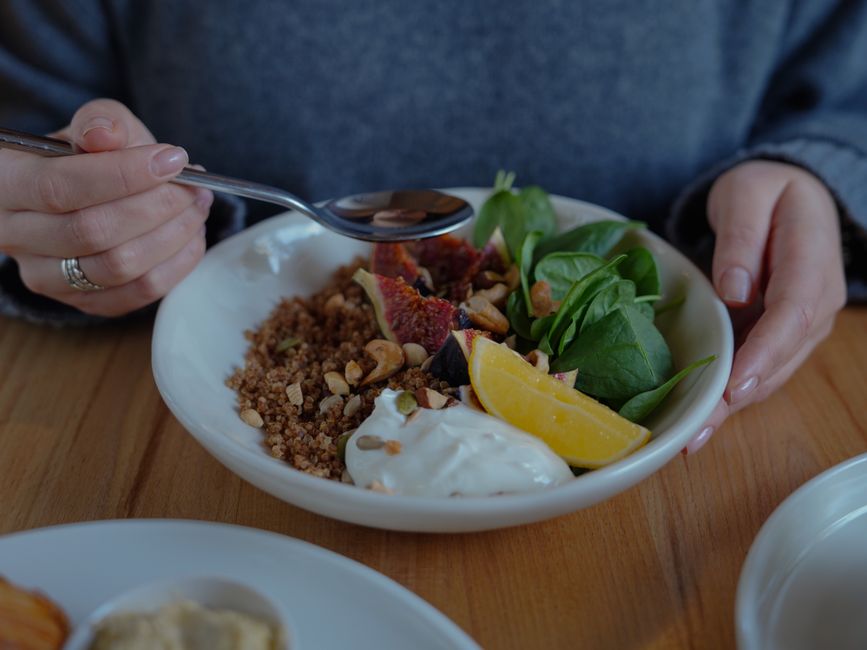
Breakfast sets the tone for your whole day. What you eat in the morning affects your blood sugar, your energy, and how hungry you feel by lunch. The short answer: skip sugary cereals, sweet pastries, and sweetened drinks first thing. Try eggs, plain Greek yogurt, oatmeal with nuts, or whole-grain toast with peanut butter instead.
That is the simple version. The details matter, though, because some breakfasts that sound healthy are not, and some foods people fear are actually fine.
Why Does Breakfast Matter So Much?
Your body has just gone 8 to 12 hours without food. Blood sugar is low. The hormone insulin is low. Your liver has been slowly releasing stored glucose to keep you going overnight.
What you eat first breaks that fast. A breakfast heavy in refined sugar and white flour hits your bloodstream fast. Blood sugar spikes. Insulin surges to bring it down. Then blood sugar often drops below where it started, and you feel tired and hungry again within a couple of hours.
A breakfast with protein, fat, and fiber digests more slowly. Glucose enters the blood gradually. You stay steadier longer. This is basic physiology, and it is well established.
Breakfast also matters because it is a habit. People who eat a poor breakfast tend to repeat it. The pattern compounds over months and years.
What Not To Eat For Breakfast And What To Try?
Some breakfast foods are clearly worth limiting. Others get a bad reputation they do not deserve. Here is a practical breakdown of what to cut back on and what to reach for instead.
Skip or limit these
- Sugary breakfast cereals. Many popular brands are 40 to 50 percent sugar by weight. Check the label. If sugar is one of the first two ingredients, treat it as a dessert.
- Sweet pastries and donuts. Refined flour plus sugar plus fried fat. Almost no protein or fiber.
- Sugary coffee drinks. A large flavored latte or frappuccino can carry more sugar than a candy bar. This is one of the most common hidden sources of morning sugar.
- White toast with jam or honey. Fast carbs on fast carbs. Very little to slow digestion.
- Processed breakfast meats in large amounts. Bacon, sausage, and ham are high in sodium and classified as processed meats. Regular heavy intake is linked to higher long-term health risks.
- Fruit juice. Even 100 percent juice strips out most of the fiber of whole fruit. A glass can deliver the sugar of several oranges in seconds.
Try these instead
- Eggs. High-quality protein with fat to slow digestion. Boiled, scrambled, or poached all work.
- Plain Greek yogurt. More protein than regular yogurt. Add your own fruit to control the sugar.
- Oatmeal with nuts and seeds. The fiber in oats slows glucose absorption. Nuts add fat and protein.
- Whole-grain toast with peanut butter. Better fiber than white bread, plus protein and fat from the nut butter.
- Cottage cheese with berries. High protein, low sugar, and quick to prepare.
- Whole fruit. A banana, apple, or handful of berries gives sugar wrapped in fiber, which slows absorption.
You do not need to be perfect. A breakfast with some protein and fiber is a big step up from one built on sugar and white flour.
Is Skipping Breakfast Bad For You?
The evidence here is mixed, and it is worth being honest about that.
For decades, breakfast was called the most important meal of the day. That claim was pushed hard, partly by cereal companies. The science behind it is weaker than the slogan suggests.
Some studies link skipping breakfast to higher body weight and worse heart health markers. But these studies often cannot separate breakfast habits from other behaviors. People who skip breakfast may also sleep less, smoke more, or eat worse overall. That makes it hard to blame breakfast alone.
Controlled trials, where researchers actually assign people to eat or skip breakfast, have generally found little effect on weight. Some people naturally are not hungry in the morning. For them, forcing breakfast may not help.
What matters more is the total quality of your diet across the day. If you skip breakfast and eat well later, that can be fine. If you skip breakfast and then eat a huge sugary snack at 10 a.m., that is a different story.
People with diabetes or blood sugar issues should talk to their doctor about morning eating patterns, because medication timing and glucose control interact with when and what you eat.





Are “Healthy” Breakfast Foods Actually Healthy?
Many foods marketed as healthy breakfast choices are not what they claim. This is one of the clearest cases of marketing outrunning the evidence.
Granola. Often sold as a health food. Many brands are high in added sugar and oil. A small serving can rival a candy bar in sugar. Read the label.
Flavored instant oatmeal. Plain oats are excellent. The flavored packets often add a lot of sugar. Buy plain oats and sweeten them yourself.
Breakfast bars. Some are basically cookies with added vitamins. Check for protein and fiber, and watch the sugar.
Vitamin-fortified cereals. Adding vitamins to a sugary cereal does not cancel out the sugar. Fortification is not the same as a healthy base.
Plant-based milks. These vary widely. Some are low in protein compared to dairy milk. Check the label if protein matters to you.
The pattern is simple. If a product shouts about health on the front of the box, read the nutrition panel on the back.
How Do I Build a Better Breakfast?
Aim for three things: protein, fiber, and some fat. Together they slow digestion and keep you full.
Protein sources include eggs, Greek yogurt, cottage cheese, milk, tofu, and nut butter. Fiber comes from whole grains, oats, fruit, and vegetables. Fat comes from nuts, seeds, avocado, and olive oil.
You do not need all three in perfect amounts. A rough target many nutrition guidelines suggest is including a source of protein at breakfast, since most people fall short of protein earlier in the day.
Here is a simple comparison of common breakfast choices by their main nutrient profile:
| Breakfast choice | Main strength | Main weakness |
|---|---|---|
| Eggs | Protein and fat | No fiber on their own |
| Plain Greek yogurt | Protein | Little fiber unless you add fruit |
| Oatmeal with nuts | Fiber, fat, some protein | Sugar if you add a lot |
| Sugary cereal with milk | Some vitamins, some protein from milk | High sugar, low fiber |
| Pastry and coffee drink | Quick energy | High sugar, low protein and fiber |
One practical trick: prepare breakfast the night before. Overnight oats, boiled eggs, or a yogurt bowl take minutes to assemble. When breakfast is easy, you are less likely to grab a pastry on the way out.
Does What You Drink With Breakfast Matter?
Yes, and it is easy to overlook.
Water, plain coffee, and plain tea have no sugar and no calories. Coffee and tea in moderation are fine for most people. The trouble comes from what gets added. Flavored syrups, whipped cream, and large amounts of sugar turn a near-zero-calorie drink into a dessert.
Fruit juice is the most misunderstood morning drink. It is often seen as healthy because it comes from fruit. But juicing removes most of the fiber, so the sugar absorbs quickly. Whole fruit is the better choice.
Soda and sweetened iced tea at breakfast are worth cutting entirely. They add sugar with no nutritional benefit.
If you drink coffee, try it black or with a small amount of milk. If you need sweetness, add it yourself so you know how much is going in. Coffee shop drinks can hide a surprising amount of sugar.
Frequently Asked Questions
What is the worst thing to eat for breakfast?
Sugary cereals, sweet pastries, and sugary coffee drinks are among the worst choices because they spike blood sugar with little protein or fiber. They tend to leave you hungry again within a couple of hours.
Is oatmeal a healthy breakfast?
Plain oats are a good breakfast because their fiber slows glucose absorption. The problem is flavored instant packets, which often contain a lot of added sugar, so buy plain oats and sweeten them yourself.
Is it OK to skip breakfast?
For many healthy adults, skipping breakfast is not harmful, and controlled trials have found little effect on weight. What matters more is the overall quality of what you eat across the day.
What is a quick healthy breakfast?
Plain Greek yogurt with berries, or whole-grain toast with peanut butter, takes only a few minutes. Both give you protein and fiber without much added sugar.
