
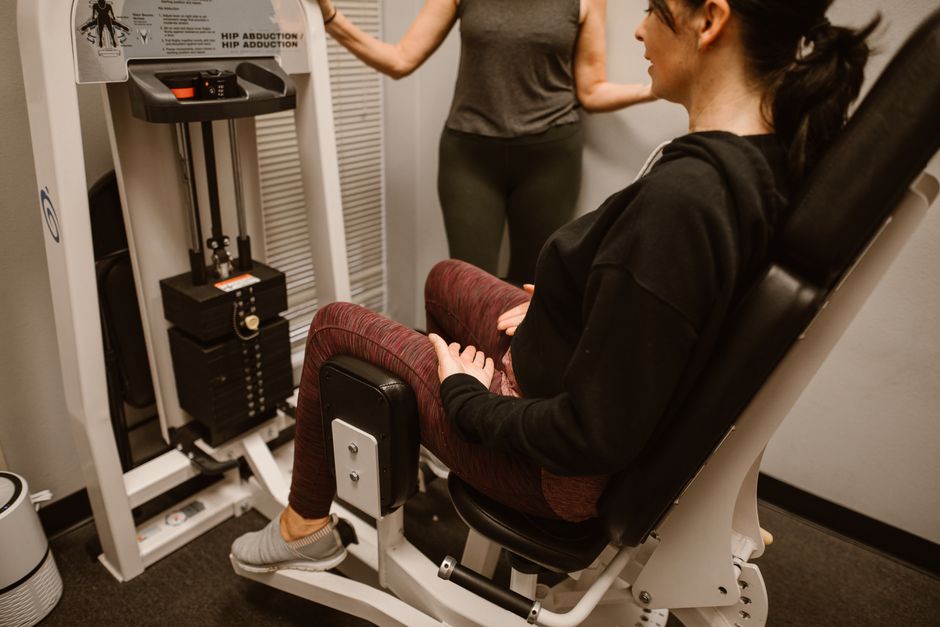
The hip abductor muscles are responsible for lifting your leg away from your body’s midline. The primary muscles worked are the gluteus medius, gluteus minimus, and tensor fasciae latae. These muscles sit on the side of your hip and upper thigh, and they control side-to-side leg movements as well as stabilize your pelvis when you stand or walk on one leg.
What is the main muscle worked by the hip abductor?
The main muscle worked is the gluteus medius. This muscle lies on the outer surface of your pelvis, just below the large gluteus maximus. It is the primary muscle that lifts your leg sideways. When you perform a side-lying leg raise or a standing hip abduction, the gluteus medius does most of the work. Research consistently shows this muscle is the strongest hip abductor and is essential for single-leg stability during walking and running.
What other muscles assist during hip abduction?
Two other muscles play important supporting roles. The gluteus minimus sits underneath the gluteus medius and helps with the same movement, especially when the hip is extended. The tensor fasciae latae is a small muscle on the front of your hip that also contributes to hip abduction and helps stabilize your knee. Both of these muscles work together with the gluteus medius to produce smooth, controlled side-to-side motion. Some studies also note that the piriformis—a deep rotator of the hip—can assist in abduction when the hip is flexed, though its main job is rotation, not lifting the leg out to the side.
What muscles does the hip abductor work?
When you perform hip abduction exercises, you are working three main muscles in a coordinated pattern. The gluteus medius is the primary mover and the largest abductor. The gluteus minimus acts as a secondary abductor and also helps internally rotate the thigh. The tensor fasciae latae assists in both abduction and flexion of the hip, and it also tensions the IT band on the outside of your thigh. Together, these muscles form the hip abductor group. They are all activated during exercises like side-lying leg raises, standing cable hip abductions, and lateral band walks. Knowing exactly which muscles are involved helps you strengthen them correctly and avoid compensations from other muscle groups.




How do these muscles contribute to movement and stability?
The hip abductors are not just for lifting your leg sideways. Their most important job is stabilizing your pelvis when you stand on one leg. Every time you take a step, your weight shifts to one leg, and the abductors on that side contract to keep your pelvis level. If these muscles are weak, your opposite hip will drop—a sign called a Trendelenburg gait. This can lead to poor walking mechanics, lower back strain, and increased stress on your knees. Strong hip abductors also help control the position of your thigh and knee during activities like running, squatting, and climbing stairs. Without adequate abductor strength, your knees may drift inward, which some evidence links to patellofemoral pain and ACL injury risk.
Why is strengthening these muscles important?
Strong hip abductors contribute to overall lower-body function and injury prevention. Research suggests that weakness in the gluteus medius is associated with conditions like iliotibial (IT) band syndrome, patellofemoral pain syndrome, and hip bursitis. However, it is important to understand the limits of the evidence—most studies show an association, not a proven cause-and-effect relationship. Strengthening the abductors is a common part of rehabilitation for these conditions, and many clinicians recommend it because the muscle group is critical for joint alignment and load distribution. For healthy individuals, maintaining balanced hip abductor strength supports better sports performance and everyday mobility as you age. There is no single recommended dose of exercise, but consistent, controlled movements performed a few times per week are generally advised.
What exercises target the hip abductor muscles?
A variety of exercises effectively work the hip abductors. The most fundamental is the side-lying leg raise: lie on your side with legs stacked, lift the top leg toward the ceiling without rotating your hips. Standing hip abduction using ankle weights or a cable machine also directly targets the gluteus medius. Lateral band walks—stepping sideways against a resistance band placed just above your knees—are popular because they also engage the gluteus medius in a weight-bearing position. Clamshells (side-lying with knees bent) emphasize the gluteus medius more than the tensor fasciae latae and are often used in rehab. For each exercise, focus on controlled movement and avoid using momentum. If you feel the front of your hip (the tensor fasciae latae) taking over too much, you may need to adjust your form or minimize external rotation of the leg.
What common mistakes weaken hip abductor exercises?
One common mistake is rolling your hips back during side-lying leg raises, which shifts the load away from the gluteus medius and onto the lower back or hip flexors. Another error is using too much momentum—quick, jerky lifts reduce muscle activation and increase injury risk. People also often allow the standing leg to drift outward during single-leg exercises, which means the abductors are not working as hard. To get the most from your effort, keep your pelvis stable, move slowly through a full range of motion, and stop when you cannot maintain proper alignment. Consistency matters more than weight—performing 10 to 15 controlled repetitions with good form is more effective than heavy loads with poor technique.
How do hip abductor muscles change with age?
Like many muscles, the hip abductors naturally weaken with age if not maintained. Loss of strength in the gluteus medius contributes to balance problems and a higher fall risk in older adults. Because these muscles are crucial for lateral stability, their decline can make walking on uneven surfaces more difficult. Regular strengthening exercise—even simple side-stepping or standing leg lifts—can preserve abductor function. Some evidence indicates that targeted resistance training improves abductor strength in people over age 50, but the specific benefits for fall prevention are still being studied. Maintaining these muscles throughout life supports independence and mobility.
Frequently Asked Questions
Which muscle is the primary hip abductor?
The gluteus medius is the primary muscle responsible for hip abduction. It lifts the leg sideways and stabilizes the pelvis during single-leg stance.
What does the gluteus medius do besides abduct the hip?
It also helps rotate the thigh outward and stabilizes the pelvis when you stand or walk on one leg. Its role in balance is critical for normal gait.
Can weak hip abductors cause knee pain?
Some research suggests a link between weak hip abductors and knee conditions like patellofemoral pain and IT band syndrome, but the evidence is not definitive. Strengthening these muscles is often part of treatment plans for knee pain.
How often should you exercise the hip abductors?
There are no strict guidelines, but performing 2 to 3 sessions per week with 2 to 3 exercises each session is common. Focus on controlled movements and listen to your body.
