
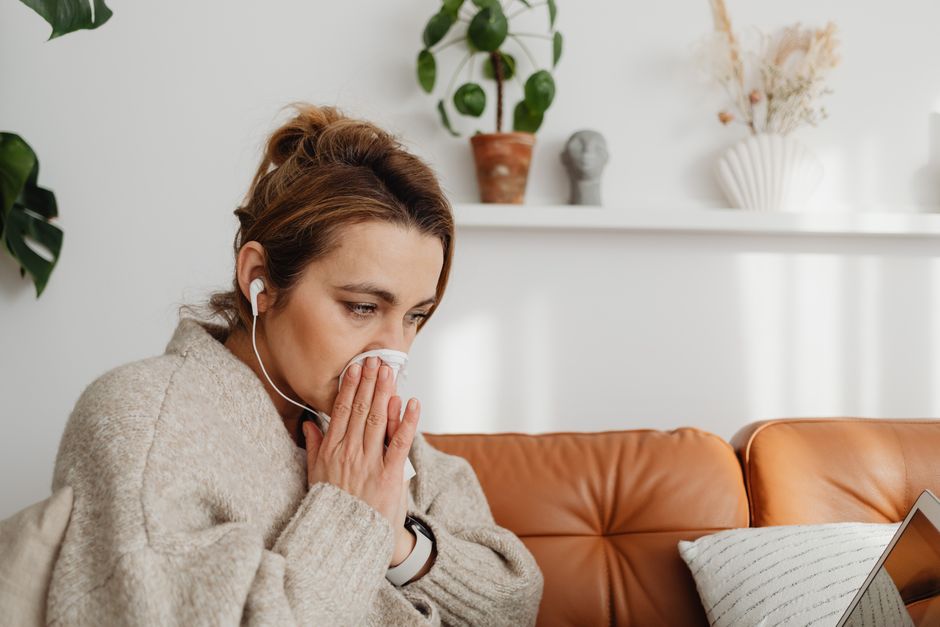
A sneeze is a reflex your body uses to clear irritants from the nasal passages. Nerves lining your nose detect something foreign — dust, pollen, a virus, or even a sudden change in temperature — and send a signal to the brainstem. The brainstem triggers a coordinated burst of muscle movements that forces air and mucus out through your nose and mouth at high speed.
That is the short answer. The longer answer involves several different triggers, a few surprising ones, and some popular beliefs about sneezing that do not hold up under scrutiny.
What Makes You Sneeze?
The sneeze reflex starts in the trigeminal nerve, which carries sensation from your face and nasal cavity to the brain. When something irritates the nasal lining, this nerve fires. The brainstem responds by coordinating a sequence: a deep breath in, closure of the vocal cords, a rapid buildup of pressure in the chest, and then a sudden release. The result is the explosive expulsion of air that we call a sneeze.
This reflex exists for a reason. It helps remove irritants before they can travel deeper into the respiratory tract. Mucus and trapped particles get launched out with the air.
The most common triggers fall into a few categories:
- Physical irritants — dust, smoke, strong odors, pollution, and dry air
- Allergens — pollen, pet dander, mold spores, and dust mites
- Infections — colds, flu, and other respiratory viruses inflame the nasal lining and make it more sensitive
- Temperature changes — stepping from a warm room into cold air can trigger sneezing in some people
- Bright light — a phenomenon called the photic sneeze reflex, which affects a minority of people
Each of these triggers ultimately activates the same reflex pathway. The difference is what sets it off.
Why Do Some People Sneeze in Bright Sunlight?
The photic sneeze reflex is a real, well-documented phenomenon. It causes sneezing when a person moves from darkness or dim light into bright light, especially sunlight. Estimates suggest it affects roughly one in four people, though the exact percentage varies by study population.
The mechanism is not fully understood. One leading explanation involves crossed signals between the optic nerve and the trigeminal nerve in the brainstem. These two nerves run close together, and bright light may cause the trigeminal nerve to fire inappropriately, triggering a sneeze.
This trait appears to run in families, which suggests a genetic component. It is harmless. It is not a sign of any underlying disease.
Can You Sneeze in Your Sleep?
You generally cannot sneeze while you are asleep. During sleep, the brainstem suppresses many reflexes, including the sneeze reflex. The trigeminal nerve may still detect an irritant, but the brain does not produce the full sneeze response.
That said, you can sneeze as you are falling asleep or waking up. The reflex returns as the brain transitions between sleep stages. Some people also sneeze immediately upon waking, particularly if they have allergies and the nasal passages have accumulated mucus overnight.
If someone reports sneezing during sleep, they may be describing a sneeze that happened during a brief awakening they do not remember. True sneezing during deep sleep is not considered possible.




What Happens in Your Body During a Sneeze?
A sneeze involves a precise sequence of events that happens in about a second. Understanding the steps explains why sneezes feel the way they do — and why holding them in can be risky.
The process unfolds like this:
- Irritant contacts the nasal lining
- Trigeminal nerve sends a signal to the brainstem
- Brainstem activates the sneeze center
- You take a deep breath
- Vocal cords close and pressure builds in the chest
- Vocal cords open suddenly and air bursts out
The speed of a sneeze varies. Some research has measured the airflow exiting the mouth at speeds comparable to a strong gust of wind, though estimates differ across studies. What is clear is that the pressure generated inside the respiratory tract during a sneeze is substantial.
This is why holding a sneeze by pinching your nose and closing your mouth is not a good idea. The pressure has nowhere to go and can be redirected into the eustachian tubes, which connect the throat to the middle ear. In rare cases, this has caused ear damage or even a ruptured eardrum. There are also case reports of more serious injuries, though these are uncommon.
The safest approach is to sneeze into a tissue or your elbow, or to let the sneeze happen naturally while covering your mouth and nose.
Is Sneezing a Sign of Allergies or a Cold?
Sneezing can be a symptom of both, but the pattern often differs. Allergic sneezing tends to come in bursts, often several sneezes in a row, and is accompanied by itchy, watery eyes and a clear runny nose. Cold-related sneezing is more likely to be accompanied by a sore throat, congestion that thickens over time, and sometimes a mild fever.
Allergic rhinitis — the medical term for allergy-related nasal inflammation — affects a large number of people. The sneezing happens because the immune system mistakes a harmless substance like pollen for a threat and releases histamine. Histamine irritates the nasal lining and triggers the reflex.
Viral infections cause sneezing through a different route. The virus inflames the nasal passages directly, making the nerve endings more sensitive to normal stimuli. That is why people with colds often sneeze more in the early days of illness.
If sneezing is persistent, happens mostly in specific environments or seasons, and comes with itchy eyes, allergies are more likely. If it comes with body aches, fatigue, and a sore throat, a viral infection is more likely.
What Does It Mean If You Sneeze a Lot?
Frequent sneezing usually points to ongoing irritation or an allergic response. The most common causes are environmental allergens, chronic nasal inflammation, and structural issues inside the nose.
Some people have a condition called non-allergic rhinitis. This causes chronic sneezing, runny nose, and congestion without an allergic trigger. It can be set off by strong smells, temperature changes, or certain medications. The mechanism is different from allergies but the sneezing is just as real.
Medication-related sneezing is also possible. Some drugs, including certain blood pressure medications and nasal decongestant sprays used for more than a few days, can cause rebound congestion and sneezing.
If sneezing is severe enough to interfere with daily life, a doctor can help identify the cause. Allergy testing, a nasal exam, and a review of medications are common steps.
Does Sneezing Mean You Are Sick?
Not necessarily. Sneezing is a normal reflex that happens in healthy people every day. It only becomes a concern when it is persistent, accompanied by other symptoms, or clearly linked to an illness.
A single sneeze or a brief burst after walking into a dusty room is not a sign of disease. It is your nose doing its job.
When sneezing comes with fever, facial pain, thick discolored mucus that lasts more than a week or two, or difficulty breathing, that is worth a medical evaluation. These can signal a sinus infection, a more serious respiratory condition, or another issue that needs attention.
Can You Stop a Sneeze Before It Happens?
Sometimes you can interrupt a sneeze if you catch it early. The reflex builds over a second or two, and some people can short-circuit it by pressing a finger firmly under the nose, pinching the bridge of the nose, or pressing the tongue against the roof of the mouth.
These tricks do not work for everyone, and they are not recommended as a regular habit. Suppressing a sneeze occasionally is generally harmless, but repeatedly forcing sneezes to stop can cause discomfort or, in rare cases, ear problems.
If you feel a sneeze coming on and want to avoid it — for example, during a quiet meeting — the safest approach is to cover your mouth and nose and let it out as quietly as you can. Trying to hold it in completely is not worth the risk.
Frequently Asked Questions
What makes you sneeze when you look at the sun?
This is called the photic sneeze reflex, and it happens because signals from the optic nerve may cross over to the trigeminal nerve in the brainstem. It affects roughly one in four people and is harmless.
Can you sneeze with your eyes open?
Yes, you can sneeze with your eyes open. The idea that your eyes will pop out if you sneeze with them open is a myth — the muscles and structures around the eyes are strong enough to keep them in place.
Why do I sneeze so much in the morning?
Morning sneezing is common in people with allergies because mucus and allergens accumulate in the nasal passages overnight. As you move around and breathe, the irritation triggers the reflex.
Is it bad to hold in a sneeze?
Yes, it can be. Holding in a sneeze traps pressure inside your respiratory tract, which can rarely cause ear damage or other injuries. It is safer to let the sneeze out while covering your mouth and nose.
