
Your gut runs on a simple rule: what goes in shapes what comes out. Fiber, fluid, and the trillions of bacteria living in your colon all pull on the same levers that control how often you poop and how easily it passes. Get those levers right and your gut settles into a rhythm. Get them wrong and you feel it.
The phrase “poop foods” is really a question about two things. Which foods add bulk and speed to your stool, and how does water turn that bulk into something your body can move. Water alone does not make you poop. Fiber alone can actually make constipation worse if you are not drinking enough. The two work as a pair.
Here is the short version. Fiber adds bulk and holds water in your stool. Water keeps that bulk soft. Your gut bacteria ferment some of that fiber and produce compounds that speed up the muscles in your colon. All three have to be working together for regular bowel movements.
What Makes You Poop Foods Water Your Gut?
Fiber and water work together because fiber is what traps the water in your stool. Insoluble fiber, the kind in wheat bran and vegetable skins, does not dissolve. It adds bulk and gives your colon something to push against. Soluble fiber, found in oats, beans, and apples, forms a gel when it mixes with water. That gel is what keeps stool soft and easier to pass.
The water part is not optional. If you eat a lot of fiber without drinking enough fluid, the fiber pulls water from your body into your colon but there may not be enough to go around. The result can be harder, bulkier stool that is more difficult to pass, not less. This is why some people feel worse, not better, when they suddenly add fiber to their diet.
There is a second layer most people miss. Your colon is not a passive tube. It is lined with bacteria that ferment certain fibers and release short-chain fatty acids, mainly butyrate, acetate, and propionate. These compounds feed the cells lining your colon and influence how the muscle wall contracts. Some research suggests they help regulate the speed at which contents move through the gut. That is part of why fiber-rich diets tend to support regularity beyond just adding bulk.
How Much Water Do You Actually Need for Regular Bowel Movements?
There is no single number that guarantees regular bowel movements, and no clinical guideline sets a water target specifically for preventing constipation. General fluid guidance for adults is often described in terms of roughly 2 to 3 liters of total fluid per day from all sources, including food, but individual needs vary widely with body size, activity, climate, and health status.
What the evidence does support is that dehydration is a common contributor to hard stools. When your body is short on fluid, your colon absorbs more water from stool to conserve it. The stool becomes drier and harder to pass. This is a well-established mechanism, not a theory.
Practical signs you may be under-hydrated include dark yellow urine, infrequent urination, and dry mouth. Pale yellow urine is a reasonable everyday marker for most healthy adults.
One clarification worth knowing: drinking more water than your body needs does not force a bowel movement. Extra fluid beyond what your body requires is simply excreted. Water helps when you are genuinely short on it. It does not act like a laxative.
Which Foods Actually Make You Poop?
Foods that support bowel movements share one feature: they deliver fiber along with water. The strongest examples combine both.
- Beans and lentils. High in soluble and insoluble fiber. They also contain fermentable carbohydrates that gut bacteria break down, which can increase gas initially but often settles with regular intake.
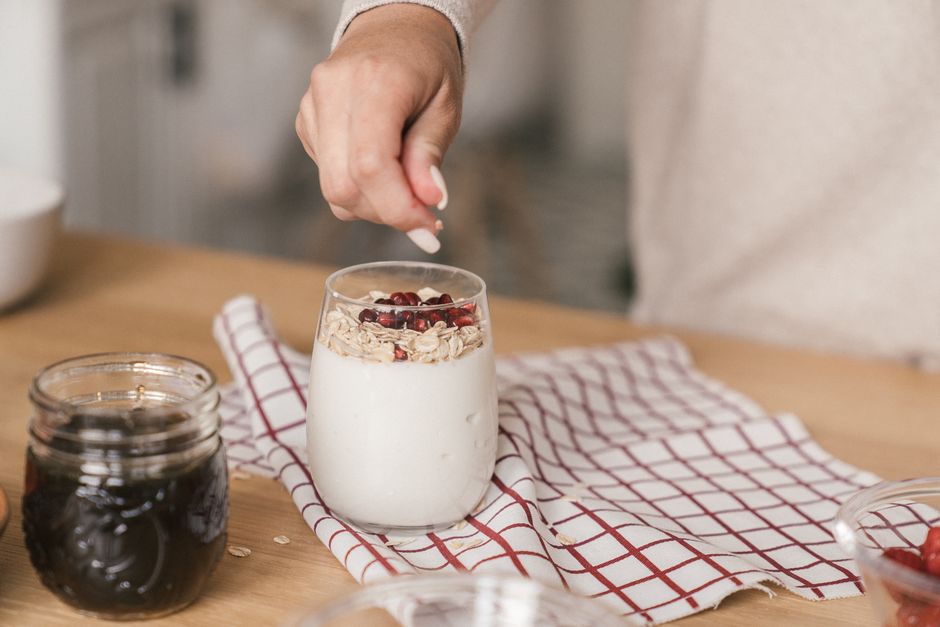
- Oats. Rich in beta-glucan, a soluble fiber that forms a gel and helps keep stool soft.
- Prunes. Contain fiber plus sorbitol, a sugar alcohol that draws water into the bowel. Prunes have reasonably consistent evidence behind them for relieving mild constipation.
- Leafy greens and vegetables. High water content plus fiber. Spinach, broccoli, and cabbage all contribute both.
- Fruit with skin. Apples, pears, and berries deliver fiber and fluid together. The skin carries much of the insoluble fiber.
- Whole grains. Wheat bran is one of the more effective insoluble fiber sources for adding bulk.
- Water-rich foods. Cucumber, watermelon, and soups add fluid alongside nutrients.
What these foods have in common is not a magic ingredient. It is fiber plus moisture, arriving together in a form your gut can use.



Why Does Fiber Sometimes Make Constipation Worse?
Fiber can backfire, and this is more common than most people realize. The usual reason is adding too much fiber too fast without enough fluid. Your gut needs time to adjust, and your fluid intake needs to rise alongside your fiber intake.
A second reason is the type of fiber. Insoluble fiber adds bulk. For someone with slow transit constipation, more bulk can mean more discomfort if the colon is already struggling to move contents along. Some clinicians recommend focusing on soluble fiber first in that situation, since it holds water and softens stool rather than simply adding volume. That is common clinical practice rather than a strongly established rule from large trials.
If increasing fiber makes things worse rather than better, the sensible move is to slow down, increase fluid, and talk to a clinician rather than pushing through.
Does Gut Bacteria Play a Role in Regularity?
Yes, and it is a meaningful one. Your colon hosts a dense community of bacteria that ferment fiber your small intestine cannot digest. The short-chain fatty acids they produce do more than feed the colon lining. Evidence indicates they influence gut motility, the muscular contractions that move contents along.
This helps explain why a diverse, fiber-rich diet tends to support regularity over time, while a diet low in fermentable fiber may not. It also explains why fiber from whole foods is generally preferred over isolated fiber supplements. Whole foods deliver a mix of fiber types that feed a broader range of bacteria.
Probiotic supplements are a different story. The evidence for specific probiotic strains improving constipation is mixed. Some studies show modest benefit for certain strains, others show none. No single probiotic is established as a reliable fix for constipation in the general population.
What Habits Support a Regular Gut Beyond Food and Water?
Diet and fluid get most of the attention, but other factors carry real weight. Physical activity stimulates the muscles of the colon and is associated with more regular bowel movements. Even light activity like walking helps.
Routine matters too. Your colon has its own rhythm, and ignoring the urge to go when it arrives can contribute to constipation over time. Responding to the signal rather than delaying it is a simple habit with a sound physiological basis.
Certain medications, including some pain relievers, antidepressants, and iron supplements, are well-known contributors to constipation. So are some medical conditions, including thyroid problems and irritable bowel syndrome. If constipation is new, persistent, or comes with pain, blood in the stool, or unexplained weight loss, that warrants medical evaluation rather than dietary tweaks.
How Long Does It Take to See a Difference?
Bowel habits respond to diet changes gradually. Most people notice some shift within a week or two of consistently increasing fiber and fluid, but full adjustment can take longer, especially if you are rebuilding gut bacteria over time. There is no fixed timeline that applies to everyone.
Sudden dramatic changes are not the goal. Steady, modest increases in fiber-rich foods alongside adequate fluid are more likely to help than a rapid overhaul that leaves you bloated and discouraged.
Frequently Asked Questions
Does drinking water make you poop?
Water helps stool stay soft and easier to pass, but it does not directly trigger a bowel movement. It matters most when you are genuinely dehydrated, since dehydration causes the colon to pull more water from stool.
What foods make you poop fast?
Prunes, beans, and high-fiber vegetables are among the foods most consistently linked to faster bowel movements. Prunes contain both fiber and sorbitol, which draws water into the bowel.
Why does fiber make me constipated instead of helping?
Fiber without enough fluid can harden stool rather than soften it. Adding fiber too quickly also gives your gut less time to adjust, so slow increases with more water usually work better.
How much water should I drink to avoid constipation?
No clinical guideline sets a specific water target for preventing constipation. General adult fluid guidance is often described as roughly 2 to 3 liters of total fluid daily from all sources, but individual needs vary.
