
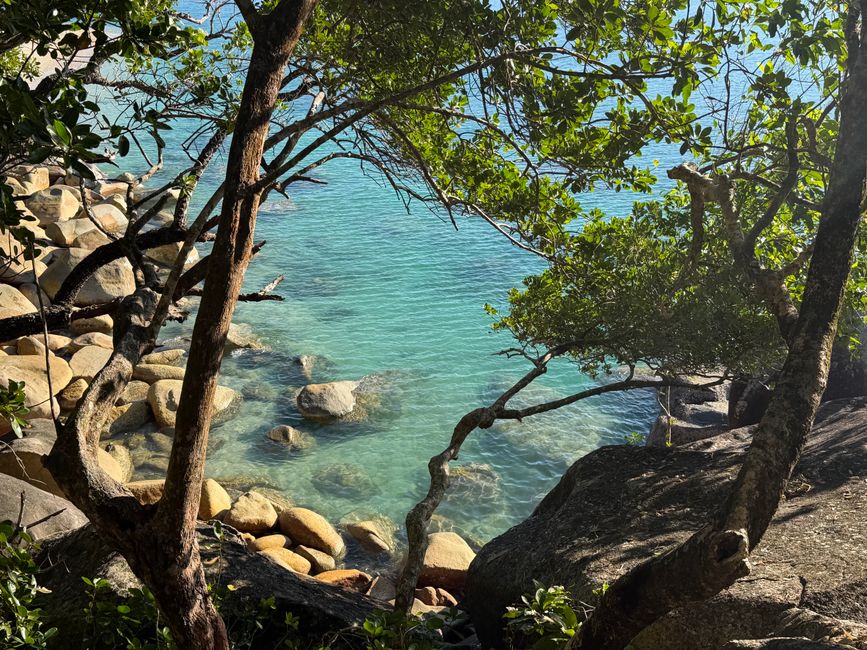
The Great Barrier Reef is the largest living structure on Earth. It stretches more than 1,400 miles along the northeast coast of Australia and is built by billions of tiny animals called coral polyps. No other reef system on the planet comes close to its size, and no other living structure can be seen from space.
What Makes The Great Barrier Reef So Unique?
Its scale is the first thing that sets it apart. The reef is not one reef but a network of roughly 3,000 individual reefs and about 900 islands spread across an area of approximately 133,000 square miles. For comparison, that is larger than the entire country of Italy.
The structure is biological, not geological. Every part of it was built by living organisms. Coral polyps — small animals related to jellyfish and sea anemones — pull calcium carbonate from seawater and deposit it as a hard skeleton. Over thousands of years, generation after generation of these skeletons pile up and form the reef framework.
What most people do not realize is that the living coral is only a thin skin on top. The colorful part of a reef is often just the upper few millimeters of a much larger dead skeleton underneath. The structure beneath is built from the accumulated remains of corals that lived and died over many thousands of years.
The reef also hosts an unusual range of life. It supports more than 1,500 species of fish, around 400 species of hard coral, and dozens of species of marine mammals, reptiles, and birds. Some species found there live nowhere else.
How Was the Great Barrier Reef Formed?
The reef sits on a shallow continental shelf off the coast of Queensland. Corals need specific conditions to grow: warm water, clear water, sunlight, and relatively stable temperatures. This stretch of ocean provides all of those.
The current reef structure began forming after the last ice age, when sea levels rose and flooded the continental shelf. Corals colonized the newly submerged higher ground along the shelf edge. As sea levels stabilized roughly 6,000 to 8,000 years ago, the reef took on something close to its modern shape.
Growth is slow. Many branching corals grow only a few centimeters per year. Massive corals like brain coral may add less than a centimeter of skeleton annually. A reef the size of the Great Barrier Reef represents an enormous amount of time — the framework has accumulated over thousands of years, and the underlying limestone foundations date back much further.
This slow growth rate matters for recovery. When coral dies, the skeleton remains, but rebuilding living tissue takes years to decades depending on the species. That is one reason damage to reefs is not quickly undone.
Why Is the Great Barrier Reef So Biologically Rich?
Coral reefs cover less than 1 percent of the ocean floor but support roughly a quarter of all known marine species. The Great Barrier Reef sits at the extreme end of that pattern because of its size and its range of habitats.
It contains shallow lagoons, deep outer reefs, seagrass beds, mangrove forests, and sandy cays. Each habitat supports different communities of organisms. A fish that lives in a mangrove nursery as a juvenile may spend its adult life on the outer reef. This connectivity between habitats is part of why the system supports so much life.
The reef also sits at a meeting point of ocean currents. Warm water from the Coral Sea and cooler, nutrient-rich water from deeper areas mix across the shelf. That mixing supports plankton, which feeds the food web from the bottom up.
Symbiosis is central to how the whole system works. Reef-building corals live in partnership with microscopic algae called zooxanthellae that live inside their tissues. The algae photosynthesize and provide the coral with most of its energy. In return, the coral provides shelter and nutrients. This relationship is what allows corals to build massive structures in water that is otherwise low in nutrients.





What Threatens the Great Barrier Reef?
Mass coral bleaching is the most visible threat. When water gets too warm, corals expel their zooxanthellae. Without those algae, the coral loses its color and its main energy source. If the water cools quickly, the coral can recover. If the heat persists, the coral starves and dies.
Bleaching events on the Great Barrier Reef have become more frequent and more severe. Major events have occurred repeatedly in recent decades, and back-to-back events have left less time for recovery between them. The pattern is consistent with warming ocean temperatures.
Other pressures add up:
- Ocean acidification, which makes it harder for corals to build calcium carbonate skeletons
- Nutrient and sediment runoff from coastal land, which can smother corals and fuel algae that compete with them
- Tropical cyclones, which physically break coral structures
- Crown-of-thorns starfish outbreaks, which consume coral tissue
- Marine heatwaves, which drive bleaching
These stressors interact. A reef weakened by bleaching is more vulnerable to disease. A reef already stressed by runoff may recover more slowly from a cyclone. The combined effect is often worse than any single threat alone.
Can the Great Barrier Reef Recover?
Corals can recover from bleaching if conditions improve in time. Some reefs have shown regrowth after disturbances. But recovery depends on how severe the damage was, how often disturbances occur, and whether new coral larvae can reach the damaged area.
Recovery is not guaranteed. When bleaching events happen close together, there is not enough time for corals to regrow and reproduce before the next event. This is the core concern with the current pattern of repeated marine heatwaves.
Some interventions are being studied and tested. These include coral breeding programs, assisted migration of heat-tolerant corals, and shading or cooling techniques at small scales. None of these approaches has been shown to work at the scale of the entire reef system. Researchers generally describe them as tools that might help at local levels, not as solutions to warming ocean temperatures.
The most important factor for the reef’s long-term future is the trajectory of ocean temperatures. Coral reefs have survived past periods of warming, but those changes occurred over much longer timeframes than what is happening now.
How Does the Great Barrier Reef Compare to Other Reefs?
The Great Barrier Reef is not the only large reef system. The Mesoamerican Barrier Reef off Central America, the Coral Triangle in Southeast Asia, and the Red Sea reefs are all significant. But none match the Great Barrier Reef in total extent.
The Coral Triangle, which spans Indonesia, the Philippines, and nearby waters, has higher coral diversity than the Great Barrier Reef. It contains more coral species overall. What the Great Barrier Reef has is sheer size and the fact that it is a single connected system along one continental shelf.
This comparison matters because it shows that uniqueness is not only about biodiversity. The Great Barrier Reef is unique in its scale, its structure, and its status as the largest structure ever built by living organisms.
Why Does the Great Barrier Reef Matter Beyond Australia?
Reefs protect coastlines from wave damage and erosion. They support fisheries that feed millions of people. They generate tourism revenue. And they serve as early warning systems for ocean health.
When reefs bleach on a large scale, it signals that ocean temperatures have moved outside the range corals can tolerate. Because corals are sensitive to temperature, they respond faster than many other marine organisms. What happens to reefs is often a preview of what happens to other ocean ecosystems.
The Great Barrier Reef is also a scientific resource. Its size and relative accessibility have made it one of the most studied reef systems in the world. Much of what is known about coral biology, reef ecology, and bleaching comes from research conducted there.
Its future depends on decisions made far from its waters. Local management can address runoff, fishing pressure, and starfish outbreaks. But ocean temperature is a global variable, and that is the one corals cannot adapt to quickly enough on their own.
Frequently Asked Questions
Is the Great Barrier Reef the largest living structure on Earth?
Yes. It is the largest structure built by living organisms, stretching over 1,400 miles along Australia’s northeast coast. It is also the only living structure visible from space.
How many species live in the Great Barrier Reef?
It supports more than 1,500 species of fish, around 400 species of hard coral, and dozens of marine mammal, reptile, and bird species. Some of these species are found nowhere else on Earth.
What causes coral bleaching on the Great Barrier Reef?
Bleaching happens when water temperatures rise too high and corals expel the microscopic algae living inside their tissues. Without those algae, corals lose their color and their main energy source, and they can die if the heat persists.
Can the Great Barrier Reef recover from bleaching?
Corals can recover if water temperatures return to normal quickly enough. But repeated bleaching events close together leave too little time for recovery, and recovery is not guaranteed.
