
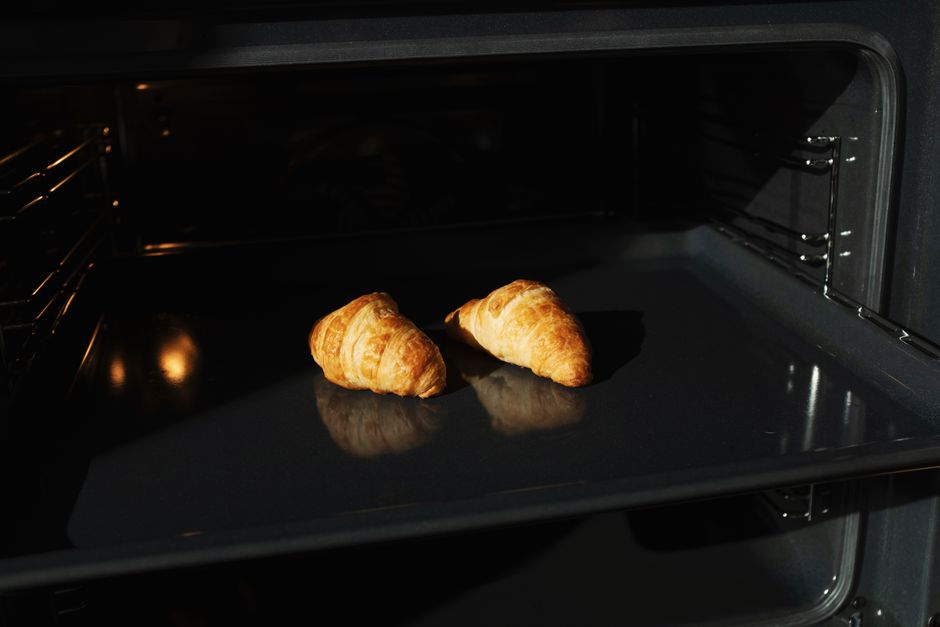
Crispy food is the result of one thing: water leaving a surface fast enough that the outer layer dries out, hardens, and turns brittle before the inside overcooks. Heat drives moisture out of the food’s surface, the structure collapses into a dry, porous network, and the starches, proteins, or sugars in that layer brown and stiffen. When you bite in, that thin rigid shell shatters instead of bending. That snap is the whole story.
Understanding why some foods crackle and others turn soggy explains a lot — from why a hot pan beats a warm one to why a paper towel ruins leftover fried chicken. None of it requires a food science degree.
What Actually Happens to Food When It Turns Crispy?
Two processes run at the same time. The first is dehydration: water on and just under the surface evaporates, and the cells there shrink and pull tight. The second is browning, where heat triggers chemical reactions that build new flavor compounds and reinforce that dried structure.
The most studied of these is the Maillard reaction, named after the French chemist Louis-Camille Maillard. It happens when amino acids (the building blocks of protein) react with certain sugars under heat. It is responsible for the brown crust on toast, roasted meat, and fried chicken. It generally gets going well above the boiling point of water, which is 212°F (100°C) at sea level.
Caramelization is a separate reaction. It involves sugars alone, without proteins, breaking down under heat. It gives onions their deep brown color and creates the sweetness in caramel. Both reactions need heat and low moisture. Neither works well when the surface is wet.
Water is the enemy of crispiness. As long as a surface is wet, its temperature cannot climb much past 212°F — the energy goes into boiling water off instead of browning the food. Only once the surface dries can it heat further and start to crisp.
Why Does Frying Make Food So Crispy?
Deep frying works because hot oil transfers heat to food far more efficiently than hot air does. Oil can be heated well above water’s boiling point — typical frying temperatures are in the range of 325°F to 375°F (about 160°C to 190°C). When food hits that oil, surface water boils off violently. You can see it as the bubbles.
As the water leaves, the surface dries and the oil begins to brown the outer layer. The food’s own moisture is what keeps the inside from burning: as long as water is still steaming out, the interior stays near 212°F. This is why frying is self-limiting in a way baking is not. Once the water runs out, the food starts to burn quickly.
This also explains why oil temperature matters so much. Oil that is too cool does not drive off water fast enough, so the food sits there absorbing oil and turns greasy instead of crisp. Oil that is too hot browns the outside before the inside cooks. The bubbles you see are a rough gauge — heavy bubbling means water is still escaping, and slowing bubbles mean the food is nearly done.
What Makes Baked and Air-Fried Food Crisp?
Convection and radiant heat do the same job as oil, just more slowly. A hot oven or air fryer surrounds food with moving hot air that pulls moisture off the surface. The surface dries, then browns.
The catch is that air is a much weaker heat carrier than oil. That is why oven-baked versions of fried foods often come out drier or less evenly crisp. An air fryer is essentially a small, powerful convection oven. It moves hot air fast and close to the food, which speeds up drying. It does not fry in the traditional sense — it bakes with intense airflow.
A light coating of oil helps here. Oil conducts heat into the surface and helps it brown, even in a hot-air environment. Without any fat, starchy surfaces can dry out and harden before they brown, which is why some baked goods taste tough rather than crisp.


Why Does Crispy Food Get Soggy?
Because moisture always moves from wet to dry. A crisp crust is dry. The inside of most foods is not. Given time, water migrates outward from the moist interior into the dry crust, and the crust softens.
Trapped steam is the other culprit. If you seal hot crispy food in a container, the water vapor it releases has nowhere to go. It condenses on the surface and soaks back in. That is why a paper bag works better than a sealed box for takeout fries — the bag lets steam escape.
This is also why reheating rarely restores crispiness. Reheating drives off some surface water, but if the food has already absorbed moisture throughout, you are fighting the same migration problem again. A dry, high heat source helps more than a microwave, which heats by exciting water molecules and tends to add moisture rather than remove it.
Why Do Some Coatings Crisp Better Than Others?
Starch is the workhorse of crispy coatings. When a starch-based batter or breading dries and heats, its structure sets into a rigid, brittle network. Different starches behave differently. Some form stronger, crisper films than others, and some brown more readily.
Protein coatings, like the egg wash under breadcrumbs, help the coating stick and add to browning through the Maillard reaction. Fat in a coating can improve browning and add richness, but too much can make the coating soft.
There is a useful trick in commercial and home kitchens alike: a small amount of a starch slurry or a light dusting of starch before frying can create a thinner, crisper shell than a thick batter. Thick wet batters hold more water, and that water has to leave before the coating can crisp. Thin coatings dry faster.
Does Crispy Always Mean Fried?
No. Crispiness comes from structure and dryness, not from oil specifically. You can get a crisp result from roasting, broiling, grilling, toasting, or high-heat baking. What matters is that the surface dries and the structure sets before the interior dries out too.
Some foods crisp through a different route. Puffed grains and some extruded snacks crisp because they are built with trapped air and then dried, creating a brittle foam-like structure. Puffed rice, for example, is made by heating rice under pressure so internal moisture flashes to steam and expands the grain, then drying it into a rigid, airy shell.
Temperature and time still rule everything. A surface has to reach a temperature high enough to drive off water and trigger browning, and it has to stay there long enough for the structure to set. Miss either one and you get pale, limp results.
Is Crispy Food Unhealthy?
Crispiness itself is not a health issue. How the food got crisp is what matters. Deep-fried foods absorb oil during cooking, and that adds fat and calories. The amount absorbed depends on the food, the coating, the oil temperature, and how long it cooks.
Higher-temperature cooking also produces compounds that have been studied for potential health effects. Acrylamide, for instance, forms in starchy foods like potatoes and bread when they are cooked at high heat until browned. It is found in foods like french fries, potato chips, and toasted bread. Regulatory bodies including the FDA have published guidance on reducing acrylamide in home cooking, generally by cooking starchy foods to a golden rather than dark brown color and avoiding burning.
This does not mean crispy food is inherently harmful. It means the method and degree of browning matter. A lightly toasted slice of bread and a blackened one are not the same thing. The evidence on long-term health effects of dietary acrylamide in humans is still limited and mixed, and researchers continue to study it.
Practical Takeaways
If you want crispier results, the principles are consistent:
- Dry the surface before cooking. Pat food dry. Moisture on the surface delays crisping.
- Use enough heat. Whether it is oil, an oven, or an air fryer, the surface needs to get hot enough to drive off water and brown.
- Do not crowd the pan or basket. Crowding traps steam and lowers the temperature around the food.
- Let steam escape after cooking. Use a paper bag, a wire rack, or an open container rather than a sealed one.
- Reheat with dry heat, not a microwave, if you want to recover any crispness.
None of this is complicated once you know what is happening. Crispiness is a race between drying the surface and overcooking the inside. Everything else is technique.
Frequently Asked Questions
Why does food get soggy after it cools?
As crispy food cools, moisture from the inside migrates outward into the dry crust, softening it. Trapped steam in a sealed container makes this worse by condensing on the surface.
Does an air fryer actually fry food?
No. An air fryer is a compact convection oven that circulates hot air rapidly around food. It crisps by drying and browning the surface, not by frying in oil.
Why does cold oil make food greasy?
Oil that is not hot enough does not drive off surface water quickly, so the food sits in oil and absorbs more of it. Properly heated oil causes water to boil off fast, which helps limit how much oil soaks in.
Is browned or charred food bad for you?
High-heat cooking of starchy foods can form acrylamide, a compound regulators suggest limiting by cooking to golden rather than dark brown. The human evidence on long-term health effects is still limited and mixed.
