
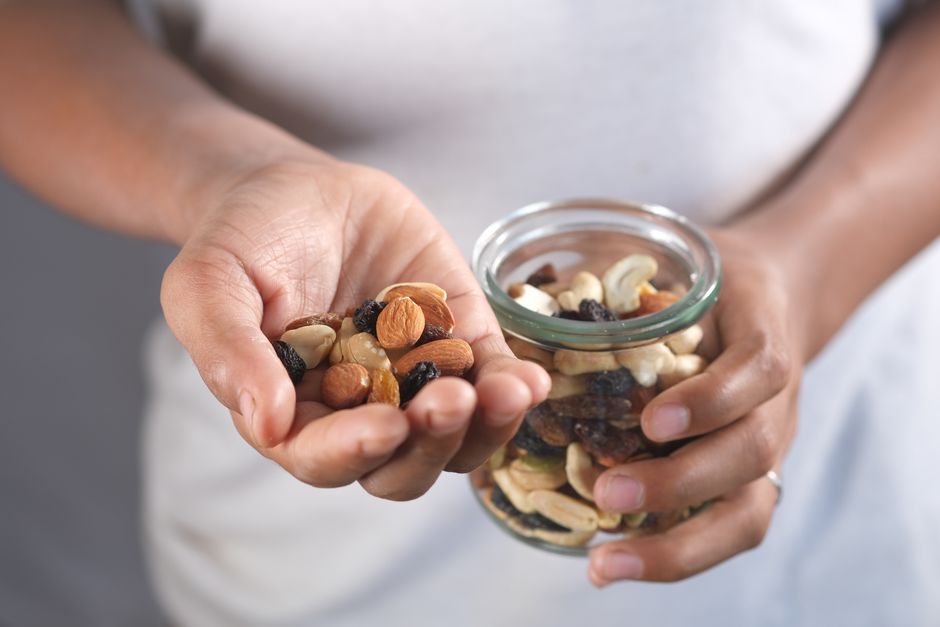
A snack that pairs protein with fiber does two jobs at once. Protein helps you feel full and supports muscle maintenance, while fiber slows digestion and steadies the release of energy. Together they tend to keep hunger away longer than a snack built mostly on refined carbs or sugar.
That combination is why a handful of nuts, a pot of plain yogurt with berries, or an apple with peanut butter feels more satisfying than a bag of chips. The protein and fiber work on different systems in your body, and the effect adds up.
What Makes A Healthy Snack Protein Fiber More?
Protein and fiber are the two nutrients most reliably linked to feeling full after eating. Protein takes longer to break down than carbohydrate, and fiber adds bulk while slowing how fast food moves through your gut. A snack with both tends to hold you over better than one with neither.
There is a second reason the pairing matters. Many high-protein snacks are also high in saturated fat or added sugar. Many high-fiber snacks are low in protein. Getting both in one snack usually means you are eating a whole food or a simple combination, not a processed bar engineered to hit a number on the label.
Fiber also feeds the bacteria in your colon. Your gut bacteria ferment certain fibers and produce short-chain fatty acids, which support the health of the colon lining. This is well established in the research. Protein does not do this, so the two nutrients are doing genuinely different work.
How Do Protein And Fiber Keep You Full?
They work through separate mechanisms, which is why combining them has a larger effect than either alone.
Protein triggers the release of satiety hormones, including GLP-1 and PYY, from your gut. These hormones signal to your brain that you have eaten. Protein also takes more energy to digest than fat or carbohydrate, though that effect is modest in the context of a whole day.
Fiber slows gastric emptying, meaning food stays in your stomach longer. Soluble fiber forms a gel-like substance in your gut that slows the absorption of sugars. This is why a high-fiber meal tends to produce a gentler rise in blood glucose than a low-fiber one.
One clarification worth making: not all fiber behaves the same way. Soluble fiber, found in oats, beans, and apples, dissolves in water and slows digestion. Insoluble fiber, found in wheat bran and vegetable skins, adds bulk and speeds transit through the gut. Both are useful, but they do different things.
Which Snacks Combine Protein And Fiber Well?
Whole foods make this easy because many of them already contain both nutrients. The table below shows approximate protein and fiber for common snack portions, based on standard USDA nutrient data.
| Snack (approximate portion) | Protein | Fiber |
|---|---|---|
| Almonds (1 oz, about 23 nuts) | 6 g | 3.5 g |
| Peanut butter (2 tbsp) with apple | 7 g | 4 g |
| Plain Greek yogurt (1 cup) with ½ cup berries | 20 g | 3 g |
| Hummus (⅓ cup) with carrot sticks | 6 g | 5 g |
| Edamame (½ cup, shelled) | 9 g | 4 g |
| Roasted chickpeas (½ cup) | 7 g | 6 g |
These are approximate figures and vary by brand and preparation. The point is not to hit an exact number. It is that real foods tend to deliver both nutrients without much effort.
Notice that the yogurt-and-berries option leans heavily on protein. The chickpeas lean more on fiber. Combining a protein food with a fiber food is often the simplest approach: cheese with whole-grain crackers, cottage cheese with fruit, or a hard-boiled egg with vegetables.
Are Protein Bars And Snacks Actually Healthy?
Many packaged protein bars contain fiber, but the source matters. Some use added isolated fibers, such as inulin or chicory root fiber, to boost the fiber number on the label. These fibers can cause bloating and gas in some people, especially in large amounts.
Added fiber is not the same as fiber from whole foods. Whole foods bring vitamins, minerals, and a mix of fiber types. An isolated fiber added to a bar delivers a narrower benefit.
Read the ingredient list rather than the front of the package. A bar with a short list of recognizable ingredients and modest added sugar is a reasonable choice when you are in a hurry. A bar with a long list of syrups and sugar alcohols is closer to candy with a health claim.
No clinical evidence currently confirms that any specific protein bar improves health outcomes. They are a convenience food, not a health food, and treating them that way keeps expectations honest.
How Much Protein And Fiber Does A Snack Need?
There is no official recommended amount of protein or fiber for a single snack. General dietary guidance for adults is roughly 25 to 38 grams of fiber per day, depending on age and sex, and protein needs vary with body weight, activity, and health status. A snack is one part of that daily total.
As a practical guide, many people find that a snack with a meaningful amount of protein and a few grams of fiber holds them until the next meal. What counts as meaningful depends on the person. Someone who is very active or recovering from illness may need more protein than someone who is sedentary.
Fiber needs to be increased gradually. Jumping from a low-fiber diet to a high-fiber one quickly can cause gas, bloating, and cramping. Drinking enough water matters too, because fiber needs fluid to move through the gut properly.
People with certain medical conditions, including those who need a low-fiber diet or who have kidney disease requiring protein restriction, should follow guidance from their clinician rather than general recommendations.
Why Does Timing And Portion Size Matter?
A snack eaten because you are genuinely hungry behaves differently from one eaten out of boredom. Hunger signals are real physiology. Habit and emotion are separate drivers, and no nutrient combination fixes those.
Portion size matters as well. A snack that is too large can blunt your appetite for a balanced meal. A snack that is too small may not hold you. There is no universal rule, but keeping a snack to a few hundred calories is a common approach among people managing weight.
Timing also plays a role. A protein-and-fiber snack in the mid-afternoon can help bridge a long gap between lunch and dinner. A snack right before a meal is less useful.
One non-obvious point: drinking water with a high-fiber snack improves how well the fiber works. Fiber absorbs water and forms bulk. Without enough fluid, a high-fiber snack can leave you feeling uncomfortably full rather than satisfied.
What Should You Look For On A Label?
Check the ratio of protein and fiber to added sugar. A snack with several grams of each and little added sugar is generally a better choice than one with a similar protein number but a lot of sugar.
Look at the fiber source. Whole grains, legumes, nuts, seeds, fruits, and vegetables are the most reliable sources. Isolated fibers can help, but they are not equivalent to fiber from whole foods.
Watch for sugar alcohols such as sorbitol, maltitol, and erythritol. They add sweetness with fewer calories, but they can cause digestive discomfort in some people, particularly in larger amounts.
Sodium is worth a glance too, especially in savory snacks like flavored nuts and roasted chickpeas, where it can climb quickly.
Frequently Asked Questions
Is a protein and fiber snack better than a piece of fruit alone?
Often yes, because fruit is mostly carbohydrate and fiber with little protein, so the addition of protein tends to keep you full longer. A piece of fruit on its own is still a healthy choice.
Can a protein and fiber snack replace a meal?
Usually not, because a snack rarely delivers the full range of nutrients a meal provides. It works best as a bridge between meals, not a replacement.
Does fiber in a protein bar count the same as fiber in beans?
Not exactly, because added isolated fibers do not carry the same mix of nutrients as whole foods. Fiber from whole foods remains the better-supported choice.
How much protein should a snack have?
There is no official recommended amount for a single snack, and needs vary by body weight, activity, and health status. A few grams to around 20 grams is a common range depending on the food.
