
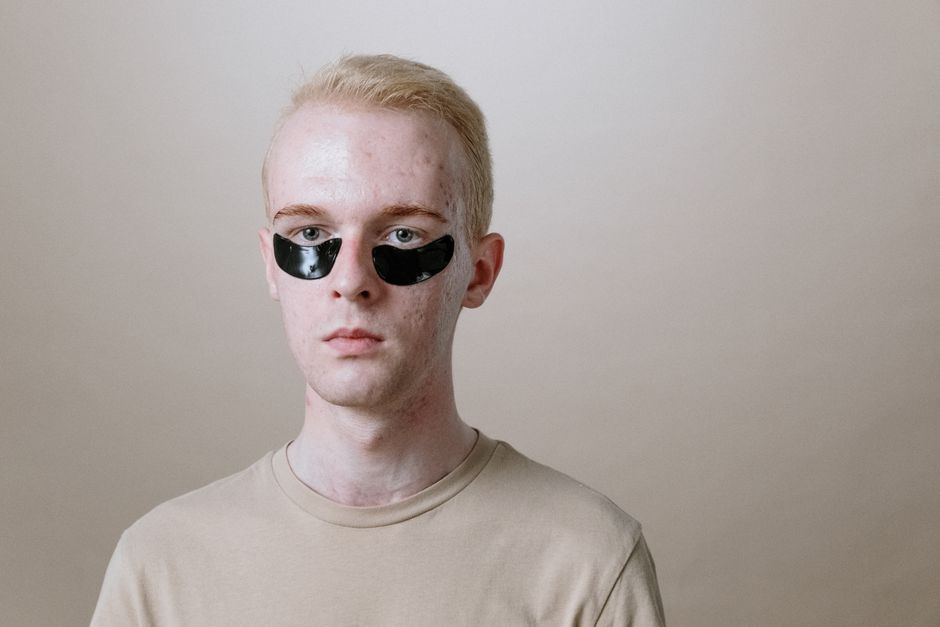
Pimples form when a hair follicle gets blocked by excess oil and dead skin cells, and the bacterium Cutibacterium acnes multiplies inside that blocked pore. The body’s immune system responds with inflammation, which is what creates the redness, swelling, and tenderness. Four things have to line up for this to happen: extra sebum production, sticky skin cells that clog the pore opening, bacterial overgrowth, and an inflammatory response. Hormones drive most of it, which is why acne clusters in the teen years and often shifts again in adulthood.
What Leads To Pimples?
Sebaceous glands sit inside hair follicles and produce sebum, an oily substance that normally travels up the follicle and out onto the skin surface. When sebum production rises and skin cells shed abnormally, the follicle opening can narrow or seal. Sebum and dead cells accumulate behind the blockage.
Cutibacterium acnes lives on human skin as part of the normal microbiome. In a blocked follicle, the environment shifts — oxygen drops, oil builds up — and the bacterium multiplies. The immune system detects this and sends inflammatory signals to the area. That inflammation is what makes a pimple red, raised, and sore.
A comedo (the medical term for a blocked pore) can stay closed and appear as a whitehead, or stay open and oxidize into a blackhead. Neither blackheads nor whiteheads are caused by dirt. The dark color of a blackhead comes from melanin oxidation, not grime.
The sequence matters: blockage comes first, bacterial activity follows, inflammation comes last. This is why treatments that target only one step often work partially. It also explains why squeezing a pimple tends to make things worse — it pushes inflammatory material deeper into surrounding tissue.
How Do Hormones Cause Acne?
Androgens — hormones present in both males and females — directly stimulate sebaceous glands to produce more sebum. At puberty, androgen levels rise sharply. Sebum output increases, and acne follows in most adolescents.
This is also why acne is not simply a hygiene problem or a diet problem. A teenager with severe cystic acne is not doing anything wrong. Their sebaceous glands are responding to a normal hormonal signal in an exaggerated way.
In adult women, hormonal fluctuations around the menstrual cycle, during pregnancy, and during perimenopause can trigger flares. Some women notice acne concentrated along the jawline and chin, which is a pattern clinicians sometimes associate with hormonal activity. Polycystic ovary syndrome (PCOS) is a condition where androgen levels can be elevated, and acne is a recognized feature of it. If adult acne appears suddenly alongside irregular periods or excess hair growth, that combination is worth discussing with a doctor.
Does Diet Cause Pimples?
The evidence on diet and acne is real but not as strong as headlines suggest. Some studies have found associations between high-glycemic diets and acne severity. High-glycemic foods raise blood sugar quickly, which triggers insulin release, and insulin can increase androgen activity and sebum production. That mechanism is plausible and has some research support, but the studies are generally small and results vary.
Dairy has also been studied. Some research suggests an association between milk consumption and acne, particularly skim milk. The proposed mechanisms involve hormones naturally present in milk or the way milk affects insulin-like growth factor 1 (IGF-1). The evidence is not strong enough to say dairy causes acne in all people, and no clinical guideline currently recommends eliminating dairy as a first-line acne treatment.
What the evidence does not support: chocolate specifically causing pimples, greasy food causing pimples, or any single food being the root cause. A 2019 review of the evidence found that the relationship between diet and acne is complex and that no single dietary factor has been confirmed as a direct cause.
If someone notices their skin flares after eating certain foods, tracking that pattern is reasonable. But cutting out entire food groups without evidence is not.
Does Stress Cause Acne?
Stress does not create acne from nothing, but it can worsen existing acne. The mechanism involves cortisol, the primary stress hormone. Cortisol can increase sebum production and promote inflammation. Stress also tends to disrupt sleep and eating patterns, both of which can affect skin.
The research here is limited. Some studies have found associations between higher stress levels and acne severity, but it is difficult to separate stress from other factors like hormonal changes, sleep quality, and skincare habits. The evidence supports stress as a contributing factor, not a primary cause.
For someone already prone to acne, a high-stress period may bring more flares. That is a reasonable thing to expect. It is not a reason to blame yourself for a breakout.
What Does Not Cause Pimples?
Several widely believed causes do not hold up.
- Dirty skin. Acne is not caused by poor hygiene. Overwashing and harsh scrubbing can irritate skin and make inflammation worse.
- Chocolate. No controlled study has confirmed that chocolate directly causes pimples. The association may exist because chocolate bars are often high-glycemic, but the chocolate itself is not the confirmed culprit.
- Greasy food. Eating oily food does not transfer oil to your skin. Sebum is produced internally by sebaceous glands, not absorbed from food.
- Makeup. Most modern cosmetics are non-comedogenic and do not cause acne. Heavy occlusive products can contribute in some people, but this is individual.
- Masturbation or sexual activity. No evidence supports any connection to acne.
One clarification worth making: blackheads are not dirt-filled pores. The dark color is oxidized melanin. Scrubbing harder will not remove them and can damage the skin barrier.
When Should You See a Doctor About Acne?
Acne that is mild and occasional usually responds to over-the-counter treatments containing benzoyl peroxide or salicylic acid. These are well-established options with evidence behind them.
Moderate to severe acne — many inflamed pimples, nodules, or cysts — generally needs prescription treatment. Waiting can lead to scarring that is permanent. This is not a reason to panic, but it is a reason not to wait years before seeking help.
Signs it is time to see a doctor or dermatologist:
- Acne that covers a large area of the face, chest, or back
- Deep, painful nodules or cysts
- Acne that is leaving scars or dark marks that persist
- Acne that has not improved after several months of consistent over-the-counter treatment
- Acne that is affecting your mental health or daily life
Prescription options include topical retinoids, oral antibiotics, hormonal treatments for women, and isotretinoin for severe cases. Each has specific risks and monitoring requirements. A doctor can explain which is appropriate for your situation.
Can You Prevent Pimples?
You cannot prevent acne caused by genetics and hormones. You can reduce factors that make it worse.
Gentle cleansing twice daily with a mild cleanser removes excess oil without stripping the skin. Harsh scrubs, alcohol-based toners, and over-washing can disrupt the skin barrier and increase irritation. Non-comedogenic moisturizers and sunscreen are generally recommended, especially when using acne treatments that dry the skin.
Do not pick or squeeze pimples. This pushes bacteria and inflammatory material deeper and increases the risk of scarring and dark spots.
If you use hair products, keep them off your face where possible. Pomades and heavy oils can migrate to the forehead and contribute to breakouts along the hairline — a pattern sometimes called acne cosmetica.
For people with hormonal acne, no lifestyle change reliably prevents flares. That is an honest limitation, not a failure.
Frequently Asked Questions
What is the main cause of pimples?
The main cause is a blocked hair follicle combined with excess sebum production, bacterial activity, and inflammation. Hormones, particularly androgens, drive the sebum increase that starts the process.
Does chocolate cause pimples?
No controlled study has confirmed that chocolate directly causes pimples. The association some people notice may be related to the high sugar content of chocolate products rather than chocolate itself.
Can stress cause acne?
Stress can worsen existing acne by raising cortisol, which increases sebum production and inflammation. It is a contributing factor, not a primary cause.
Why do teenagers get more pimples?
Puberty raises androgen levels, which directly stimulate sebaceous glands to produce more sebum. That surge in oil production is what makes acne so common during the teen years.
