
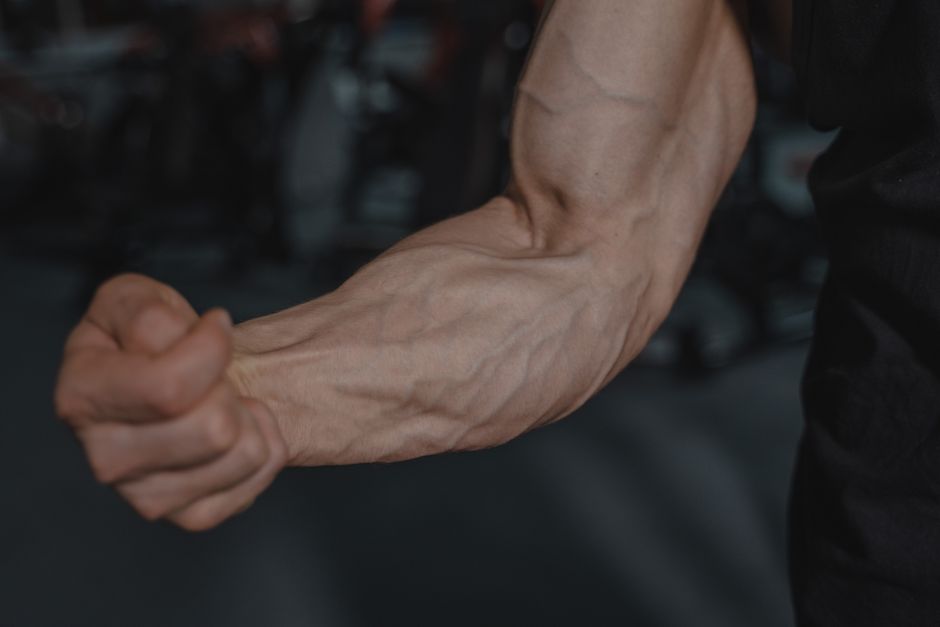
Your forearm is the part of your arm between your elbow and your wrist. It contains two long bones — the radius and the ulna — along with many muscles, tendons, nerves, and blood vessels. These structures work together to let you rotate your hand, grip objects, and move your wrist and fingers.
What Is Your Forearm Made Of?
The forearm has two bones running parallel to each other. The radius is on the thumb side. The ulna is on the pinky side. These bones connect at the elbow and the wrist and allow your hand to rotate palm-up and palm-down.
Around these bones are layers of muscle. Some muscles control your wrist and fingers. Others control how your forearm rotates. Tendons attach these muscles to bone. Nerves run through the forearm to supply feeling and movement to your hand. Major blood vessels also pass through this area.
The muscles in your forearm are grouped into two main compartments. The front compartment contains the flexor muscles that curl your wrist and fingers. The back compartment contains the extensor muscles that straighten them out. This setup gives you fine motor control over your hands.
What Does Your Forearm Do?
Your forearm does more than just connect your elbow to your wrist. It is the control center for your hand. Every time you grip a coffee mug, type on a keyboard, or turn a doorknob, your forearm muscles are working.
Rotation is a key job. The radius and ulna cross over each other when you turn your palm down. This motion is called pronation. Turning your palm back up is supination. Without this ability, simple tasks like using a screwdriver would be impossible.
The forearm also absorbs force. When you catch something heavy or push yourself up from a chair, the bones and muscles in your forearm take the impact before it reaches your elbow or shoulder. This protection matters more than most people realize.
Your forearm plays a role in balance too. When you walk, your arms swing naturally. This counterbalance helps you stay upright and move efficiently. Research published in the Journal of Experimental Biology found that arm swing reduces the energy cost of walking by about 12 percent.
What Causes Forearm Pain?
Forearm pain usually comes from overuse, injury, or nerve compression. Overuse is the most common cause. Repetitive motions like typing, gripping tools, or playing tennis can inflame the tendons. This condition is often called tendinitis.
Tennis elbow affects the outside of the forearm near the elbow. Golfer’s elbow affects the inside. Both are forms of tendinitis. The American Academy of Orthopaedic Surgeons reports that these conditions affect about 1 to 3 percent of the general population each year. People aged 40 to 60 are most at risk.
Falls can cause forearm fractures. The radius is the bone that breaks most often. A Colles fracture happens when you land on an outstretched hand. It breaks the radius near the wrist. This is one of the most common fractures seen in emergency rooms.
Nerve compression is another cause. Carpal tunnel syndrome compresses the median nerve in the wrist, but the symptoms often start in the forearm. Cubital tunnel syndrome compresses the ulnar nerve at the elbow. Both conditions can cause tingling, numbness, or weakness in the forearm and hand.





What Are the Signs of a Forearm Injury?
Pain is the main sign. If your forearm hurts when you grip, twist, or lift something, something is wrong. Swelling, bruising, or tenderness in one spot also points to injury. A grinding sensation when you move your arm may mean a bone or tendon issue.
Numbness or tingling that travels into your fingers is a red flag. This often means a nerve is compressed. The location of the tingling helps identify which nerve. Tingling in the thumb and first two fingers points to the median nerve. Tingling in the ring and pinky fingers points to the ulnar nerve.
Weakness in your grip is another sign. If you drop objects more often or cannot open jars as easily, your forearm muscles or nerves may be affected. Loss of motion — not being able to fully straighten or bend your arm — also needs attention.
The CDC reports that about 8.6 million people visit emergency rooms each year for arm and hand injuries. Many of these involve the forearm. If you cannot move your arm, have severe pain, or see bone through the skin, seek medical help immediately.
How Do You Keep Your Forearm Healthy?
Strong forearms are less likely to get injured. Simple exercises can help. Wrist curls with a light dumbbell strengthen the flexor muscles. Reverse wrist curls target the extensors. Grip strengtheners also work the forearm muscles.
Stretching matters too. Straighten your arm with your palm facing up. Use your other hand to gently pull your fingers back toward you. Hold for 15 to 30 seconds. Do this on both sides of your forearm. Stretching before repetitive activity reduces strain on the tendons.
Taking breaks is important. If you type all day, stand up and shake out your hands every hour. If you use tools at work, vary your grip position. Small breaks let the tendons and muscles recover before inflammation sets in.
Ergonomics help prevent problems. Keep your wrists in a neutral position when typing. Do not bend them up or down. When lifting weights or doing manual labor, use proper form. Sudden increases in weight or repetition are a common cause of forearm tendinitis.
| Condition | Common Cause | Key Symptom |
|---|---|---|
| Tennis elbow | Repetitive wrist extension | Pain on outside of elbow |
| Golfer’s elbow | Repetitive wrist flexion | Pain on inside of elbow |
| Carpal tunnel syndrome | Median nerve compression | Tingling in thumb and index finger |
| Forearm fracture | Fall on outstretched hand | Sudden pain and swelling |
| Cubital tunnel syndrome | Ulnar nerve compression | Tingling in ring and pinky fingers |
What Are Common Misconceptions About the Forearm?
Many people think forearm pain always means carpal tunnel syndrome. That is not true. Carpal tunnel is only one possible cause. Tendinitis, muscle strain, and arthritis are all more common. Jumping to the wrong diagnosis wastes time and delays proper treatment.
Another myth is that forearm fractures only happen in children or older adults. Adults in their 30s and 40s break their forearms too. Sports injuries, bike accidents, and falls on ice cause fractures at any age. The radius is the bone that breaks most often in adults under 50.
Some people believe that wearing a wrist brace all day helps heal forearm tendinitis. Braces can help temporarily by resting the area, but they do not fix the underlying problem. Weak muscles and poor movement patterns are usually the root cause. Strengthening and stretching are more effective long-term solutions.
A widespread claim is that forearm pain always requires surgery. This is false. The American Academy of Orthopaedic Surgeons states that more than 80 percent of people with tennis elbow recover without surgery. Rest, physical therapy, and anti-inflammatory medications work for most cases. Surgery is only considered when conservative treatments fail after 6 to 12 months.
Frequently Asked Questions
What is your forearm used for?
Your forearm controls wrist and finger movement, hand rotation, and grip strength. It also absorbs force and helps with balance during walking.
Can you break your forearm easily?
Forearm fractures are common from falls, sports injuries, and accidents. The radius bone breaks most often, especially when landing on an outstretched hand.
How long does a forearm strain take to heal?
Mild forearm strains heal in 2 to 4 weeks with rest and gentle stretching. More severe strains can take 6 to 12 weeks to fully recover.
What exercises strengthen your forearm?
Wrist curls, reverse wrist curls, and grip strengtheners effectively build forearm strength. Stretching before activity helps prevent injury.
