
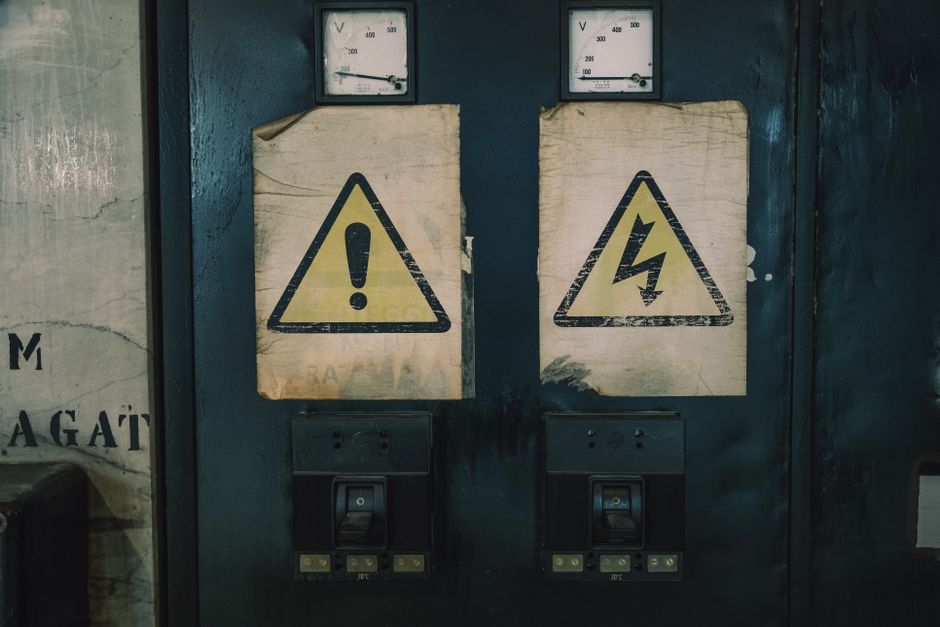
Voltage drop is the loss of electrical pressure that happens as current flows through a conductor. Every wire has some resistance, and pushing current through that resistance uses up a small amount of voltage before the electricity reaches its destination. This means the device at the far end receives less voltage than the source supplies. A little drop is normal and harmless. Too much drop causes dim lights, slow motors, and equipment that runs hot or fails early.
What Is Voltage Drop and Why Does It Matter?
Voltage is the pressure that pushes electrical current through a circuit. Think of it like water pressure in a pipe. The longer the pipe and the narrower it is, the more pressure you lose by the time water reaches the end. Wires work the same way.
When current flows through a wire, the wire’s natural resistance converts some of the electrical energy into heat. That lost energy shows up as a reduction in voltage. The current still arrives, but at a lower pressure.
This matters because most electrical equipment is designed to run within a specific voltage range. A motor rated for 230 volts may still turn at 220 volts, but it draws more current to do the same work. More current means more heat. Over time, that heat shortens the motor’s life.
For lights, the effect is easy to see. Incandescent bulbs dim noticeably with even a small drop. LEDs may flicker or dim unevenly. Electronics can behave unpredictably or shut down.
The National Electrical Code addresses voltage drop in informational notes rather than as a strict requirement for most branch circuits. The commonly cited recommendation is to keep voltage drop under 3% on a branch circuit and under 5% from the service entrance to the farthest outlet. These are widely used design targets in engineering practice, though enforcement varies by jurisdiction.
What Causes Voltage Drop?
Four factors drive voltage drop in any circuit. Change any one of them and the drop changes.
- Conductor resistance. Thinner wire has more resistance. Longer wire has more resistance. Both increase drop.
- Current load. Higher current through the same wire produces more drop. Doubling the current roughly doubles the voltage loss.
- Conductor material. Aluminum has higher resistance than copper for the same size. Aluminum circuits drop more voltage under identical conditions.
- Connections and terminations. Loose or corroded connections add resistance. A single bad splice can cause more drop than hundreds of feet of good wire.
Temperature also plays a role. Wire resistance rises as the conductor heats up. A circuit running near its capacity may see voltage drop increase as the wire warms.
In alternating current systems, there is an additional factor called reactance. It comes from the magnetic fields around the conductors. Reactance matters more in large commercial and industrial feeders than in typical home branch circuits. For most residential wiring, resistance is the dominant cause.
How Do You Calculate Voltage Drop?
The basic formula for single-phase circuits is straightforward: voltage drop equals 2 times the wire length times the current times the resistance per unit length. The factor of 2 accounts for the current traveling out to the load and back.
For three-phase circuits, the formula uses 1.732 (the square root of 3) instead of 2. This is because the three phases share the return path differently.
In practice, most electricians and engineers use voltage drop tables or calculators rather than working through the formula by hand. These tables list resistance values for standard wire sizes and let you plug in length and current.
What matters more than the exact math is understanding the relationships. Voltage drop goes up with distance, up with current, and down with larger wire. These three relationships explain almost every real-world voltage drop problem.
A detail that surprises many people: the wire size that satisfies code for safety is not always large enough to prevent excessive voltage drop. Code focuses on ampacity — the wire’s ability to carry current without overheating. Voltage drop is a separate performance concern. A circuit can be perfectly code-compliant and still have unacceptable voltage drop.





What Are the Limits for Voltage Drop?
The most widely referenced limits come from NEC informational notes. They suggest a maximum 3% voltage drop on a branch circuit and a maximum 5% total from the service point to the farthest outlet.
These are recommendations, not mandatory requirements for most circuits. Some local jurisdictions adopt them as enforceable rules. Others treat them as good practice.
Certain applications have their own tighter limits:
- Fire pump circuits often have specific voltage drop limits set by NFPA 20, typically no more than 15% during motor starting.
- Sensitive electronic equipment may need less than 3% to function reliably.
- Long runs to outbuildings, wells, or detached garages commonly exceed 3% unless wire is upsized.
Voltage drop limits exist for practical reasons. They protect equipment, reduce energy waste, and keep systems performing as designed. They are not arbitrary numbers.
What Are the Signs of Excessive Voltage Drop?
The symptoms depend on what is connected to the circuit.
Lights are the easiest indicator. If lights dim noticeably when a large appliance kicks on, that circuit has a voltage drop problem. If lights at the far end of a house are consistently dimmer than lights near the panel, the wiring run is too long or too thin for the load.
Motors show different signs. A motor running on low voltage draws higher current, runs hotter, and may trip overload protection. It may also start slowly or fail to start under load. Over time, sustained low voltage shortens motor life even if the motor never fails outright.
Electronics may reboot randomly, display errors, or fail to charge properly. In severe cases, equipment simply will not operate.
These symptoms can also come from other causes — loose neutrals, utility supply problems, or failing equipment. Voltage drop is one possible explanation, not the only one. Measuring voltage at the source and at the load is the way to confirm it.
How Do You Fix Voltage Drop?
There are four practical fixes. Which one makes sense depends on the situation.
Increase wire size. This is the most common solution. Larger wire has lower resistance. Going up one or two sizes often brings voltage drop within acceptable limits. This is the standard approach for long runs.
Shorten the run. If possible, relocate the load closer to the source or move the source closer to the load. In new construction, this is often cheaper than upsizing wire over a long distance.
Reduce the load. Lower current means lower voltage drop. Splitting a circuit or moving high-demand equipment to a dedicated circuit can solve the problem without rewiring.
Fix bad connections. Tighten terminations, replace corroded splices, and check for aluminum wiring issues. A single loose connection can cause more drop than the entire wire run.
For existing installations, a voltage drop calculator or a qualified electrician can determine whether the current wiring is adequate. Measuring voltage under load at the panel and at the outlet gives a direct answer.
Does Voltage Drop Waste Energy?
Yes. The energy lost to voltage drop becomes heat in the wire. That heat is real power that was generated, transmitted, and paid for but never did useful work.
In a single residential circuit, the waste is small. Across a large building with long feeders and heavy loads, the cumulative loss can be significant. This is one reason commercial design pays close attention to voltage drop even when code does not strictly require it.
Reducing voltage drop through larger conductors or shorter runs lowers energy waste. The savings may not justify the cost in every case, but in large systems the math often works out.
When Should You Call an Electrician?
Any voltage drop problem that involves overheating, burning smells, tripping breakers, or flickering lights across multiple circuits warrants professional attention. These signs can indicate a serious wiring fault, not just a performance issue.
If you are planning a long circuit run — to a detached garage, a well pump, or an outdoor workshop — have the wire size calculated for voltage drop before installation. It is far cheaper to install the right wire the first time than to redo it later.
Voltage drop is a normal part of electrical systems. Managing it is a design decision. The goal is not zero drop, which is impossible. The goal is keeping it low enough that equipment runs properly and safely.
Frequently Asked Questions
What is an acceptable voltage drop?
The widely used recommendation is no more than 3% on a branch circuit and 5% total from the service to the farthest outlet. These figures come from NEC informational notes and are design targets rather than strict code requirements in most cases.
Does voltage drop damage appliances?
Sustained low voltage can cause motors to overheat and electronics to malfunction, which shortens equipment life over time. Brief or small drops are generally not harmful.
Can I fix voltage drop by increasing breaker size?
No. A larger breaker does not reduce voltage drop and can create a fire hazard if the wire is not rated for the higher current. The correct fix is larger wire, a shorter run, or a reduced load.
How do I test for voltage drop at home?
Measure voltage at the panel and again at the outlet while the load is running. A difference of more than a few percent suggests a voltage drop issue. A qualified electrician can confirm the cause.
