
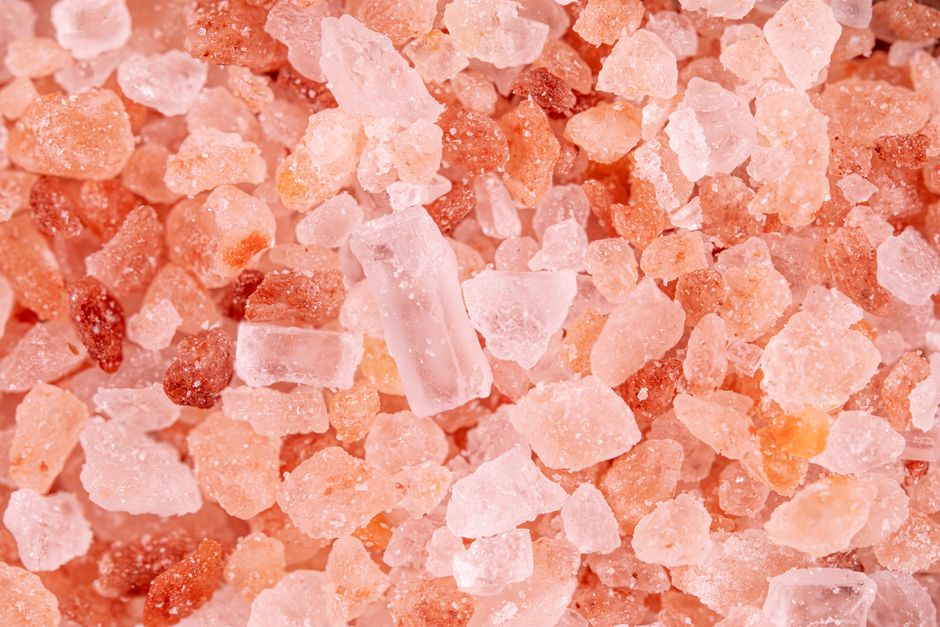
Violet salt is a specialty salt sold in two main forms: a naturally violet-tinted rock salt from mineral-rich deposits, and ordinary salt blended with dried purple herbs or flowers such as violet petals or lavender. Neither form is a distinct nutritional category. The violet color comes from trace minerals in the rock version or from plant pigments in the blended version, and both are used mainly for seasoning and appearance rather than for health benefits.
That distinction matters more than most product pages admit. Many violet salts are marketed with claims about mineral content or “detox” effects that outrun what the evidence shows. This article explains what these salts actually are, what nutrition they provide, and where the marketing gets ahead of the science.
What Is Violet Salt and Where Does the Color Come From?
The color comes from one of two sources, and knowing which one you have tells you most of what you need to know.
The first type is rock salt mined from ancient mineral deposits. These salts pick up trace elements from surrounding rock, and some develop a violet or purplish hue from minerals present in tiny amounts. The color is a geological fingerprint, not a sign of added nutrition. The amounts of these trace minerals are small and their contribution to your diet is minor.
The second type is a manufactured blend. Producers mix ordinary white salt with dried violet flowers, lavender, butterfly pea flower, or other purple botanicals. Sometimes the color comes from a plant pigment called anthocyanin, the same family of compounds that makes blueberries blue. In this case the violet is decorative and the flavor is herbed or floral.
Both types are sold as finishing salts. They are meant to be sprinkled on food at the table, not used by the cup in cooking. That is partly about cost and partly about the fact that heat and moisture can dull the color and aroma.
What Is the Nutrition of Violet Salt Varieties?
Nutritionally, violet salt is salt. The core composition is sodium chloride, and the trace minerals or plant pigments that give it color do not change that in any meaningful way.
One teaspoon of salt contains roughly 2,300 milligrams of sodium. That figure is essentially the same whether the salt is white, pink, black, or violet. This is where a lot of salt marketing goes wrong. Colored salts are often presented as lower in sodium or as a healthier alternative to table salt. They are not. The sodium content is comparable across all of them.
Trace minerals do differ slightly between salts, but the amounts are so small that they make no practical difference to your nutrient intake. You would need to eat far more salt than is advisable to get a meaningful amount of calcium, magnesium, or potassium from any specialty salt.
If your violet salt is a botanical blend, it may carry a faint amount of plant compounds from the flowers or herbs. The quantity is tiny. No clinical evidence suggests these trace amounts provide a health benefit.
How does violet salt compare to other salts?
| Salt type | Main color source | Sodium per teaspoon (approx.) |
|---|---|---|
| Table salt | None (refined white) | 2,300 mg |
| Sea salt | Trace minerals | 2,300 mg |
| Himalayan pink salt | Iron oxide traces | 2,300 mg |
| Violet rock salt | Trace minerals | 2,300 mg |
| Violet botanical blend | Plant pigments (e.g., anthocyanins) | 2,300 mg |
The numbers are close enough that the differences are not worth planning a diet around. The table is included to show how little the type of salt matters for sodium, not to suggest one is better.
Does Violet Salt Have Health Benefits?
No clinical evidence confirms that violet salt provides health benefits beyond those of ordinary salt. The claims you see on packaging and in wellness content are not supported by human trials.
Common marketing claims include that the trace minerals support hydration, that the color indicates purity, or that the salt is “detoxifying.” None of these hold up. Trace mineral content in any salt is too low to affect hydration or detoxification. The body’s detox systems are handled by the liver and kidneys, not by salt.
There is one honest point in favor of specialty salts, and it is not nutritional. Because they are coarse, colorful, and more expensive, people tend to use them in smaller pinches as finishing salts. If that leads you to use less salt overall, that is a real benefit. But it comes from the behavior, not the salt itself.
Some clinicians do recommend unrefined salts for people who want a less processed product, but this is a preference rather than an evidence-based recommendation. The health impact of choosing violet salt over table salt is negligible.
What Are the Main Varieties of Violet Salt?
Violet salts fall into a few recognizable types, and the names on labels can be confusing because there is no strict standard for what “violet salt” means.
- Violet rock salt: Mined from mineral deposits and naturally tinted. The color varies from pale lilac to deep purple depending on the source.
- Lavender salt: Sea salt blended with dried lavender buds. Floral aroma, pale purple tint, used mostly on roasted vegetables and baked goods.
- Violet flower salt: Salt mixed with dried violet petals. Delicate color and a mild floral note.
- Butterfly pea salt: Salt blended with butterfly pea flower, which contains anthocyanins. The color can shift with pH, which is why some of these salts change hue when they meet acidic food.
- Herb-blended violet salt: Salt mixed with purple basil, rosemary, or other herbs. The violet may come from the herbs rather than a flower.
Because labeling is loose, the same name can describe quite different products. Read the ingredient list. If the only ingredient is salt, the violet is mineral. If flowers or herbs are listed, it is a blend.
How Should You Use Violet Salt?
Use violet salt as a finishing salt, added just before eating. That preserves the color and aroma that make it distinctive.
Sprinkle it on roasted vegetables, eggs, salads, or grilled fish. A small pinch is enough. In baked goods, lavender and violet salts are sometimes used in shortbread or cookies, where the floral note works with butter and sugar. Keep the amount small, because floral flavors can turn soapy when overused.
Do not use violet salt for everyday cooking in place of regular salt. It is more expensive, and the color and aroma fade with heat. For brines, baking, and general seasoning, ordinary salt does the same job for less money.
Store it in a sealed container away from moisture and light. Botanical blends can clump and lose their scent faster than plain salt.
Is Violet Salt Safe, and How Much Sodium Is Too Much?
Violet salt is safe to eat in the same amounts as any other salt. The safety question is not about the color. It is about sodium.
Federal dietary guidance recommends limiting sodium to 2,300 milligrams per day for most adults. That is about one teaspoon of salt total across all foods. Most Americans consume well above that, largely from packaged and restaurant food rather than from the salt shaker.
People with high blood pressure, kidney disease, or heart failure are often advised to limit sodium further. If you have a medical condition that affects sodium handling, talk with your clinician about your intake rather than relying on the type of salt you buy.
One caution specific to botanical violet salts: if you have a known allergy to lavender, violet flowers, or other herbs in the blend, check the ingredient list. Reactions to culinary amounts are uncommon, but they are possible. Pregnant and breastfeeding women should treat herbal-blended salts the same as any other herbed product and check with a clinician if unsure. No clinical guidelines set specific limits for these culinary herb amounts during pregnancy, so the general advice to keep intake modest applies.
Frequently Asked Questions
Is violet salt healthier than regular salt?
No. Violet salt has essentially the same sodium content as regular salt, and its trace minerals are too small to matter nutritionally. Any health difference comes from how much you use, not which salt you choose.
What makes violet salt purple?
The color comes either from trace minerals in rock salt or from plant pigments in blended salts made with violet flowers, lavender, or butterfly pea flower. The ingredient list tells you which type you have.
Can you cook with violet salt?
You can, but it works best as a finishing salt added after cooking. Heat and moisture can dull the color and floral aroma that make it distinctive.
How much sodium is in a teaspoon of violet salt?
About 2,300 milligrams, roughly the same as any other salt. Federal guidance recommends most adults keep total sodium under 2,300 milligrams per day.
