
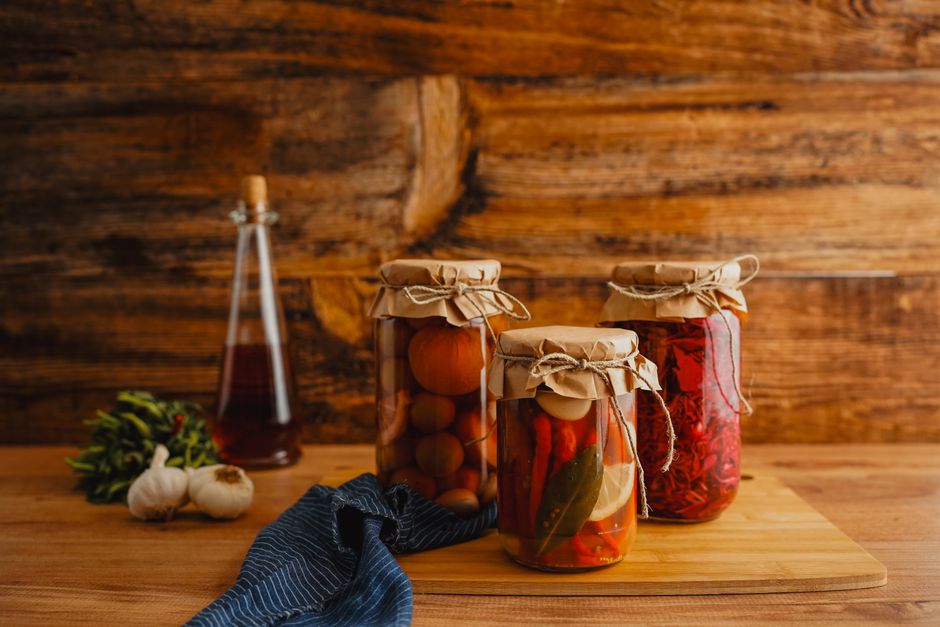
Vinegar is made from a two-step fermentation process that turns any source of alcohol into acetic acid and water. The starting ingredient determines the flavor, color, and nutrients of the final product. At its chemical core, all vinegar is roughly 4-8% acetic acid diluted in water, with trace compounds that give each variety its distinct character.
What Is Vinegar Made Out Of at the Chemical Level?
Acetic acid is the active compound that makes vinegar vinegar. It is what gives vinegar its sharp smell and sour taste. The chemical formula is CH₃COOH, and it forms when ethanol (drinking alcohol) is exposed to oxygen and a specific bacteria called Acetobacter.
The rest of vinegar is mostly water. Most commercial vinegars contain 5% acetic acid and 95% water. Some specialty vinegars like pickling vinegar may reach 7-8% acetic acid. Anything above that is labeled as “cleaning vinegar” and is not tested for food safety.
Trace compounds make up less than 1% of the total volume. These include vitamins, minerals, amino acids, and organic acids like malic acid or tartaric acid. These traces are where the health claims come from, but their amounts are so small they rarely matter nutritionally.
How Is Vinegar Made Step by Step?
The process is simple and ancient. It happens in two distinct stages.
Stage one: Alcohol fermentation. A sugar source like grapes, apples, rice, or barley is mixed with yeast. The yeast eats the sugar and produces ethanol. This is how wine, hard cider, and beer are made. For vinegar, this alcohol becomes the raw material.
Stage two: Acetic acid fermentation. The alcohol is exposed to oxygen. Acetobacter bacteria convert the ethanol into acetic acid. This is why leaving a bottle of wine open too long turns it sour. Commercial producers control the oxygen flow and temperature to speed this up from weeks to days.
Some traditional methods use a “mother of vinegar” — a gelatinous colony of bacteria and cellulose that floats in the liquid. This is not contamination. It is the living culture doing the work. Unfiltered vinegars like Bragg’s contain this mother.
What Are the Different Types of Vinegar Made From?
Every vinegar starts with a different base ingredient. That base determines everything about the final product.
| Type | Base Ingredient | Acidity | Key Flavor Notes |
|---|---|---|---|
| White distilled | Grain alcohol (corn or wheat) | 5% | Sharp, clean, neutral |
| Apple cider | Crushed apples | 5% | Fruity, mild apple |
| Balsamic | Grape must (crushed grapes) | 6-7% | Sweet, complex, syrupy |
| Red wine | Red wine | 6% | Tart, bold, grape forward |
| Rice | Fermented rice | 4-5% | Mild, slightly sweet |
| Malt | Barley malt (beer base) | 5% | Nutty, earthy |
White distilled vinegar is the most processed. It is made from industrial grain alcohol and filtered to remove all color and flavor. It is the cheapest and most versatile for cleaning and preservatives.
Apple cider vinegar retains some of the apple’s natural pectin and minerals. Many people believe this makes it healthier than white vinegar. The evidence for that is weak. The difference in nutrient content between a tablespoon of apple cider vinegar and white vinegar is negligible for a normal diet.
Balsamic vinegar is aged in wooden barrels for years. The aging concentrates sugars and creates complex flavor compounds. Real balsamic from Modena, Italy, is aged a minimum of 12 years. Supermarket balsamic is often just wine vinegar with caramel coloring and sugar added.





Does the “Mother” in Unfiltered Vinegar Matter?
The mother is a natural byproduct of the fermentation process. It contains Acetobacter bacteria, cellulose, and trace enzymes. Unfiltered vinegar looks cloudy because the mother is still suspended in the liquid.
Some people claim the mother makes vinegar healthier because it contains probiotics. This is widely claimed, but strong evidence is limited. The Acetobacter bacteria are not the same as the probiotic strains found in yogurt or kimchi. They do not survive stomach acid well. Research published in the Journal of Food Science found that while the mother contains some beneficial compounds, their concentration is too low to meaningfully affect gut health in normal serving sizes.
What the mother does do is provide flavor complexity and slight cloudiness. Some people prefer the taste of unfiltered vinegar. That is a valid personal preference. Believing the mother is a health powerhouse is not supported by current evidence.
Filtered vinegar removes the mother through pasteurization and fine filtration. This gives a clear, stable product with a consistent taste. Neither version is significantly healthier than the other.
What Are Common Misconceptions About What Vinegar Is Made Out Of?
Three persistent myths keep circulating online. Here is what the evidence actually shows.
Myth: Vinegar is a strong acid that can burn your insides. Acetic acid is a weak acid. At 5% concentration, it is about as acidic as lemon juice. Drinking it undiluted can irritate your throat and damage tooth enamel over time, but it will not burn your esophagus or stomach lining in normal amounts. The pH of vinegar is around 2.5, which is similar to stomach acid itself.
Myth: Vinegar contains significant vitamins and minerals. A tablespoon of apple cider vinegar contains roughly 1-2% of your daily potassium needs. That is essentially nothing. The acetic acid is the only compound present in meaningful amounts. Anyone claiming vinegar is a good source of nutrients is misreading the data.
Myth: “Cleaning vinegar” and “food vinegar” are the same thing diluted differently. This is partially true but misses an important detail. Cleaning vinegar is typically 6-10% acetic acid and is not manufactured under food safety standards. It may contain impurities or residues from the production process that are safe for cleaning but not tested for human consumption. Never cook with cleaning vinegar.
- White vinegar is made from grain alcohol, not from “chemicals” as some believe.
- Balsamic vinegar labeled “condiment grade” is not real aged balsamic.
- Rice vinegar is naturally gluten-free. Malt vinegar is not.
- Most commercial vinegars are pasteurized. Unpasteurized vinegar with the mother is the exception.
How Should You Choose and Store Vinegar?
Choose based on what you need it for, not on health marketing. For cooking, select a vinegar whose base ingredient complements your dish. Apple cider vinegar works in salad dressings and marinades. White vinegar is best for pickling where you do not want added color or flavor. Balsamic is for finishing dishes, not for cooking at high heat.
For cleaning, plain white distilled vinegar at 5% acidity is the standard. It cuts grease, removes mineral deposits, and kills some bacteria. The CDC reports that vinegar is not a registered disinfectant and does not kill Salmonella or E. coli at household concentrations. For sanitizing surfaces, use bleach or an EPA-registered cleaner.
Store vinegar in a cool, dark place with the lid tightly closed. Vinegar does not expire in the sense of becoming unsafe. Over years, it may develop sediment or lose some sharpness, but it will not spoil. The acidity prevents microbial growth. If you see mold floating on top, that is a sign of contamination from a dirty bottle or lid. Discard that batch.
Do not store vinegar in metal containers. The acetic acid can react with copper, iron, or aluminum and leach metal into the vinegar. Glass or food-grade plastic is best. Some ceramic glazes also contain lead, so avoid handmade pottery for long-term storage unless you are certain it is food-safe.
Frequently Asked Questions
Is vinegar made from alcohol?
Yes, vinegar is always made from alcohol. The alcohol is fermented from a sugar source, then bacteria convert the alcohol into acetic acid.
Can vinegar go bad?
Vinegar does not spoil because the acetic acid prevents bacteria and mold from growing. It may lose flavor over many years but remains safe to use.
What is the difference between white vinegar and apple cider vinegar?
White vinegar is made from grain alcohol and has a sharp, neutral taste. Apple cider vinegar is made from crushed apples and has a milder, fruity flavor.
Is the mother in vinegar good for you?
The mother contains bacteria and enzymes, but the amounts are too small to provide meaningful health benefits in normal serving sizes.
