
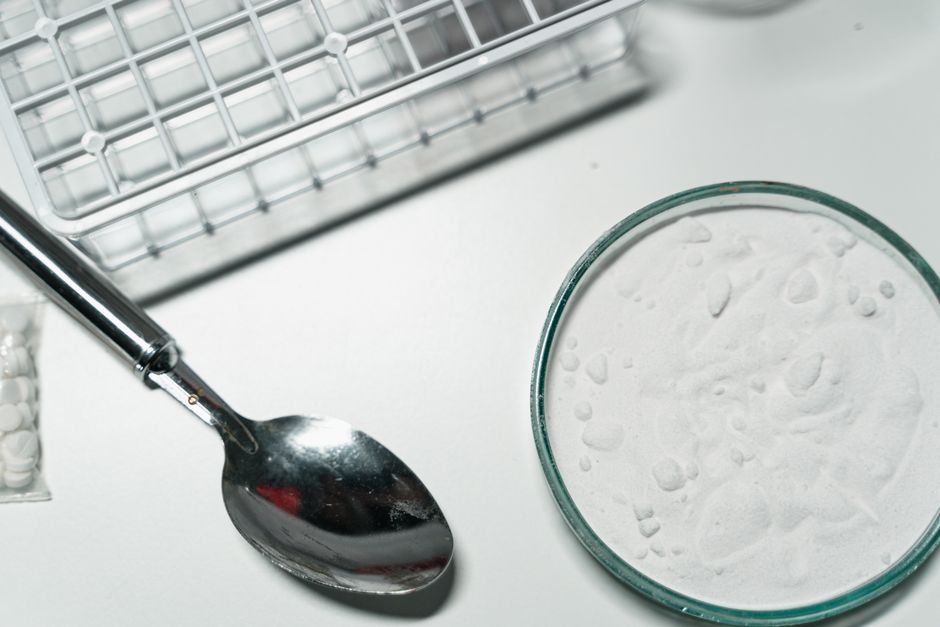
Urea powder is a nitrogen-rich compound used in two very different worlds: skin care and farming. In skin care, it is a humectant and keratolytic — it pulls water into the skin and, at higher concentrations, helps break down thickened, dead surface cells. In farming, it is one of the most concentrated solid nitrogen fertilizers available, supplying crops with the nitrogen they need to grow. The same white crystalline solid does both jobs, but the grades, purity standards, and handling requirements are not interchangeable.
The “farms more” in the question points to a real source of confusion. Cosmetic-grade urea and fertilizer-grade urea are different products sold for different purposes. Understanding which one you are looking at matters — for your skin, for your garden, and for safety.
What Is Urea Powder Used For in Skin Care?
Urea is a naturally occurring molecule. Your body makes it as a byproduct of protein breakdown, and it is present in healthy skin as part of what is called the natural moisturizing factor, or NMF. That is the collection of substances in the outer skin layer that hold water and keep the surface flexible.
When urea is applied to skin, what it does depends heavily on concentration.
At lower concentrations — roughly up to about 10% — urea acts mainly as a humectant. It binds water and helps the outer layer of skin hold onto moisture. Many moisturizers and lotions for dry skin use urea in this range.
At higher concentrations — commonly around 20% and above in prescription products — urea becomes keratolytic. It softens and helps break down keratin, the tough protein that makes up the outer skin layer. This is why higher-strength urea products are used for thick, scaly, or hardened skin, such as calluses, and in some clinical settings for conditions involving thickened skin.
The shift from moisturizer to exfoliant is a matter of dose. A 5% urea lotion and a 40% urea cream are doing meaningfully different things to the skin barrier.
Is Urea Safe for Skin, and Who Should Be Careful?
Urea is generally well tolerated, and it is used widely in dermatology. The most common side effect is mild stinging or irritation, especially on broken skin or when a high-concentration product is applied to sensitive areas.
People with cracked or damaged skin may feel more stinging from urea products. Anyone with a known sensitivity should patch-test a small area first. Higher-concentration urea products are stronger and should be used as directed rather than applied liberally to large areas of thin or sensitive skin.
One point worth being clear about: concentration matters for safety as well as effect. A product formulated for thick heel skin is not the same as one made for the face. Follow the label and, for prescription-strength products, your clinician’s instructions.
What Is Urea Powder Used For on Farms?
In agriculture, urea is the most widely used solid nitrogen fertilizer in the world. Nitrogen is essential for plant growth — it is a core building block of proteins and chlorophyll — and urea delivers it at a very high concentration. By weight, agricultural urea is about 46% nitrogen, which is the highest nitrogen content of any common solid nitrogen fertilizer.
Farmers apply it to supply crops with nitrogen. It can be spread on fields, incorporated into soil, or dissolved and applied in irrigation water. When it contacts soil and moisture, an enzyme called urease breaks it down, releasing nitrogen in a form plants can use.
That breakdown is also where a common problem comes from. If urea sits on the soil surface, some of the nitrogen can be lost to the air as ammonia gas before plants can use it. This is why application method and timing matter in farming, and why some products are treated to slow that loss.





Are Cosmetic Urea and Fertilizer Urea the Same Thing?
They share the same basic chemistry but are not the same product. Cosmetic-grade urea is manufactured and purified to a standard suitable for skin contact. Fertilizer-grade urea is produced for agricultural use and is not held to the same purity standards for human skin application.
This distinction is not a technicality. Fertilizer products can contain impurities and are not intended for use on skin. A bag of agricultural urea should never be repurposed as a skin treatment, no matter how similar the chemical name sounds.
The reverse is also true in a practical sense: cosmetic urea is far more expensive per unit and is not a sensible or economical choice for fertilizing plants.
How Does Urea Work Differently at Different Strengths?
The concentration is the single most important factor in how a urea skin product behaves. This is well established in dermatology, and it is why products are formulated across a wide range.
- Low concentration (roughly up to 10%): Primarily a moisturizer. Helps skin hold water.
- Moderate concentration: Increasingly softens the skin surface while still moisturizing.
- High concentration (around 20% and above): Acts as a keratolytic, helping to break down and shed thickened outer skin.
The exact percentages at which these effects shift are approximate and vary between products and formulations. What is consistent is the direction: more urea means more exfoliating action and less of a pure moisturizing role.
What Should You Know Before Buying a Urea Product?
Read the concentration on the label first. That number tells you more about what the product will do than any marketing claim on the front of the package.
Match the product to the job. A low-strength lotion suits everyday dry skin. A high-strength cream suits thick, hardened skin and is usually intended for targeted use, not all-over application.
Be skeptical of vague claims. Urea is a real, well-studied ingredient with genuine moisturizing and keratolytic properties. But no single ingredient fixes every skin concern, and products marketed with dramatic promises deserve scrutiny. The evidence supports urea for dry skin and for thickened skin at appropriate strengths — not as a universal solution.
For farming use, buy from agricultural suppliers and follow the labeled application guidance. Urea fertilizer is a concentrated product, and correct storage and handling matter.
Is Urea the Same as the Urea in Urine?
Chemically, yes. Urea is urea — the same molecule whether it is synthesized industrially or produced by the body. The urea used in skin care and fertilizer is manufactured, not collected from urine, but the compound itself is identical.
This is one of those facts that sounds surprising but is not. The body produces urea as a way to safely carry away excess nitrogen, and industry produces the same molecule for practical use. The source differs; the chemistry does not.
Frequently Asked Questions
What is urea powder used for on skin?
It is used as a moisturizer at lower concentrations and as a skin-softening exfoliant at higher concentrations. It helps skin hold water and, at stronger levels, helps break down thickened outer skin.
Can I use fertilizer urea on my skin?
No. Fertilizer-grade urea is not purified to standards suitable for skin contact and may contain impurities. Only cosmetic-grade urea should be used on skin.
What percentage of urea is best for dry skin?
Lower concentrations, roughly up to about 10%, are typically used for moisturizing dry skin. Higher strengths are formulated for thickened or hardened skin and are stronger in effect.
Why is urea used as a fertilizer?
It has the highest nitrogen content of any common solid nitrogen fertilizer, at about 46% nitrogen by weight. Nitrogen is essential for plant growth, making urea an efficient way to supply it.
