
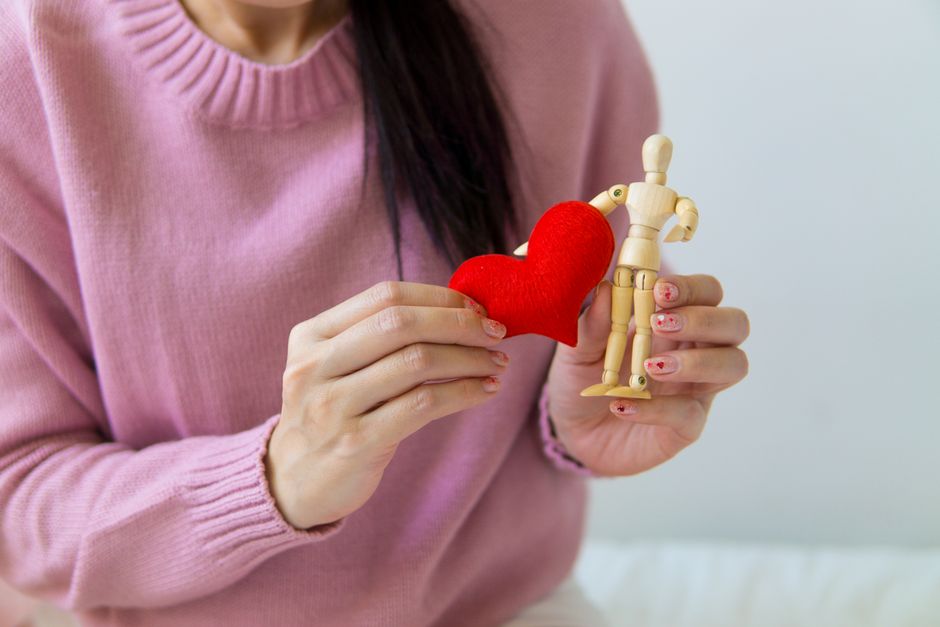
Unrequited love is romantic feeling that is not returned by the other person. It can happen to anyone, at any age, and it is one of the most common emotional experiences people report. The distress is real, the feelings are real, and there is a well-documented pattern to how this kind of love affects the mind and body.
Most people will experience it at least once. Some estimates suggest it is the most common form of romantic disappointment, though it rarely gets talked about openly. What follows is what the science actually says about what it is, why it hurts, and how people move through it.
What Is Unrequited Love?
Unrequited love is a one-sided romantic attachment. One person feels love, desire, or deep affection. The other does not return those feelings, or returns them at a much lower intensity.
It is not the same as rejection. Rejection is a single event. Unrequited love is a state that can last weeks, months, or years. The person who feels it often knows the feeling is not returned but cannot simply switch it off.
Psychologists sometimes divide it into two patterns. In one, the person has never been in a relationship with the object of their affection. In the other, a relationship existed and then ended, but one person still holds the feelings. Both produce similar distress. The second is often harder because there is a real memory of mutual connection to compare against.
What makes unrequited love unusual is that the person experiencing it is usually aware of the reality. They are not delusional. They know the other person does not feel the same way. And yet the emotional system does not respond to that knowledge the way logic would suggest.
Why Does Unrequited Love Hurt So Much?
The pain of unrequited love is not imaginary. Brain imaging studies have found that social rejection activates some of the same regions involved in physical pain. The brain does not draw a clean line between a broken heart and a broken bone.
Romantic love involves the reward system. Dopamine, the neurotransmitter tied to motivation and wanting, rises when a person thinks about the one they love. When that reward is uncertain or withheld, dopamine activity does not simply stop. It often increases. This is part of why uncertainty can feel more intense than certainty. The brain keeps reaching for something it cannot have.
Cortisol, the stress hormone, also tends to rise during periods of romantic distress. That can affect sleep, appetite, and concentration. People going through unrequited love often describe a physical heaviness in the chest. That sensation is real and is tied to the stress response, not imagination.
There is also a cognitive loop. The mind returns to the person repeatedly, replaying conversations and imagining alternatives. This is sometimes called rumination. It is normal after a loss, but in unrequited love it can persist because there is no clear ending. Nothing was lost, so nothing can be grieved in the usual way.
What Are the Signs of Unrequited Love?
The signs are usually clear to the person experiencing them, even when they are not obvious to anyone else. The most common include:
- Thinking about the person far more than is wanted or intended
- Reading too much into small signals, like a text reply or a smile
- Feeling a rush of hope followed by disappointment
- Avoiding other romantic possibilities because they do not compare
- Feeling worse after seeing the person, not better
- Idealizing the person and minimizing their flaws
- Losing sleep, appetite, or focus during intense periods
The last item matters. When unrequited love starts to affect basic functioning — sleep, eating, work, or mood for weeks at a time — it can overlap with depression. That does not mean the person is weak. It means the emotional load has crossed into territory where professional support is worth considering.





Is Unrequited Love the Same as Limerence?
No. They overlap but are not identical.
Limerence is a term coined by psychologist Dorothy Tennov in the 1970s. It describes an involuntary state of intense romantic infatuation, often with intrusive thinking and a strong craving for reciprocation. Limerence can occur with or without unrequited love. Sometimes the other person does feel the same way, but the intensity is still one-sided.
Unrequited love is about the mismatch. Limerence is about the intensity. A person can experience unrequited love without the obsessive quality of limerence, and a person can experience limerence in a mutual relationship.
The distinction matters because the strategies are different. Unrequited love often requires accepting the reality of the situation. Limerence often requires managing the intrusive thoughts and the craving itself, which can persist even after the person is out of the picture.
How Long Does Unrequited Love Last?
There is no fixed timeline. Some people move through it in a few weeks. Others carry it for years, especially if they continue to see the person regularly.
What tends to predict how long it lasts is contact. Continued exposure — through work, a friend group, or social media — keeps the reward system engaged. Each interaction, even a brief one, can reset the emotional clock. People who cut off or greatly reduce contact usually report faster resolution, though this is based on clinical observation rather than large controlled trials.
Another factor is whether the person has a clear story about what happened. Ambiguity tends to prolong distress. When someone knows definitively that the feeling is not returned, the mind has something to work with. When the situation is unclear, the mind keeps the door open.
It is also worth noting that unrequited love does not always end in pain. Some people look back on it as a meaningful period of their life. The feeling fades, but it is not always replaced by regret.
What Actually Helps Someone Move Through It?
The evidence here is limited. There is no large body of clinical trials on treating unrequited love specifically. What follows is based on general research on grief, rumination, and emotional regulation, plus common clinical practice.
Reducing contact is the most consistently recommended step. This does not mean being cruel or dramatic. It means not seeking out the person, not checking their social media, and not creating reasons to be near them. Each of those behaviors feeds the loop.
Naming the feeling honestly helps. People who can say “I love someone who does not love me” tend to move through it faster than those who keep reframing it as “maybe someday.” Ambiguity is the enemy here.
Redirecting attention matters, but not in a forced way. Trying to not think about someone usually backfires. Instead, filling time with things that require attention — exercise, projects, time with people who are not connected to the situation — tends to work better than trying to suppress the thought directly.
Some clinicians recommend writing about the experience. Expressive writing has been studied for emotional processing, and results are mixed. It helps some people and not others. It is not a guaranteed method.
If the distress is severe — affecting sleep, appetite, or mood for weeks, or leading to thoughts of self-harm — that is a sign to talk to a doctor or mental health professional. Unrequited love itself is not a clinical condition, but the depression it can trigger is.
Can Unrequited Love Ever Turn Into Something Mutual?
Rarely, and usually not in the way people hope.
There are cases where feelings change over time. But the pattern people most often imagine — waiting long enough that the other person eventually comes around — is not well supported. When feelings do shift, it is usually early, before the dynamic has hardened.
What tends to happen instead is that the person who is not interested becomes more distant over time, not less. The hope that keeps the feeling alive is usually the thing that prevents it from resolving.
This is not a reason to feel foolish. Hope is not a character flaw. But it is worth being honest with yourself about the difference between a real possibility and a story you are telling yourself to make the waiting bearable.
Is Unrequited Love a Sign of Something Wrong?
No. It is a normal human experience. It happens to people with secure attachments, stable moods, and healthy relationships. It is not a sign of low self-esteem or poor judgment.
That said, patterns matter. If someone finds themselves repeatedly in one-sided situations, it may be worth looking at what draws them to those dynamics. This is not about blame. It is about noticing a pattern that might be worth understanding.
Some people are drawn to unavailable partners because the unavailability itself feels familiar or safe. Others are drawn to the intensity of the pursuit. These are not diagnoses. They are patterns that a therapist can help someone see more clearly if they want to.
The most important thing to know is that unrequited love is not a failure. It is a feeling. It does not mean something is broken. It means something human is happening.
Frequently Asked Questions
What does unrequited love mean?
It means loving someone who does not love you back in the same way. The feeling is one-sided, and the person experiencing it usually knows it is not returned.
How long does unrequited love usually last?
There is no set timeline. Some people move through it in weeks, while others carry it for years, especially if they stay in regular contact with the person.
Is unrequited love the same as limerence?
No. Limerence is about the intensity of infatuation, while unrequited love is about the mismatch in feelings. They can overlap, but they are not the same thing.
Can unrequited love turn into a real relationship?
It happens, but it is uncommon, and it usually requires the other person’s feelings to shift early. Waiting over a long period rarely changes the outcome.
