
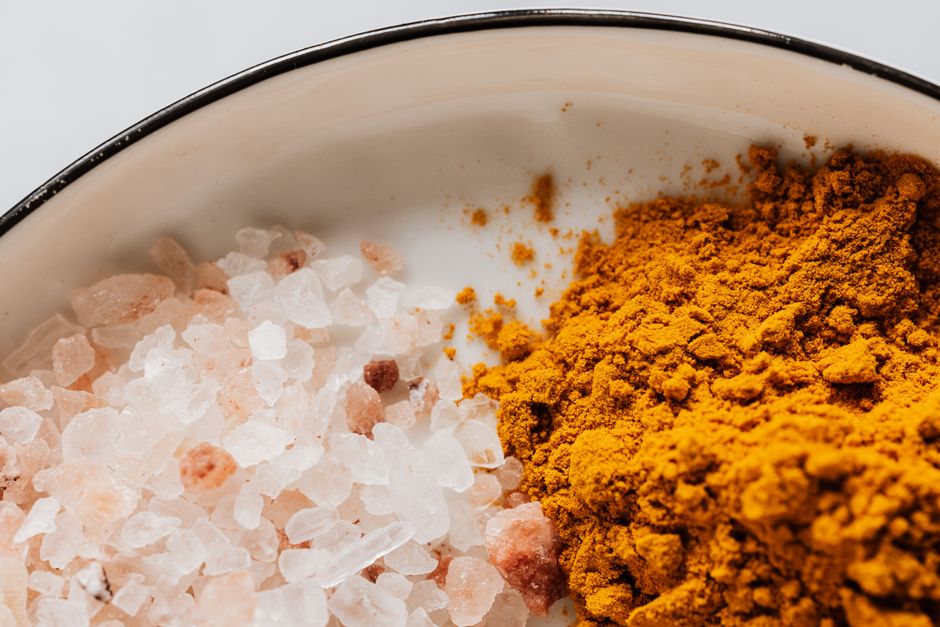
Turmeric oil is an extract of the turmeric plant, Curcuma longa, that carries its fat-soluble compounds, including curcuminoids and aromatic turmerones. It is used mostly in two ways: as a topical oil for skin and scalp, and as a concentrated food or supplement ingredient. The strongest human evidence for turmeric compounds involves oral curcumin extracts, not the essential oil — an important distinction most product marketing blurs.
What Is Turmeric Oil Good For Benefits And Uses?
Turmeric oil is not one product. The name covers two different things, and they behave differently in the body.
Essential oil is steam-distilled from the rhizome. It is rich in turmerones — aromatic compounds that give turmeric its earthy smell — and contains little to no curcumin. Curcuminoid extract, often sold as “turmeric oil” in softgel form, is a solvent extract standardized for curcumin content. Sometimes products blend both.
This matters because most of the clinical research on turmeric’s anti-inflammatory effects used oral curcuminoid extracts, often formulated to improve absorption. The essential oil has far less human data behind it. If a label says “turmeric oil” and lists no curcumin percentage, you are likely looking at a turmerone-rich product with a different evidence base.
Topically, turmeric oil has a long traditional use for skin irritation and scalp health. Some laboratory studies show curcumin and turmerones have antimicrobial and antioxidant activity in cell and animal models. Whether that translates to meaningful benefit on human skin has not been established in large controlled trials.
What Does the Evidence Actually Show for Curcumin?
Oral curcumin has been studied for osteoarthritis, and the results are genuinely encouraging but not settled. Several randomized trials found curcumin extracts reduced knee osteoarthritis pain compared with placebo, and some compared it to standard pain relievers with roughly similar short-term results. The trials are generally small, often use special formulations to overcome poor absorption, and vary widely in dose and product. Independent replication remains limited.
The absorption problem is real and worth understanding. Plain curcumin is poorly absorbed from the gut and is rapidly metabolized. This is why research almost always uses enhanced formulations — combined with piperine, in phospholipid complexes, or as nano-emulsions. A generic turmeric powder in a capsule is not equivalent to what was tested.
For other conditions, the picture is weaker:
- Inflammation markers: Some studies show reductions in CRP and other inflammatory markers with curcumin supplementation. Effects are modest and inconsistent across trials.
- Metabolic and joint conditions: Small trials exist for several, but most are too small or too short to draw firm conclusions.
- Cancer: Laboratory research is extensive, but no human trial has shown turmeric oil or curcumin prevents or treats cancer. Claims to that effect are not supported.
- Depression and cognitive function: Early-stage trials only. Evidence is insufficient to recommend it for either.
One clarification worth stating plainly: turmeric is not the same as curcumin. Turmeric root is roughly 2-5% curcumin by weight. A teaspoon of culinary turmeric powder delivers a small fraction of the curcumin used in clinical trials.
What Are the Skin and Scalp Uses of Turmeric Oil?
Topical turmeric oil is used for acne-prone skin, minor irritation, dandruff, and scalp dryness. The rationale comes from laboratory findings that curcumin and turmerones have antibacterial and antioxidant properties. That is a plausible mechanism, not proof of clinical benefit.
What exists in human research is mostly small studies and traditional use, not rigorous trials. Some clinicians and dermatology researchers have noted interest in curcumin for inflammatory skin conditions, but no large controlled trial has confirmed turmeric oil treats acne, eczema, or psoriasis. If you use it, treat it as a traditional cosmetic practice rather than a treatment.
Practical cautions matter here. Turmeric oil can stain skin and fabric yellow. Essential oil concentrates can irritate sensitive skin, so dilute before applying and patch-test on a small area first. Do not apply to broken skin. Anyone with a known allergy to plants in the ginger family should avoid it.
Is Turmeric Oil Safe to Take Orally?
Oral curcumin is generally well tolerated in clinical trials, with the most common side effects being stomach upset, nausea, and diarrhea. Turmeric essential oil taken internally is a different question — it is far more concentrated in turmerones and has much less safety data. Do not assume the two are interchangeable.
Several situations warrant caution or avoidance:
- Gallbladder problems: Turmeric can stimulate bile flow. People with gallstones or bile duct obstruction should avoid concentrated turmeric supplements unless a clinician approves.
- Blood thinners: Curcumin may have mild antiplatelet effects. Combining it with warfarin, aspirin, or other anticoagulants has been reported to increase bleeding risk in case reports. Discuss with a prescriber before combining.
- Before surgery: Because of the possible bleeding effect, some clinicians advise stopping turmeric supplements in the weeks before surgery. Follow your surgeon’s instructions.
- Iron absorption: Curcumin can bind iron and may reduce absorption. People with iron deficiency should be aware of this.
- Liver concerns: Rare case reports of liver injury have been linked to curcumin supplements, sometimes involving products with absorption enhancers. The overall risk appears low, but it is not zero.
Pregnancy and breastfeeding deserve a direct statement: concentrated turmeric supplements and essential oils are not established as safe in these groups, and no clinical guidelines set a safe supplemental dose. Culinary amounts of turmeric in food are a different matter. Check with a clinician before using concentrated products.
How Does Turmeric Oil Compare to Turmeric Powder and Curcumin Capsules?
These three products are not interchangeable. The table below summarizes the practical differences.
| Form | Key compounds | Typical use | Evidence base |
|---|---|---|---|
| Culinary turmeric powder | Small amounts of curcumin (roughly 2-5% by weight) | Cooking, food coloring | Long dietary safety history; too little curcumin for clinical effects |
| Curcuminoid extract capsules | Standardized curcumin, often with absorption enhancers | Oral supplement | Most human trials; modest evidence for osteoarthritis pain |
| Turmeric essential oil | Turmerones, minimal curcumin | Topical, aromatic, occasionally internal in tiny amounts | Mostly laboratory and traditional; limited human trials |
If you are seeking the effects studied in clinical trials, you want a standardized curcuminoid extract with an absorption strategy — not a bottle of essential oil. If you want a topical aromatic oil for skin or scalp, the essential oil is the relevant product. The label should tell you which you are holding.
What Should You Look For in a Turmeric Oil Product?
Label transparency separates useful products from vague ones. Look for the plant part used, the extraction method, and — for curcumin products — the standardized percentage and milligram amount per serving. A product that lists “turmeric oil” with no further detail tells you very little.
For oral curcumin, check whether the formulation includes an absorption enhancer such as piperine or a phospholipid carrier. Trials that showed benefits generally used these. Also check for third-party testing; independent verification of purity and heavy metal content is meaningful for any concentrated botanical.
For topical use, look for dilution information. Undiluted essential oils are not appropriate for direct application to large areas of skin. A carrier oil blend is generally more suitable for everyday use.
Be skeptical of labels claiming to “fight inflammation,” “detox,” or “boost immunity.” No regulatory body has approved turmeric oil for treating any disease. These are marketing statements, not established claims.
Frequently Asked Questions
Is turmeric oil the same as curcumin?
No. Turmeric essential oil contains mostly turmerones and very little curcumin, while curcuminoid extracts are standardized for curcumin content. Most clinical research used curcumin extracts, not the essential oil.
Can I put turmeric oil directly on my skin?
Dilute it in a carrier oil first and patch-test a small area, because concentrated essential oils can irritate skin. Turmeric oil can also stain skin and fabric yellow.
Does turmeric oil help with arthritis pain?
Some randomized trials found oral curcumin extracts reduced knee osteoarthritis pain, but those studies used standardized, enhanced-absorption formulations rather than essential oil. Evidence for topical turmeric oil for joint pain is very limited.
Is it safe to take turmeric oil every day?
Oral curcumin is generally well tolerated in trials, but daily essential oil use has little long-term safety data. People with gallbladder disease, those on blood thinners, and pregnant or breastfeeding women should check with a clinician first.
