
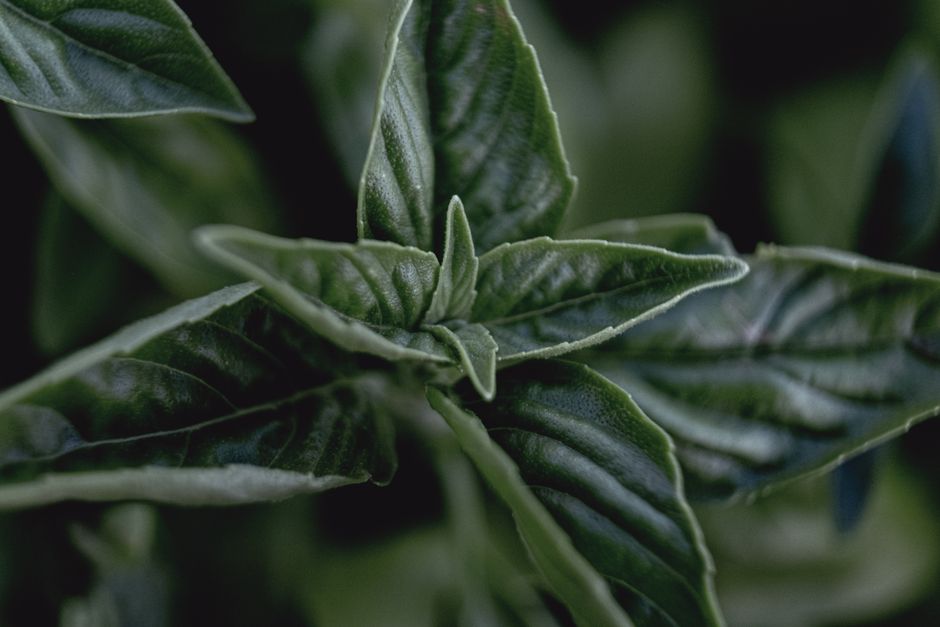
Tulsi — also called holy basil — is a leafy plant in the mint family that has been used in Ayurvedic medicine for centuries and is now sold widely in the US as a tea, capsule, and extract. Its scientific name is Ocimum tenuiflorum, and it is not the same plant as the sweet basil you buy fresh for cooking. The two are related, but they are different species with different chemistry.
You will see tulsi marketed for stress, sleep, blood sugar, and immune support. Some of that has real research behind it. Some of it does not. This article separates the two.
What Is Tulsi Holy Basil?
Tulsi is a small shrubby plant native to the Indian subcontinent and grown across much of Southeast Asia. It produces green or purple leaves with a clove-like scent and small flower spikes.
In Ayurveda, tulsi is classified as an adaptogen — a category of plant said to help the body resist stress. That label comes from traditional use, not from a regulatory definition. The FDA does not recognize “adaptogen” as a formal drug or nutrient category, so any product using the term is using a marketing term, not a clinical one.
There are several types. The most commonly studied are Rama tulsi (green leaves), Krishna tulsi (purple leaves), and Vana tulsi (a wilder, forest variety). Most commercial supplements do not tell you which one they used, and that matters, because the chemical makeup differs between them.
The leaves contain a group of compounds called eugenol, ursolic acid, rosmarinic acid, and various flavonoids. These are the compounds most research focuses on. Whether they reach meaningful levels in your bloodstream after you drink a cup of tea is a separate question, and one that is not fully settled.
What Does the Research Actually Show?
The honest answer is that tulsi has a modest but real body of human research, and most of it is small.
Several randomized controlled trials have looked at tulsi for psychological stress and general mood. These trials generally report improvements on self-reported stress scales. The problem is size and replication. Many enrolled fewer than 100 people, ran for a few weeks, and have not been independently repeated at larger scale. That does not make the findings wrong. It makes them preliminary.
For blood sugar, there is a similar pattern. Some small trials in people with type 2 diabetes have reported changes in fasting glucose or post-meal glucose. The results are not consistent across studies, and the trials are short. No major clinical guideline currently lists tulsi as a treatment for diabetes or prediabetes.
For immune function, the evidence is thinner. Most of what exists comes from laboratory studies on cells, not from trials in people. Lab results on isolated compounds do not automatically translate into a benefit in a living human body.
Here is the part that gets left out of most articles. A plant can have documented biological activity and still produce no measurable clinical benefit at the dose people actually take. Those are two different claims, and only the second one matters if you are deciding whether to spend money on it.
What Is the Difference Between Tulsi and Sweet Basil?
They are different species. Sweet basil is Ocimum basilicum. Tulsi is Ocimum tenuiflorum. Both belong to the mint family, which is why they look similar and share a general leaf shape.
Their chemistry overlaps but is not identical. Sweet basil is bred for flavor and low eugenol content. Tulsi tends to carry more eugenol, which is why it tastes sharper and more clove-like.
Practically, this means you cannot substitute one for the other and expect the same effect. Adding sweet basil to pasta is not the same as drinking tulsi tea, and no research suggests otherwise. If a product label says “basil extract” without specifying the species, you do not know what you are getting.



How Do People Use It?
Tulsi is most often consumed as a tea made from dried leaves. It is also sold as capsules, tinctures, and powdered leaf, and it appears as an ingredient in some stress and sleep blends.
Traditional preparation varies widely by region. In India, the leaves are commonly steeped in hot water, sometimes with ginger or cardamom, and sometimes chewed fresh. There is no single standardized preparation, which is one reason research results are hard to compare across studies.
Dosing is where things get unclear. There is no established clinical dose for tulsi in the US. Supplement labels suggest amounts, but those amounts are set by manufacturers, not by clinical guidelines. No official body has published a recommended daily intake for tulsi in any population.
For pregnant women, breastfeeding women, infants, and children, no clinical guidelines currently exist for tulsi dosing. That is not a statement that it is unsafe. It is a statement that the data needed to make a dosing recommendation does not exist. In those groups, treat it as an unknown rather than a safe default.
Is Tulsi Safe? What Are the Risks?
For most healthy adults consuming tulsi as a tea, reported side effects in trials tend to be mild and uncommon. The most frequently mentioned are digestive upset and, in a small number of cases, nausea.
There are real cautions worth knowing.
- Blood sugar. Because some studies suggest tulsi may lower blood glucose, combining it with insulin or diabetes medication could theoretically push glucose too low. If you take glucose-lowering medication, this is a conversation to have with your clinician rather than something to test on your own.
- Blood thinning. Eugenol has been reported to affect platelet function in laboratory work. Whether this matters at typical dietary doses is not established. If you take an anticoagulant or antiplatelet drug, or you have a bleeding disorder, that uncertainty is worth raising with your doctor.
- Fertility. Some animal and older human research has raised questions about tulsi and sperm count or fertility. The human evidence is limited and dated. It is not strong enough to state a conclusion, but it is also not nothing, and it is often omitted from supplement marketing.
- Pregnancy. Traditional use in some regions includes tulsi during pregnancy, while other sources advise against it. When traditional practice conflicts with itself and no clinical trial data exists, the cautious position is to avoid it.
- Surgery. Because of the theoretical blood sugar and clotting questions, some clinicians advise stopping tulsi before scheduled surgery. This is a precaution based on mechanism, not on documented surgical outcomes.
One more thing worth flagging. Herbal supplements in the US are regulated as dietary supplements, not as drugs. That means they do not need FDA approval for safety or effectiveness before being sold. Independent testing has repeatedly found that some herbal products do not contain what their labels claim, or contain contaminants. If you buy tulsi, third-party testing certification is a reasonable thing to look for, though it is not a guarantee of effectiveness.
Does Tulsi Help With Stress and Sleep?
This is the claim with the most consumer interest and the least definitive evidence.
Some randomized trials have reported reductions in self-reported stress, and a smaller number have looked at sleep quality. The direction of the findings is generally positive. The strength of the findings is not.
Self-reported stress and sleep quality are subjective measures. They are also strongly influenced by expectation, which is exactly why placebo-controlled designs matter, and why small unblinded studies cannot settle the question. A few small trials pointing the same direction is a signal worth following up. It is not proof.
If you are dealing with persistent insomnia, anxiety, or depression, tulsi tea is not a substitute for evaluated care. Those conditions have treatments with much larger evidence bases.
Should You Take It?
That is not a question this article can answer for you, and anyone who answers it confidently is overstepping.
What can be said is this. Tulsi is a real plant with real bioactive compounds and a genuine, if modest, research base. It is not a proven treatment for any condition. It is generally well tolerated as a tea in healthy adults, with the specific cautions noted above. The evidence is weakest for immune claims and strongest, relatively speaking, for stress and blood sugar, where “strongest” still means small short trials.
If you take prescription medication, are pregnant or breastfeeding, or are managing a chronic condition, talk to your clinician before adding it. Not because tulsi is known to be dangerous, but because the interaction data is thin and your situation is specific.
Frequently Asked Questions
What is tulsi holy basil good for?
It is most often used for stress, sleep, and blood sugar support, and those are the areas with the most human research. The trials are generally small and short, so the evidence is preliminary rather than established.
Is tulsi the same as regular basil?
No. Tulsi is Ocimum tenuiflorum and sweet basil is Ocimum basilicum — related plants in the mint family, but different species with different chemistry. They are not interchangeable.
Can you drink tulsi tea every day?
Many people do, and trials in healthy adults have not reported serious problems at typical tea amounts. There is no officially established daily dose, and anyone taking blood sugar or blood thinning medication should check with their doctor first.
Is tulsi safe during pregnancy?
No clinical guidelines currently exist for tulsi use in pregnancy, and traditional sources disagree on whether it should be used. Without trial data, avoiding it is the cautious choice.
