
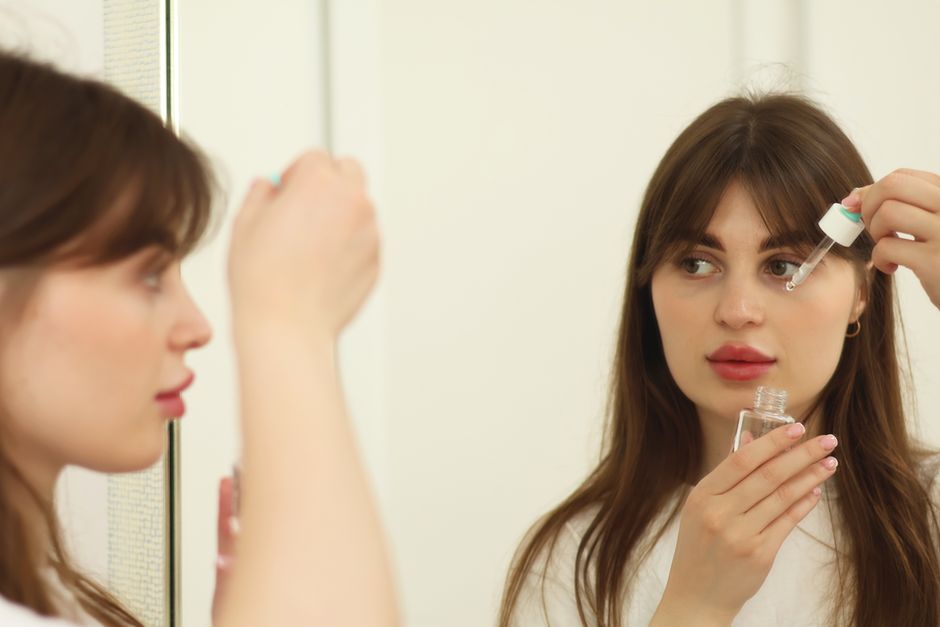
Triethanolamine is a common ingredient in skin care products that helps balance pH levels and allows oil and water to mix into a stable formula. It is considered safe in the small amounts used in cosmetics, but it has been the subject of safety debates for years due to concerns about impurities and skin irritation. The key question is not whether the ingredient itself is toxic, but rather how it is used and what it is combined with in a given product.
What Is Triethanolamine In Skin Care And Is It Safe?
Triethanolamine, often listed as TEA on ingredient labels, is a liquid chemical compound used in cosmetics as a pH adjuster and emulsifier. It works by neutralizing the acidity of other ingredients, bringing the final product to a level that is gentle on skin. It also helps keep oils and water from separating, which is why it appears in lotions, creams, sunscreens, and makeup.
Regulatory agencies in the United States and Europe have reviewed the available data and concluded that triethanolamine is safe for use in cosmetics at typical concentrations. The Cosmetic Ingredient Review panel, which evaluates cosmetic ingredients for safety, has approved its use with the condition that it not be used in products where nitrosamines can form. Nitrosamines are compounds that have been linked to cancer in animal studies, and they can form when triethanolamine reacts with certain other chemicals.
The concern is not the triethanolamine itself. The concern is the potential for contamination during manufacturing or interaction with other ingredients in the formula.
Why Is Triethanolamine Used in So Many Products?
Triethanolamine serves two main jobs in cosmetics. First, it adjusts pH. Skin naturally sits at a slightly acidic pH, around 4.5 to 5.5. Many active ingredients, especially acids used for exfoliation, need to be neutralized to a safer level before they touch your skin. Triethanolamine does this efficiently and at low cost.
Second, it acts as an emulsifier. Oil and water do not naturally mix. Without an emulsifier, a lotion would separate into a watery layer and an oily layer within days. Triethanolamine helps create a stable mixture so the product stays uniform from the first pump to the last.
This dual function explains why it appears in everything from moisturizers to shaving cream to foundation. Manufacturers have used it for decades because it works, it is inexpensive, and it has a long track record of use.
What Are the Known Risks of Triethanolamine?
The main documented risk from triethanolamine is skin irritation. People with sensitive skin or conditions like eczema may experience redness, itching, or a stinging sensation when using products that contain it. This is not an allergic reaction in most cases. It is an irritant response, meaning the concentration in the product is too high for that individual’s skin barrier to tolerate comfortably.
Products with triethanolamine are more likely to cause irritation if they are left on the skin rather than rinsed off. Leave-on products like moisturizers and sunscreens carry a higher irritation risk than rinse-off products like cleansers and shampoos.
The more serious concern involves contamination. Triethanolamine can react with nitrosating agents, which are sometimes present as preservatives or contaminants, to form nitrosamines such as N-nitrosodiethanolamine. Some nitrosamines are classified as probable human carcinogens based on animal studies. Regulatory limits exist to keep these contaminants at trace levels, and the cosmetic industry has largely reformulated to reduce the risk.
No human studies have shown that using skin care products containing triethanolamine increases cancer risk. The evidence for harm comes from animal studies using much higher doses than what a person would absorb through skin application.




Is Triethanolamine Linked to Cancer?
This is the most common fear associated with triethanolamine, and it deserves a direct answer. The concern is based on contamination, not the ingredient itself. When triethanolamine is contaminated with nitrosamines, those nitrosamines are the potentially harmful compounds. Triethanolamine that is pure and free of contaminants has not been shown to cause cancer.
Animal studies that found tumors used extremely high doses administered over long periods. These doses are far higher than what a person would be exposed to from normal cosmetic use. The amount of triethanolamine that penetrates the skin is also limited. Research on skin absorption shows that only a small fraction of the applied amount actually enters the bloodstream.
Regulatory agencies continue to monitor this issue. The FDA allows triethanolamine in cosmetics but restricts the level of nitrosamine contamination. The European Union has similar restrictions. Current manufacturing practices are designed to prevent the conditions that allow nitrosamine formation.
If you are concerned about this ingredient, the practical approach is to check labels for the presence of both triethanolamine and ingredients that could react with it, such as certain preservatives. Products from reputable manufacturers that follow current good manufacturing practices are the safest choice.
Who Should Avoid Triethanolamine?
Most people can use products containing triethanolamine without any problem. The ingredient has been used in cosmetics for over 70 years, and the vast majority of users experience no adverse effects.
People with sensitive skin should be more cautious. If you have a history of reactions to skin care products, patch testing a new product on a small area of skin before applying it to your face is a reasonable precaution. This is good practice for any new product, not just those containing triethanolamine.
People with damaged skin barriers may also want to avoid it. If your skin is already irritated, red, or peeling from conditions like eczema, rosacea, or recent procedures, products with triethanolamine may cause additional stinging. In these cases, choosing products with simpler ingredient lists is often more comfortable.
Pregnant women do not need to avoid triethanolamine based on current evidence. No studies have linked normal cosmetic use of this ingredient to pregnancy complications. As with all cosmetics, the amounts absorbed through skin are small.
What Are the Alternatives to Triethanolamine?
If you prefer to avoid triethanolamine, there are alternatives used in cosmetics that serve the same functions. Sodium hydroxide and potassium hydroxide are common pH adjusters. Aminomethyl propanol is another alternative. For emulsification, ingredients like cetearyl alcohol and various plant-based emulsifiers can replace triethanolamine.
Many brands now market triethanolamine-free products, particularly in the natural and clean beauty categories. These products often use alternative pH adjusters derived from plant sources or simple mineral bases.
It is worth noting that avoiding triethanolamine does not automatically make a product safer or better. Alternative ingredients can have their own irritation profiles. The overall formulation matters more than any single ingredient.
If you are looking for products without triethanolamine, read the full ingredient list rather than relying on front-of-package claims. Some products labeled as natural still contain triethanolamine because it is allowed in certain certification standards.
How to Tell If a Product Contains Triethanolamine
Triethanolamine appears on ingredient lists under several names. The most common is simply triethanolamine. It can also be listed as TEA, trolamine, or triethylolamine. In the European Union, it is listed as triethanolamine on the INCI list, which is the standardized naming system for cosmetic ingredients.
Ingredient lists are ordered by concentration, with the highest concentration ingredients listed first. Triethanolamine is typically used at concentrations between 0.5 percent and 5 percent in cosmetics. It usually appears in the middle or lower half of the ingredient list, reflecting its role as a minor functional ingredient rather than a main component.
If you have a product and are unsure whether it contains triethanolamine, check the label. If the ingredient is not listed, the product does not contain it. Cosmetic labeling regulations require all intentionally added ingredients to be listed.
Frequently Asked Questions
Is triethanolamine safe in skin care products?
Yes, triethanolamine is considered safe at the low concentrations used in cosmetics. Regulatory agencies in the US and Europe have approved its use with restrictions on nitrosamine contamination.
Does triethanolamine cause cancer?
No human studies show that triethanolamine in cosmetics increases cancer risk. The concern is based on potential nitrosamine contamination at levels that are now strictly regulated.
Why is triethanolamine bad for your skin?
Triethanolamine is not bad for most people, but it can cause irritation in those with sensitive skin. It may cause redness, stinging, or itching when used in leave-on products at higher concentrations.
What products contain triethanolamine?
Triethanolamine appears in moisturizers, sunscreens, cleansers, makeup, shaving creams, and hair products. It is used as a pH adjuster and emulsifier in a wide range of cosmetics.
