
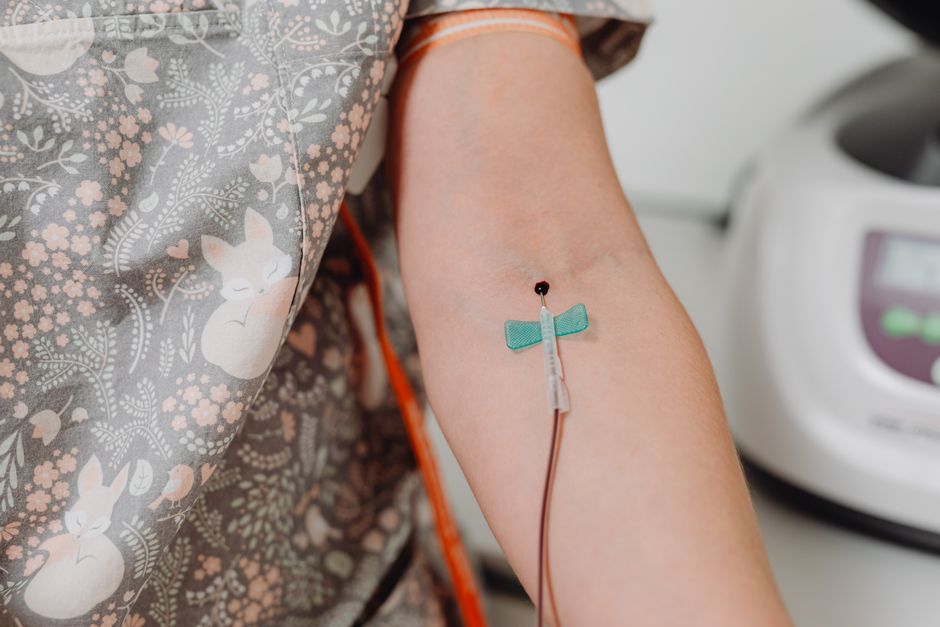
Total protein is a blood test that measures the combined amount of two groups of proteins in your bloodstream: albumin and globulin. Albumin is made by your liver and keeps fluid from leaking out of your blood vessels. Globulins are a broader family that includes antibodies and transport proteins. A total protein result tells your doctor how much protein is circulating overall — it does not, by itself, diagnose anything. It is a starting point that gets interpreted alongside other tests.
What Is Total Protein On A Blood Test?
Total protein is a single number reported on a standard blood chemistry panel. It reflects the sum of albumin and globulin in the liquid part of your blood, called serum or plasma.
The test is usually part of a larger panel — often a comprehensive metabolic panel (CMP) ordered during a routine physical or when you have symptoms. On its own, the total protein value is fairly blunt. It tells your doctor the combined weight of these proteins, but not how the pieces are distributed. That is why albumin and globulin are often measured separately too.
Protein in your blood does real work. Albumin maintains oncotic pressure — the force that keeps fluid inside your blood vessels. Globulins include antibodies that fight infection and proteins that carry hormones, lipids, and minerals through your body. When total protein is abnormal, it can point toward problems with the liver, kidneys, immune system, or nutrition. But it rarely means one specific thing.
What Do Normal Total Protein Levels Look Like?
A typical reference range for total protein in adults is roughly 6.0 to 8.3 grams per deciliter (g/dL). That range comes from standard clinical laboratory references and is widely used in the United States.
Reference ranges vary slightly between laboratories. Each lab establishes its own range based on the equipment and methods it uses, so a result flagged as “normal” at one lab may sit at the edge of another lab’s range. Always read your result against the range printed on your own report.
Age matters too. Children generally have lower total protein than adults, and levels shift during growth. Pregnancy can also lower total protein because blood volume expands and dilutes the proteins in circulation. If you are pregnant or your child is being tested, ask your doctor what range applies — standard adult ranges do not fit everyone.
One number in isolation is rarely enough. A total protein result within the reference range does not rule out disease, and a result slightly outside it does not confirm one.
What Causes High Total Protein?
High total protein means the combined albumin and globulin level sits above the reference range. The cause usually comes down to which fraction is elevated.
When globulins rise, the most common explanation is increased antibody production. Your immune system makes antibodies in response to infection, inflammation, or — less often — a blood cell disorder where the body produces too much of one antibody. Conditions that cause chronic inflammation can push globulin levels up over time.
Dehydration is another common cause of a high reading. When you have less water in your blood, the proteins become more concentrated, so the number rises even though the actual amount of protein has not changed. This is why a repeat test after good hydration sometimes looks completely different.
Less often, high total protein reflects a serious underlying condition involving the bone marrow or immune system. Doctors do not assume this from a single elevated result. They look at the albumin-to-globulin ratio (often written as A/G ratio) and may order additional tests.
What Causes Low Total Protein?
Low total protein means the combined level falls below the reference range. There are three broad explanations: your body is not making enough protein, it is losing protein, or it is not absorbing the building blocks it needs.
Liver disease is a major cause. Your liver makes albumin, so when liver function declines, albumin production drops and total protein falls with it. This is one reason liver function tests are often ordered together with a total protein measurement.
Kidney disease can cause protein loss through the urine. Healthy kidneys keep protein in your blood. Damaged kidneys can let albumin and other proteins escape into urine, which lowers the amount left in circulation. A urine protein test often follows a low total protein result for this reason.
Malnutrition and malabsorption can also lower total protein. If you are not eating enough protein, or your gut is not absorbing nutrients properly, your body has fewer raw materials to build these proteins. This is more common in people with certain digestive conditions, in older adults with poor appetite, or during serious illness.
Other causes include widespread inflammation, burns, and some chronic infections. As with high results, a single low value does not identify the cause. Your doctor will look at the pattern across your whole panel.
Why the Albumin-to-Globulin Ratio Matters
The A/G ratio is calculated by dividing your albumin level by your globulin level. It adds meaning that total protein alone cannot provide.
If total protein is high because globulin is high, the ratio shifts downward. If total protein is low because albumin is low, the ratio also tends to fall. But if total protein is low because of something like malnutrition, both fractions may drop together and the ratio can stay closer to normal.
A normal A/G ratio is generally around 1.1 to 2.5, though laboratories set their own ranges. A ratio outside that window does not diagnose a specific disease. It points your doctor toward which protein group is driving the change and helps decide what to check next.
This is the piece most people miss when they read their own results: total protein is a sum, and the ratio tells you how that sum is built. Two people can have identical total protein numbers with completely different clinical pictures.
What Happens After an Abnormal Total Protein Result?
An abnormal result usually leads to repeat testing and additional blood work rather than an immediate diagnosis. Doctors rarely act on one value alone.
Common next steps include:
- Repeating the test, sometimes after ensuring you are well hydrated
- Measuring albumin and globulin separately if they were not already reported
- Checking liver enzymes and kidney function
- Testing urine for protein loss
- Looking at other markers of inflammation or immune activity
Your doctor will also consider your symptoms, medical history, and medications. Some drugs can affect protein levels, and so can recent illness or surgery. Timing and context shape how a result is read.
If your total protein is mildly outside the reference range and everything else looks normal, your doctor may simply monitor it. That is a reasonable approach in many cases — mild deviations without other findings often turn out to be temporary or benign. But the decision belongs to your clinician, who can see the full picture.
How Accurate Is Total Protein as a Screening Test?
Total protein is not a screening test for any single disease. It is a general indicator that becomes useful when combined with other measurements.
Its main strength is that it is inexpensive, widely available, and part of standard panels. Its main limitation is that it is nonspecific — many different conditions can push it up or down, and mild changes are common.
No clinical evidence currently confirms that total protein alone reliably detects early disease. It works best as one data point in a panel that includes albumin, liver enzymes, kidney markers, and a complete blood count. When those move together in a consistent pattern, the picture becomes clearer.
Some research suggests that the A/G ratio may carry more diagnostic weight than total protein by itself, particularly in certain inflammatory and immune conditions. That does not make total protein useless — it just means the number should never be read in isolation.
Frequently Asked Questions
What is a normal total protein level?
For most adults, the reference range is about 6.0 to 8.3 g/dL, though each laboratory sets its own range. Always compare your result to the range printed on your own report.
Does high total protein always mean something serious?
No. Dehydration is a common and reversible cause of a high reading. Your doctor will consider the pattern of your full panel before drawing conclusions.
Can low total protein be caused by diet?
Yes. Not eating enough protein, or not absorbing it properly, can lower total protein over time. Liver and kidney disease are other common causes.
Do I need to fast before a total protein blood test?
Total protein itself does not require fasting, but it is often part of a panel that does. Follow the instructions your doctor or lab gives you for the specific test ordered.
