
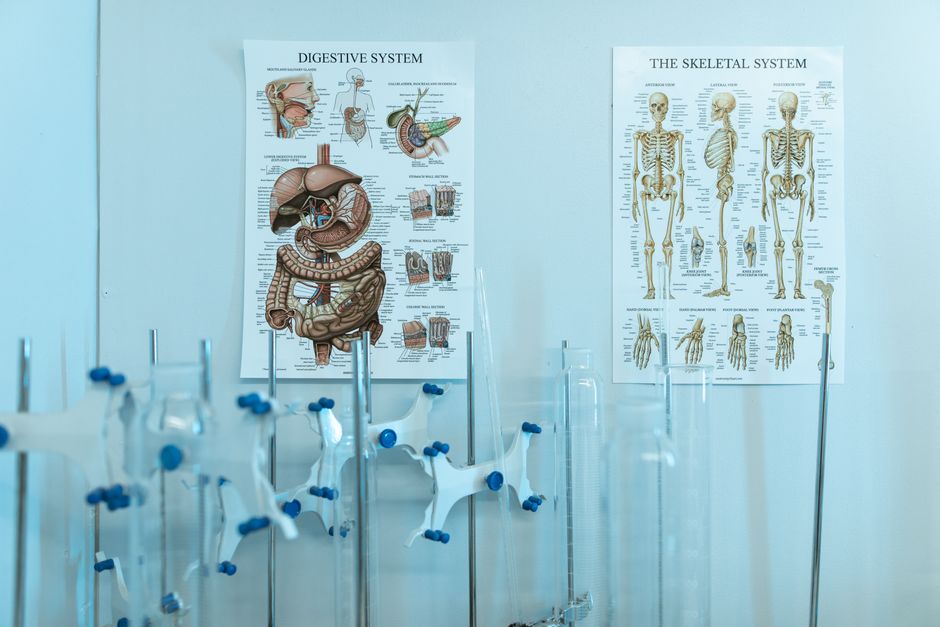
Your skeleton is not a dead scaffold. It is living tissue that rebuilds itself constantly, makes blood cells, stores minerals, and sends chemical signals to the rest of your body. The skeletal system is the framework of bones, cartilage, ligaments, and tendons that gives your body shape, protects your organs, and lets you move. An adult skeleton has 206 bones, though a newborn starts with far more — many of those fuse together during growth.
What Is The Skeletal System?
The skeletal system is your body’s structural framework. It includes bones, the cartilage that caps the ends of many bones, the ligaments that connect bone to bone, and the tendons that attach muscle to bone.
Bones are often pictured as hard and inert. They are neither. Bone is living tissue with its own blood supply, and it is remodeled throughout life by two cell types working in balance. Osteoblasts build new bone. Osteoclasts break old bone down. This cycle lets bone repair fractures and adjust to the loads you place on it.
The skeleton does five main jobs. It supports the body and gives it shape. It protects internal organs. It works with muscles to produce movement. It stores minerals, mainly calcium and phosphorus. And it houses bone marrow, where blood cells are made.
What Are the Main Parts of the Skeletal System?
Anatomy texts divide the skeleton into two parts. The axial skeleton is the central core: the skull, the spine, and the rib cage. It has 80 bones. Its job is protection and support.
The appendicular skeleton is everything attached to that core: the shoulder girdle, arms, hands, pelvis, legs, and feet. It has 126 bones. Its job is movement. Together they add up to 206 bones in a typical adult.
Bones come in several shapes, and the shape usually reflects the job.
- Long bones — the femur, tibia, and arm bones. These act as levers for movement.
- Short bones — the small bones of the wrist and ankle. These allow fine, controlled motion.
- Flat bones — the skull, ribs, and breastbone. These protect organs and provide broad surfaces for muscle attachment.
- Irregular bones — the vertebrae and certain facial bones, which have complex shapes for specific functions.
- Sesamoid bones — small bones embedded in tendons, like the kneecap. They improve the mechanical advantage of the tendon.
Cartilage is a flexible connective tissue that cushions joints and gives shape to structures like the nose and ears. Ligaments hold bones together at joints. Tendons anchor muscle to bone. All of these count as part of the skeletal system, even though only bones are calcified.
What Does Bone Actually Look Like Inside?
Bone has two main forms of tissue. Compact bone is the dense outer layer. It handles most of the load-bearing. Spongy bone, also called trabecular or cancellous bone, is a lighter, lattice-like structure found inside many bones and at the ends of long bones.
That lattice is not random. The struts of spongy bone line up along the directions of stress the bone experiences. This is why bone is strong relative to its weight — it uses material only where it is needed.
Long bones have a hollow central cavity filled with marrow. Red marrow makes blood cells. In adults, red marrow is mostly found in the flat bones — the pelvis, sternum, skull, and vertebrae — rather than in the limbs. Yellow marrow is mostly fat and fills the central cavities of long bones.
Around the outside of bone is a thin membrane called the periosteum. It carries blood vessels and nerves and contains cells that help heal fractures. Bone itself has a rich blood supply and is laced with nerves, which is one reason fractures hurt as much as they do.
How Does Bone Grow and Repair Itself?
Bone is remodeled continuously throughout life. Old bone is removed and new bone is laid down in its place. In healthy adults, the two processes stay roughly in balance, so bone mass holds steady.
During childhood and adolescence, the balance tips toward building. Peak bone mass is generally reached in the mid-twenties. After that, bone mass tends to slowly decline in both men and women, with a sharper drop in women around menopause because of falling estrogen levels.
This is why bone health in youth matters so much later. The more bone you build by your mid-twenties, the more you have to draw on as you age. This is well established in bone biology.
When a bone breaks, the healing process follows a fairly predictable sequence. A blood clot forms at the site. A soft callus of cartilage and fibrous tissue bridges the gap. That callus is gradually replaced by woven bone, which is then remodeled into normal bone over time. Healing takes weeks to months depending on the bone, the type of fracture, and the person’s age and health.
What Does Bone Do Besides Hold You Up?
Bone is an active organ system, not just a frame. It stores about 99% of the body’s calcium and a large share of its phosphorus. It releases these minerals into the blood when levels drop, which matters for nerve function, muscle contraction, and heart rhythm.
Bone also makes blood cells. The marrow inside certain bones produces red blood cells, white blood cells, and platelets throughout life.
One less obvious point: bone acts as an endocrine organ. Research over the past two decades has shown that bone releases signaling molecules that influence other tissues, including effects on insulin sensitivity and on the hormone that regulates phosphate. This is an active area of research, and how much these signals matter for human health in everyday terms is still being worked out.
What Happens to the Skeleton as You Age?
Bone mass declines with age in most people. When bone loss outpaces bone formation, bones become less dense and more fragile. When this reaches a certain threshold, it is diagnosed as osteoporosis, a condition where bone strength is low enough that the risk of fracture rises substantially.
Osteoporosis is common and often silent until a fracture occurs. It is more common in women after menopause, but it also affects men. Fractures of the hip, spine, and wrist are the classic sites. Hip fractures in older adults are serious — they are associated with loss of independence and increased mortality, which is why prevention and treatment matter.
Age also changes the joints. Cartilage can thin and wear over time, contributing to osteoarthritis. The discs between vertebrae lose some water content and become less flexible, which can reduce spinal mobility. None of this is a disease in itself — it is part of normal aging — but the rate varies widely between people.
Bone health depends on several factors that are well established: adequate calcium and vitamin D intake, regular weight-bearing and resistance exercise, not smoking, and limiting alcohol. These are consistently supported across clinical guidance. No single food or supplement substitutes for all of them.
How Do You Keep Your Skeleton Healthy?
Bone responds to the load you put on it. Weight-bearing activity — walking, jogging, stair climbing, dancing — and resistance training are the types of exercise most consistently linked to maintaining bone density. Exercise also improves balance and muscle strength, which reduce fall risk, and falls are a major cause of fractures in older adults.
Nutrition matters too. Calcium and vitamin D are the two nutrients most clearly tied to bone health. Dietary sources of calcium include dairy products, leafy greens, and fortified foods. Vitamin D is made in the skin with sunlight exposure and is found in some foods. Official intake recommendations vary by age and life stage, so it is worth checking current guidance rather than guessing.
There is a common misconception worth correcting: you cannot “feel” your bone density. Osteoporosis typically causes no symptoms until a fracture happens. That is why clinicians sometimes recommend bone density testing for people at higher risk, based on age, sex, and other factors. The exact criteria for who should be screened are set by clinical guidelines and have been updated over time.
Supplements marketed for “bone support” are not all backed by strong evidence. Calcium and vitamin D have solid support when intake is inadequate. Many other ingredients sold for bone health have far less evidence behind them. No supplement has been shown to reverse established osteoporosis on its own.
What Are the Most Common Skeletal Problems?
Fractures are the most obvious. They range from minor cracks to complete breaks, and treatment depends on the bone, the location, and whether the bone ends are displaced.
Osteoporosis is the most common condition affecting bone strength. Osteoarthritis is the most common joint disease, involving breakdown of cartilage and changes to the bone around the joint. Back pain is extremely common and has many causes, most of which are not serious, though some are.
Other skeletal conditions include:
- Scoliosis — a sideways curvature of the spine that often appears in childhood or adolescence.
- Rheumatoid arthritis — an autoimmune condition that attacks the joints, distinct from osteoarthritis.
- Bone infections — uncommon but serious, requiring medical treatment.
- Bone tumors — rare, and most are not cancerous.
Any persistent bone pain, unexplained fracture, or new deformity deserves medical evaluation. Most skeletal problems are manageable, and early assessment usually widens the options.
Frequently Asked Questions
How many bones are in the human body?
An adult skeleton has 206 bones. Babies are born with more separate bones, and many of them fuse together as the body grows.
What are the five main functions of the skeletal system?
The skeleton supports the body, protects organs, enables movement with muscles, stores minerals like calcium, and produces blood cells in the marrow. These are the five functions most anatomy sources describe.
Can you live without a skeleton?
No. The skeleton provides structural support and protects vital organs, so it is essential for life. Some individual bones can be removed or replaced surgically, but the skeletal system as a whole is required.
Does bone grow back after a fracture?
Yes. Bone heals by forming new tissue at the break and remodeling it over time. Healing takes weeks to months depending on the fracture and the person’s health.
