
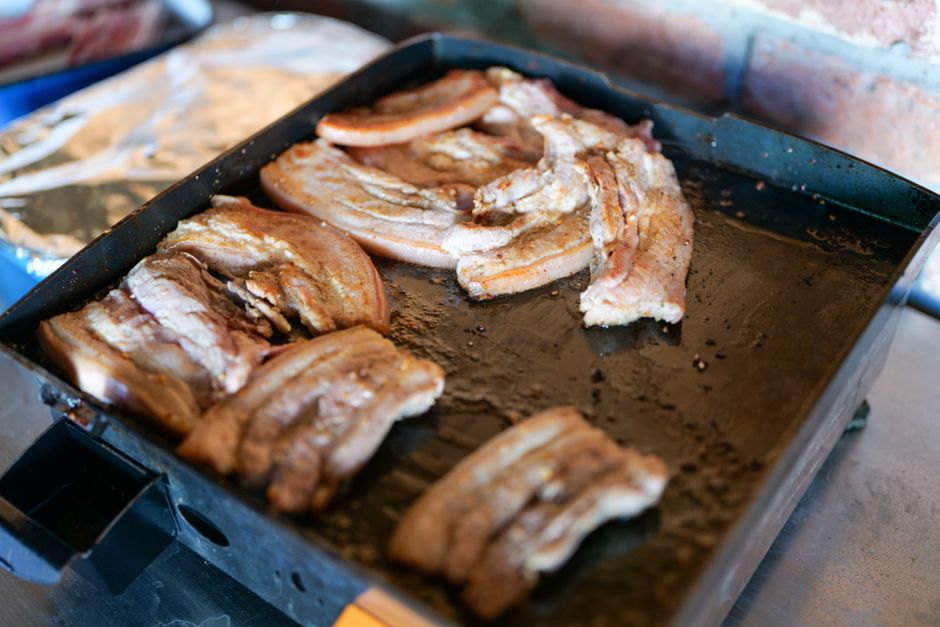
Pork belly is the fatty, boneless cut from the underside of a pig, located between the shoulder and the leg. It contains alternating layers of meat and fat, with a thick layer of skin on one side. This cut is the source of bacon, pancetta, and many slow-roasted pork dishes. Because of its high fat content, pork belly is prized for its rich flavor and tender texture when cooked properly, but it also raises important nutritional considerations.
What Is Pork Belly? A Detailed Definition
Pork belly is a primal cut from the pig’s belly. In butchering terms, it is the entire belly section after the loin and ribs are removed. The cut includes three main tissue layers: the outer skin (rind), a thick layer of subcutaneous fat, and strips of lean meat running through the fat. The ratio of fat to meat is roughly 50–60% fat by weight, depending on the specific piece and how it is trimmed.
This cut is not the same as pork shoulder or pork loin. The belly is softer, fattier, and requires moist, slow cooking to become tender. When sliced thin and cured or smoked, it becomes bacon. When left whole, it can be roasted or braised as a main dish. Pork belly is also the traditional cut for making pork rinds from the fried skin.
Knowing precisely what pork belly is helps you understand its culinary uses and its health implications. Because the fat is intramuscular and interlaced, it does not separate easily from the meat. This is why pork belly remains so moist and flavorful during cooking — and why it is so calorie-dense.
What Is the Nutritional Profile of Pork Belly?
Pork belly is one of the highest-fat cuts of pork available. The vast majority of its calories come from fat, with a significant portion of that being saturated fat. It also provides a moderate amount of protein, along with several B vitamins and minerals such as thiamin, selenium, and phosphorus.
The exact nutrient content varies by how the animal was raised, how the belly is trimmed, and whether the skin is included. Generally, a 3.5-ounce (100-gram) serving of raw pork belly contains roughly 500–600 calories, with about 50–60 grams of total fat. Of that fat, approximately 20 grams is saturated fat. The same serving provides about 10–15 grams of protein. These numbers are estimates based on typical USDA data for composite cuts.
Pork belly also contains cholesterol — roughly 80–100 mg per 100 grams. While dietary cholesterol is no longer considered the primary driver of blood cholesterol for most people, the high saturated fat content remains a concern for cardiovascular health. Processed forms like bacon add sodium and nitrates, which further affect health risk profiles.
How Does Pork Belly Compare to Other Pork Cuts?
Compared to leaner cuts like pork loin or pork tenderloin, pork belly contains three to four times the fat and more than twice the calories per serving. Pork loin, for example, has about 6 grams of fat per 3-ounce serving, while the same amount of pork belly has roughly 30 grams. Pork shoulder (also called Boston butt or picnic roast) falls in between, with around 15–20 grams of fat per serving, but it is still leaner than belly.
Pork belly also differs in how it must be cooked. Lean cuts can dry out quickly if overcooked. Pork belly requires a longer, slower method to render the fat and soften the connective tissue. This makes it more suited to braising, roasting at low temperatures, or curing and smoking for bacon.
If you are comparing nutritional density for a heart-healthy diet, pork belly is at the higher end of the spectrum. For someone on a very low-carbohydrate or ketogenic diet, the high fat content may be viewed as acceptable, but the saturated fat profile still warrants moderation.




What Are the Health Considerations of Eating Pork Belly?
The main health concern with pork belly is its high content of saturated fat and calories. Major health organizations, including the American Heart Association, recommend limiting saturated fat to less than 7% of total daily calories. A single serving of pork belly can supply more than half of that limit for an average adult.
Frequent consumption of foods high in saturated fat has been linked to increased LDL cholesterol and a higher risk of heart disease. This connection is supported by decades of epidemiological research and controlled trials. While some newer analyses have challenged the strength of the link, the overall body of evidence still supports a cautious approach to foods like pork belly that are very high in saturated fat.
When pork belly is processed into bacon or pancetta, additional health factors appear. These products typically contain added sodium, often around 300–500 mg per serving, as well as preservatives like nitrates or nitrites. The World Health Organization classifies processed meat as a Group 1 carcinogen, meaning there is strong evidence that it increases the risk of colorectal cancer. This classification includes bacon, hot dogs, and other processed meats. Unprocessed pork belly is not in that category, but it is still high in fat and calories.
Another practical consideration is portion size. Pork belly is often served in restaurants as a small appetizer or tapa, not as a large entrée. At home, eating 3 to 4 ounces is a reasonable serving. Overeating pork belly can quickly add hundreds of calories without providing much volume or satiety.
How Is Pork Belly Prepared and Cooked?
Pork belly benefits from cooking methods that allow the fat to render slowly and the meat to become tender. Common approaches include braising in liquid (stock, wine, or soy-based sauces), roasting at low temperatures (around 300°F / 150°C) for several hours, or slow cooking in a covered dish. The goal is to reach an internal temperature of at least 145°F (63°C), as recommended by the USDA for pork, but many recipes cook it to 190°F or higher to break down collagen and soften the fat.
The skin (rind) can be scored and crisped to make crackling. This requires high heat at the end of cooking or a separate roasting step. Bacon is made by curing the belly with salt, sugar, and nitrates, then smoking or drying it. Pancetta is a salt-cured version that is not smoked.
Because pork belly is so rich, it pairs well with acidic or bitter components like vinegar, citrus, or greens. Marinades and dry rubs are common, but the fat content means the meat stays moist easily. The main risk in cooking is under-rendering the fat, which can leave a greasy, chewy texture.
Is Pork Belly Compatible with a Healthy Diet?
Pork belly can be part of an otherwise healthy diet if consumed in small amounts and infrequently. It is not a food you would build a daily meal plan around, but occasional inclusion is unlikely to cause harm for most people. The key is portion control and awareness of total daily saturated fat and calorie intake.
For individuals with existing heart disease, high cholesterol, or a history of colorectal cancer, the risks are higher. Processed pork belly products like bacon should be limited or avoided in those cases. For the general population, the American Institute for Cancer Research advises minimizing processed meats and keeping red meat intake modest — pork is considered red meat in this context.
Pork belly also fits some specific dietary patterns, such as ketogenic or paleo diets, where high fat is acceptable. However, even within those diets, the saturated fat content of pork belly is higher than alternatives like olive oil, avocado, or fatty fish. Choosing leaner protein sources most of the time is a more evidence-based approach for long-term health.
Ultimately, there is no single “good” or “bad” food. The overall dietary pattern matters far more than any one ingredient. If you enjoy pork belly, treating it as an occasional indulgence rather than a staple is a sensible strategy.
Frequently Asked Questions
Is pork belly healthy?
Pork belly is high in saturated fat and calories, so it is not considered a health food. Eating it in small amounts occasionally can fit into a balanced diet, but it should not be a regular choice for heart health.
What is the difference between pork belly and bacon?
Bacon is made from pork belly that has been cured, smoked, or both. The curing process adds salt, sugar, and often preservatives like nitrates. Unprocessed pork belly is raw and not cured.
How much saturated fat is in pork belly?
A 3.5-ounce serving of raw pork belly contains roughly 20 grams of saturated fat, which is close to the daily limit recommended by many health organizations for an average adult.
Can you eat pork belly on a low-carb diet?
Yes, pork belly is very low in carbohydrates and high in fat, which fits the macronutrient profile of low-carb and ketogenic diets. However, the high saturated fat content still warrants moderation.
