
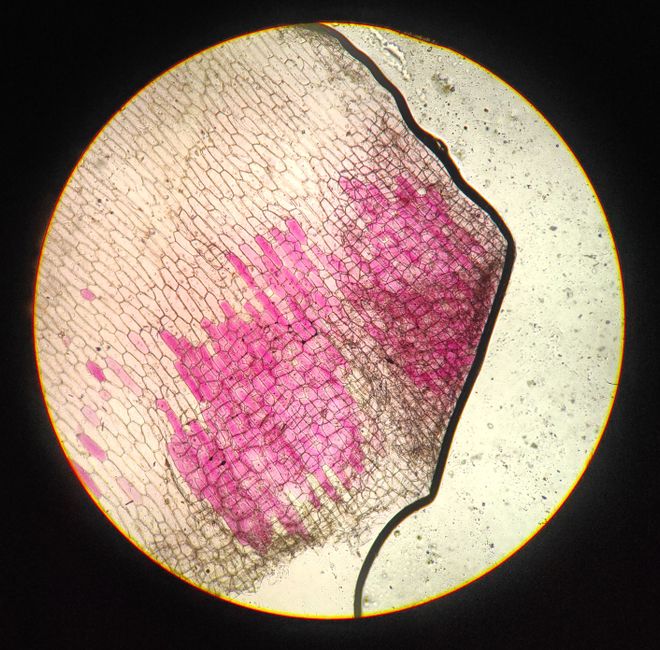
Every cell in your body that divides follows the same sequence: mitosis happens first, then cytokinesis. Mitosis is the division of the nucleus and its chromosomes. Cytokinesis is the division of the surrounding cytoplasm into two separate cells. Mitosis comes first because the genetic material must be split accurately before the cell physically pinches apart. If cytokinesis started before mitosis finished, chromosomes could be cut or lost.
What Is The Order Of Cell Division Mitosis To Cytokinesis?
Mitosis is divided into four main phases, and cytokinesis follows the last of them. The full sequence runs: prophase, metaphase, anaphase, telophase, then cytokinesis.
Some biology textbooks add a fifth stage called prometaphase between prophase and metaphase. Others fold it into prophase. Both approaches describe the same events.
Interphase is not part of mitosis. It is the longer period before division begins, when the cell grows and copies its DNA. Interphase includes three sub-stages: G1, S, and G2. DNA replication happens during S phase. By the time mitosis starts, each chromosome already consists of two identical copies called sister chromatids.
The order matters because it is not arbitrary. Each step depends on the one before it. A cell that enters anaphase before all chromosomes are properly attached to the spindle can end up with daughter cells that have the wrong number of chromosomes. That condition, called aneuploidy, is a hallmark of many cancers.
What Happens During Each Phase of Mitosis?
Each phase has a specific job, and each one sets up the next.
Prophase
Chromatin, which is the loosely packed form of DNA, condenses into visible chromosomes. Each chromosome has two sister chromatids joined at a region called the centromere. Outside the nucleus, structures called centrosomes move to opposite ends of the cell and begin building the mitotic spindle, a network of protein fibers. In most human cells, the nuclear envelope begins to break down toward the end of prophase.
Metaphase
Chromosomes line up along the middle of the cell, called the metaphase plate. Spindle fibers attach to each chromosome at the centromere. One fiber connects to each sister chromatid, pulling from opposite directions. This tension is a checkpoint. The cell pauses until every chromosome is properly attached and under tension. Only then does it proceed.
Anaphase
The sister chromatids separate and are pulled to opposite poles of the cell. Each chromatid is now an independent chromosome. The pulling is driven by shortening spindle fibers and by motor proteins that walk along the fibers. Anaphase is usually the fastest phase of mitosis.
Telophase
Chromosomes arrive at the two poles and begin to decondense back into chromatin. A new nuclear envelope forms around each set. The spindle disassembles. Two distinct nuclei now exist inside one cell. Cytokinesis typically begins during late anaphase or early telophase, overlapping with these final steps.
What Happens During Cytokinesis?
Cytokinesis splits the cytoplasm, organelles, and cell membrane so that two separate cells form. In animal cells, a contractile ring made of actin and myosin filaments forms just beneath the cell membrane at the cell’s equator. This ring tightens like a drawstring, creating a cleavage furrow. The furrow deepens until the cell pinches into two.
Plant cells work differently. A rigid cell wall surrounds them, so pinching is not possible. Instead, vesicles carrying cell wall material gather at the center and fuse outward, forming a cell plate. The plate grows until it divides the cell in two and becomes part of the new cell walls.
Timing matters here. Cytokinesis usually finishes shortly after telophase. In some cell types, it is delayed or skipped entirely. Liver cells, for example, sometimes undergo mitosis without cytokinesis, producing a single cell with two nuclei. This is normal in certain tissues and is not the same as a division error.
-
 Where Is Genetic Information Stored In A Cell?
-
EyeFortin Reviews 2026: Clear Vision Or A marketing Scam?
-
Mounjaboost Reviews & Complaints: Does Drops Work for Weight Loss?
-
Yu Sleep Weight Loss Supplement Reviews. Critical March 2026 Update.
-
Neuro Energizer Review 2026. Legit Brain Tool or Just Hype?




How Do Cells Make Sure Division Happens in the Right Order?
Cells use checkpoints, which are built-in control points that verify each step before allowing the next one to start.
- The G1 checkpoint checks whether the cell is large enough and whether DNA is damaged. If conditions are not right, the cell may pause or exit the cycle.
- The G2 checkpoint verifies that DNA replication is complete and undamaged before mitosis begins.
- The spindle checkpoint during metaphase confirms that every chromosome is attached to the spindle and under proper tension.
Proteins such as cyclins and cyclin-dependent kinases drive the transitions between phases. Their levels rise and fall in a controlled pattern. When genes that regulate these proteins mutate, cells can divide when they should not. That is one route to uncontrolled growth.
This is why the order is not just a description of what happens. It is enforced. The sequence exists because cells that skip or reverse steps tend to die or become dangerous.
How Long Does Cell Division Take?
Mitosis itself is short. In typical human cells grown in the lab, mitosis takes roughly under an hour, though this varies by cell type and conditions. Cytokinesis adds a short period after that.
The full cell cycle is much longer. For rapidly dividing human cells in culture, a complete cycle often takes about 24 hours. Most of that time is interphase, not mitosis. Cells that divide slowly, such as many mature cells in the body, may take days or longer, and some cells, such as most neurons, stop dividing altogether after maturity.
These numbers come from laboratory studies of cultured cells. Division timing inside the human body can differ and is harder to measure directly.
What Happens If the Order Goes Wrong?
Errors in the sequence can produce daughter cells with extra or missing chromosomes. The spindle checkpoint catches most of these mistakes, but not all.
When a cell exits mitosis with the wrong chromosome number, the result is aneuploidy. Most aneuploid human cells do not survive. Some do, and certain aneuploidies are linked to cancer. Research has consistently found that cancer cells frequently carry abnormal chromosome numbers, though the relationship is complex. Aneuploidy can contribute to cancer, and cancer can also cause aneuploidy.
Errors can also happen in cytokinesis. If the cleavage furrow fails to complete, the cell may end up with two nuclei. If it splits unevenly, one daughter cell may get too little cytoplasm or too few organelles.
How Is Mitosis Different From Meiosis?
Mitosis produces two daughter cells that are genetically identical to the parent cell. Meiosis produces four daughter cells with half the normal chromosome number, and those cells are genetically different from each other. Meiosis happens only in the cells that produce eggs and sperm.
Meiosis involves two rounds of division. The first round separates homologous chromosomes, and the second round separates sister chromatids, similar to mitosis. Cytokinesis follows each round. In humans, meiosis reduces the chromosome number from 46 to 23 in each gamete.
Why Does the Order Matter for Health?
The strict sequence from prophase through cytokinesis protects the integrity of the genome. Each checkpoint exists because the cost of an error is high. A cell with the wrong chromosome number can malfunction, die, or begin dividing without control.
Understanding the order also matters for medicine. Many chemotherapy drugs target specific phases of mitosis. Some interfere with spindle formation, which triggers the spindle checkpoint and causes cancer cells to stop dividing or die. Others disrupt DNA replication during interphase. Knowing exactly when each event happens helps explain why these drugs work and why they also affect normal dividing tissues, such as hair follicles and the lining of the gut.
The sequence itself is one of the most conserved processes in biology. The same basic order, mitosis followed by cytokinesis, occurs in organisms as different as yeast and humans. That consistency is a sign of how fundamental the process is.
Frequently Asked Questions
Does mitosis or cytokinesis happen first?
Mitosis happens first. Cytokinesis begins during late anaphase or telophase and finishes after mitosis is complete.
What are the four stages of mitosis in order?
The four main stages are prophase, metaphase, anaphase, and telophase. Some textbooks list prometaphase as a separate fifth stage between prophase and metaphase.
Is cytokinesis part of mitosis?
No. Cytokinesis is a separate process that divides the cytoplasm, while mitosis divides the nucleus and chromosomes. The two usually overlap in time but are distinct events.
What happens if cytokinesis does not occur after mitosis?
The cell ends up with two nuclei inside a single cell, a condition called multinucleation. This happens normally in some tissues, such as liver, but it can also result from division errors.
