
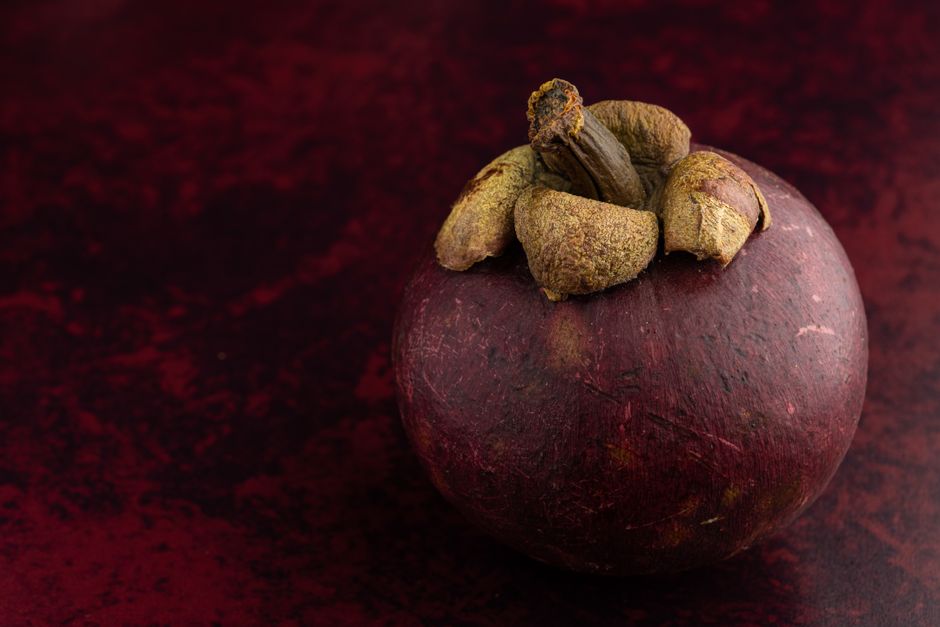
Mangosteen is a tropical fruit with a deep purple rind and sweet, white segments inside. It grows on a slow-maturing evergreen tree native to Southeast Asia. The fruit is often called the “queen of fruits” in parts of Asia, though it has no botanical relationship to the mango despite the similar name.
Mangosteen has become popular in the United States mainly through juice products and supplements, not the fresh fruit. Those products often make health claims that go far beyond what research supports. This article separates what is known about the fruit itself from what is claimed about it in the marketplace.
What Is The Mangosteen Fruit?
Mangosteen is the fruit of Garcinia mangostana, a tropical tree that can take close to a decade to bear fruit. The tree grows mainly in Thailand, Malaysia, Indonesia, Vietnam, and the Philippines. It needs steady warmth and high humidity, which limits where it can be grown commercially.
The fruit is roughly the size of a small tangerine. Its thick rind, called the pericarp, starts green and turns dark purple as it ripens. Inside are four to eight wedge-shaped segments of soft white flesh, similar in texture to a peeled orange but milder and sweeter. Each segment may contain a seed. The rind is tough and not eaten fresh, though it is dried and used in some traditional preparations.
Fresh mangosteen is difficult to find in most of the US. It is perishable, and imports have historically been limited. Most Americans encounter mangosteen as a bottled juice, a powder, or a capsule.
What Does Mangosteen Taste Like?
The flesh tastes sweet and slightly tangy, with a flavor often compared to a blend of peach, strawberry, and citrus. It is mild rather than bold. The texture is soft and juicy, and good fruit separates easily from the rind.
Quality varies a lot. Underripe fruit is firm and less sweet. Overripe fruit can turn mushy. In Southeast Asia, vendors often check ripeness by looking at the color of the rind and the number of segments visible on the bottom of the fruit.
The rind itself is bitter and astringent. It contains tannins, which is why it is not eaten fresh. That same rind is the source of most mangosteen extracts sold as supplements.
What Nutrients Does Mangosteen Contain?
Mangosteen flesh is mostly water and carbohydrate. It provides some vitamin C, fiber, and small amounts of B vitamins and minerals. It is not a concentrated source of any single nutrient.
The rind is a different story. It is rich in a class of plant compounds called xanthones, which have drawn research interest for their antioxidant activity in laboratory studies. That is a lab finding, not a demonstrated human health benefit. Antioxidant activity measured in a test tube does not automatically translate into benefits inside the body.
Here is a comparison of the fruit’s main parts:
| Part of Fruit | Edible | Main Content |
|---|---|---|
| White flesh | Yes | Water, carbohydrate, some vitamin C and fiber |
| Purple rind | No, not fresh | Tannins and xanthones |
| Seeds | Not typically eaten | Fat and protein |
One point worth clarifying: the xanthone content that makes mangosteen extracts marketable comes almost entirely from the rind, not the flesh. When you eat fresh mangosteen, you are eating the part with the least of these compounds.
Does Mangosteen Have Proven Health Benefits?
No large human trials have confirmed that mangosteen or mangosteen juice treats or prevents any disease. Most of the research to date has been done in cells or animals. That kind of research can point toward questions worth studying, but it does not show what happens in people.
Some small human studies have looked at mangosteen juice and markers such as inflammation. The results have been mixed, the studies have been small, and several were funded by companies that sell the product. That does not make the findings false, but it means they should be treated with caution.
Common marketing claims include that mangosteen boosts the immune system, fights cancer, reduces inflammation, or supports weight loss. As of now, none of these claims rest on strong human evidence. The evidence is either preliminary, absent, or based on laboratory work that has not been confirmed in people.
That is not the same as saying mangosteen is bad for you. It is a fruit with some nutrients. It just does not have the documented health effects that many products suggest.
Is Mangosteen Juice Worth Buying?
Mangosteen juice is often sold at a high price with claims that it supports many aspects of health. The evidence does not support those claims. If you enjoy the taste, that is a reasonable reason to drink it. Buying it for disease prevention is not supported by current research.
Many mangosteen juice products are blends. They may contain other fruit juices, added sugar, or preservatives. Reading the label matters more than the front of the bottle. Some products contain little actual mangosteen.
There is also a practical issue with cost. A bottle of mangosteen juice can cost far more than other fruit juices that provide comparable or better nutrition for less money.
Are There Any Risks or Medication Interactions?
Mangosteen flesh is generally considered safe to eat as a food. The rind and concentrated extracts are a different matter, because they contain compounds at levels far higher than you would get from eating the fruit.
Some research suggests that mangosteen may affect how the body processes certain drugs, though this has not been well studied in humans. If you take prescription medication, especially blood thinners or drugs for heart conditions, talk with your doctor before using mangosteen supplements. Do not stop or change a prescribed medication based on a supplement claim.
There is no established dosing guidance for mangosteen supplements. No clinical guidelines currently exist for a recommended amount. That alone is a reason for caution with any product that presents a specific dose as meaningful.
People who are pregnant or breastfeeding should be especially careful. There is not enough reliable information to say whether mangosteen supplements are safe in these groups.
How Do You Eat Fresh Mangosteen?
Fresh mangosteen is eaten by hand. The rind is tough, so the usual method is to score it around the middle with a knife and twist it open, or to press gently until it cracks. The white segments lift out easily.
Choose fruit that feels slightly soft when pressed and has a deep, even purple color. Avoid fruit with a hard, dry rind or visible mold. Once opened, the flesh is best eaten right away, since it does not keep well.
If you cannot find fresh fruit, frozen or canned versions exist in some specialty stores. These are food products, not supplements, and are not marketed with the same health claims.
Frequently Asked Questions
What is the mangosteen fruit good for?
As a food, it provides water, carbohydrate, some vitamin C, and fiber. No strong human evidence shows it treats or prevents any disease, despite common marketing claims.
Is mangosteen the same as mango?
No, they are unrelated fruits from different plant families. The similar names are a coincidence, and the two fruits look and taste nothing alike.
Can you eat the purple rind of a mangosteen?
Not fresh, because it is bitter and astringent from tannins. Dried rind is used in some traditional preparations and is the main source of the compounds found in mangosteen supplements.
Does mangosteen juice have proven health benefits?
No large human trials have confirmed any disease-related benefit. Small studies exist, but they are limited and several were funded by sellers of the product.
