
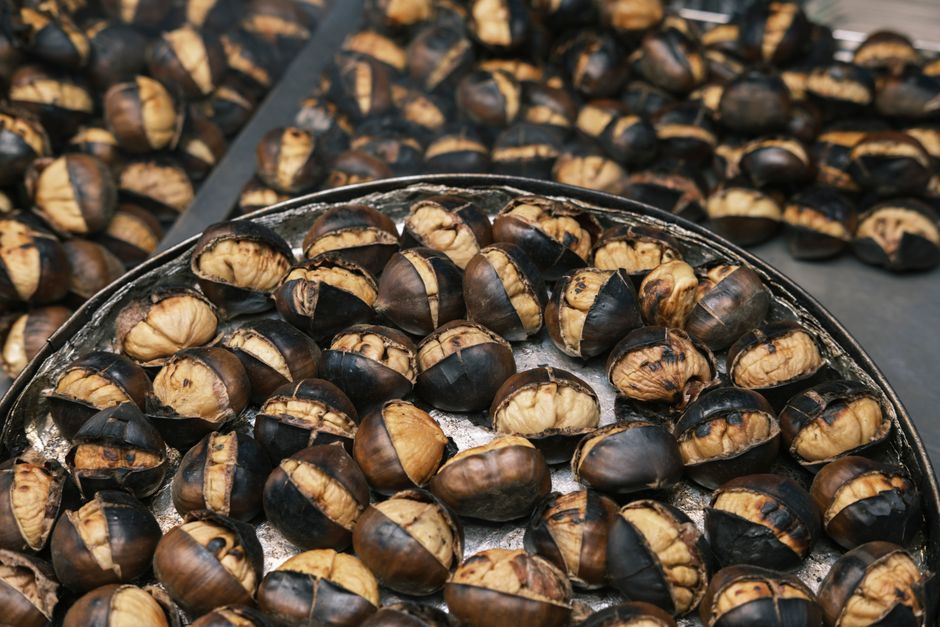
When people ask which nut has the fewest calories, the answer surprises most of them: the chestnut. A roasted chestnut contains roughly 70 calories per ounce, which is about half the calories of almonds, walnuts, or cashews. Chestnuts are not just the lowest-calorie nut — they are in a category of their own because they are technically a fruit and behave more like a grain or vegetable than a typical nut.
What Makes Chestnuts Different From Other Nuts?
Most nuts are high in fat and protein. That is why they are calorie-dense. Chestnuts are the opposite. They are about 45% water and contain very little fat — usually less than 2 grams per 100 grams. Instead, their calories come mostly from complex carbohydrates and starch.
This changes how your body processes them. A handful of almonds delivers a slow burn of energy from fat and protein. Chestnuts deliver a quicker release of energy from starch, similar to a potato or sweet potato. If you are counting calories, chestnuts give you more food by weight for fewer calories than any other nut.
How Many Calories Are in Chestnuts vs. Other Nuts?
To understand the difference, look at the numbers side by side. All values are for roasted nuts per 100 grams, which is about 3.5 ounces.
| Nut | Calories per 100g | Fat (g) | Protein (g) | Carbs (g) |
|---|---|---|---|---|
| Chestnuts (roasted) | 245 | 2 | 3 | 53 |
| Almonds (roasted) | 579 | 50 | 21 | 22 |
| Walnuts | 654 | 65 | 15 | 14 |
| Cashews (roasted) | 574 | 44 | 15 | 33 |
| Pecans | 691 | 72 | 9 | 14 |
| Pistachios (roasted) | 562 | 45 | 21 | 28 |
Chestnuts have less than half the calories of most other nuts. They also have almost no fat. That single fact makes them the clear answer to the question of which nut is lowest in calories.
Do Chestnuts Count as a Nut for Nutrition Purposes?
Botanically, chestnuts are not true nuts. A true nut has a hard shell that does not open to release the seed. Chestnuts have a shiny brown shell that splits open when ripe. They are technically the fruit of the chestnut tree, and they belong to the same family as oaks and beeches.
Nutritionally, this distinction matters. True nuts like almonds and walnuts are seeds with high fat content. Chestnuts are starchy fruits. They are closer to whole grains in their nutrient profile. This is why they are lower in calories and fat, but also lower in protein.
If you are eating chestnuts to replace other nuts in your diet, you need to know that you are not getting the same protein or healthy fats. Chestnuts provide about 3 grams of protein per 100 grams. Almonds provide around 21 grams. They are not a protein substitute.





Are Chestnuts Good for Weight Loss?
Chestnuts can help with weight management for one clear reason: they fill you up for fewer calories. Because they are high in water and fiber, they take up more space in your stomach than an equal-calorie portion of almonds.
But there is a catch. Chestnuts are high in carbohydrates. About 53 grams of carbs per 100 grams. That is similar to a baked potato. If you are following a low-carb diet, chestnuts are not a good fit. If you are simply counting calories, they are an excellent choice.
Another practical point: chestnuts are rarely eaten raw. They are usually roasted or boiled. How you prepare them changes the calorie count. Roasting removes water and concentrates calories slightly. Boiling adds water and keeps calories lower. Neither method adds significant fat unless you use butter or oil.
What Are the Health Benefits of Chestnuts?
Chestnuts offer several genuine nutritional benefits beyond being low in calories. They are a good source of vitamin C — unusual for a nut. A 100-gram serving of roasted chestnuts provides about 26 milligrams of vitamin C, which is about a third of the daily recommended intake for most adults.
They also contain potassium, magnesium, and B vitamins, especially B6 and folate. The fiber content is respectable at about 5 grams per 100 grams. That fiber supports digestive health and helps with satiety.
Chestnuts are naturally gluten-free. For people with celiac disease or gluten sensitivity, chestnut flour is a useful alternative to wheat flour in baking. It has a slightly sweet, nutty flavor and works well in pancakes, breads, and pastas.
One thing chestnuts do not provide is significant omega-3 fatty acids. Walnuts are famous for those. If you eat chestnuts instead of walnuts, you lose that benefit entirely. This is not a reason to avoid chestnuts — just a reminder that no single food does everything.
How to Eat Chestnuts Without Ruining Their Low-Calorie Advantage
The way you prepare chestnuts matters more than with other nuts. Raw chestnuts are bitter and hard to peel. Roasting is the traditional method. Score an X on the flat side of each nut, roast at 400°F for about 20 minutes, and peel while warm.
Boiling is another option. Boiled chestnuts have a softer texture and slightly fewer calories per gram because they absorb water. Steaming works too and keeps more of the nutrients intact.
Be careful with prepared chestnuts sold in stores. Some are roasted with sugar or coated in syrup. Candied chestnuts — marrons glacés — are a dessert and can contain more sugar than the chestnut itself. Vacuum-packed roasted chestnuts are usually plain and fine, but check the label for added ingredients.
Chestnut flour is a good way to use them in cooking. It is lower in calories than wheat flour by weight and adds a distinct flavor. But it behaves differently in recipes. It lacks gluten, so baked goods made with chestnut flour are denser and do not rise the same way. Many recipes combine chestnut flour with wheat flour or use eggs to provide structure.
What Is The Lowest Calorie Nut Chestnuts Win — But Should You Eat Them Daily?
Eating chestnuts daily is fine for most people. They are a whole food with fiber, vitamins, and minerals. The main consideration is their carbohydrate content. If you have diabetes or insulin resistance, portion control matters. A serving of chestnuts is about 3 ounces or roughly 10 medium nuts.
People with a history of kidney stones should be aware that chestnuts contain oxalates, though at lower levels than spinach or almonds. As with any food, moderation is the sensible approach.
One more thing worth knowing: chestnuts spoil faster than other nuts. They have high water content, which makes them prone to mold. Store them in the refrigerator in a paper bag and use them within a week or two. Cooked chestnuts can be frozen for several months.
Are There Other Low-Calorie Nuts Worth Considering?
If you cannot find chestnuts or simply do not like them, the next lowest-calorie options are pistachios and cashews. Both are lower in fat than almonds and walnuts. Pistachios have about 562 calories per 100 grams and the added benefit of being sold in-shell, which slows down eating.
Almonds are not the lowest-calorie nut, but they are the most nutrient-dense per calorie. They provide more protein, fiber, vitamin E, and magnesium than chestnuts. If your goal is maximum nutrition per bite, almonds win. If your goal is fewest calories per bite, chestnuts win.
The choice depends on your goal. For weight loss, chestnuts give you volume and satiety for fewer calories. For metabolic health and nutrient density, traditional nuts like almonds and walnuts are stronger. There is no reason you cannot include both in your diet.
Frequently Asked Questions
Are chestnuts really the lowest-calorie nut?
Yes. Roasted chestnuts have about 245 calories per 100 grams, which is less than half the calories of almonds, walnuts, or pecans.
Can I eat chestnuts on a low-carb diet?
Not easily. Chestnuts contain about 53 grams of carbohydrates per 100 grams, similar to a potato, so they do not fit a strict low-carb eating plan.
Do chestnuts have any protein?
They have some, but not much — about 3 grams per 100 grams. That is far less than almonds or pistachios, so chestnuts should not be your protein source.
How many chestnuts can I eat in one serving?
A reasonable serving is about 3 ounces, which is roughly 10 medium roasted chestnuts. That provides around 200 calories.
