
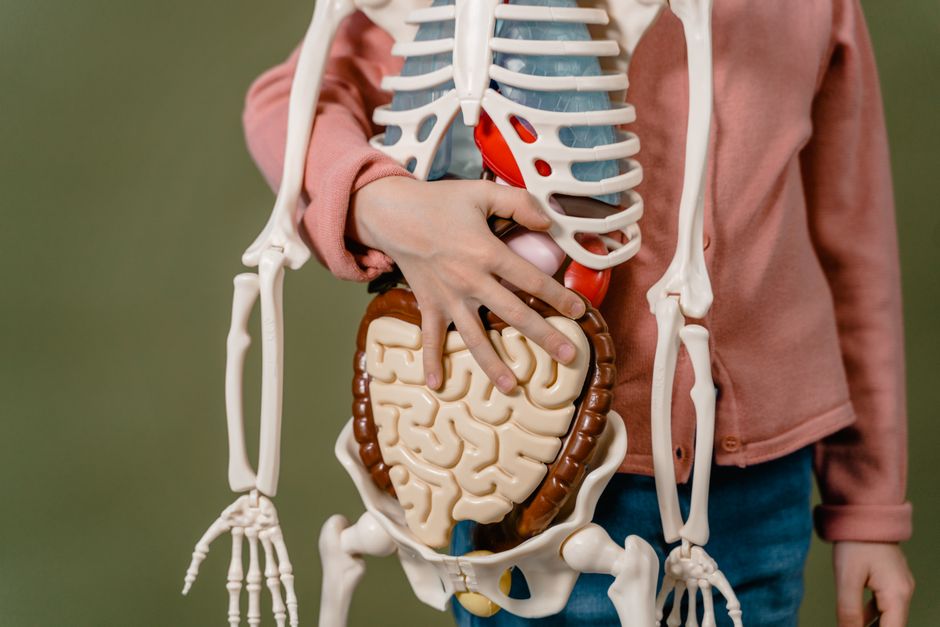
The largest organ in the human body is the skin. An adult carries roughly 8 pounds of it, spread across about 22 square feet of surface area. It covers every inch of you, and it does far more than hold everything in.
Most people picture organs as things tucked inside the body — the heart, the liver, the lungs. Skin is easy to overlook because you see it every day. But by weight and by surface area, nothing else comes close.
What Is The Largest Organ Of Human Body?
The skin is the largest organ of the human body by both weight and surface area. It accounts for roughly 15% of total body weight in adults.
That figure shifts with body size. A heavier person has more skin, and the percentage can vary. But in every adult, skin outweighs the liver — the next largest solid organ — by a wide margin.
The skin is also the largest organ system in a sense, because it has multiple parts working together: the outer layer, the deeper layer, hair follicles, glands, nerves, and blood vessels. That complexity is part of why it qualifies as a true organ rather than just a covering.
Why Is Skin Considered An Organ?
An organ is a structure made of two or more tissues working together for a specific purpose. Skin meets that definition completely.
It contains all four major tissue types:
- Epithelial tissue — the outer protective layer
- Connective tissue — collagen and elastin that give skin strength and stretch
- Muscle tissue — tiny arrector pili muscles attached to hair follicles
- Nervous tissue — nerve endings that detect touch, temperature, and pain
These tissues cooperate constantly. When you touch something hot, nerve endings fire, blood vessels respond, and glands may activate — all within the same organ. That coordination is what separates an organ from a simple sheet of cells.
A common misconception is that the skin is one uniform layer. It is actually three distinct layers stacked on top of each other, each with its own structure and job.
What Are The Three Layers Of Skin?
Skin is built from three layers, each with a different role. Understanding them explains why skin behaves the way it does.
The epidermis
The epidermis is the thin outer layer you can see and touch. Its deepest cells divide constantly, pushing older cells upward. By the time those cells reach the surface, they are flat, dead, and packed with a protein called keratin.
This layer is your first line of defense. It blocks water loss, keeps microbes out, and continually replaces itself. The outer surface you touch is mostly dead cells — which is exactly why a shallow scrape does not hurt until it goes deep enough to reach nerve endings.
The dermis
The dermis sits beneath the epidermis and does most of the work. It holds collagen and elastin fibers that give skin its strength and ability to spring back. It also contains blood vessels, nerve endings, sweat glands, oil glands, and hair follicles.
Most of the skin’s weight comes from this layer. When skin sags with age, it is largely because collagen and elastin in the dermis decline over time.
The hypodermis
The hypodermis is the deepest layer, made mostly of fat and connective tissue. It cushions the body, insulates against cold, and anchors the skin to the muscles and bones underneath.
Fat distribution in this layer varies widely between people. That variation is normal and does not reflect health on its own.
What Does Skin Actually Do?
Skin performs several jobs at once, and most of them happen without you noticing.
Protection. It blocks physical injury, ultraviolet radiation, and most microbes. The slightly acidic surface also makes it harder for harmful bacteria to settle and multiply.
Temperature control. When you are hot, sweat glands release fluid that cools you as it evaporates, and blood vessels near the surface widen to release heat. When you are cold, those vessels narrow to keep warmth in. This regulation is one of the skin’s most important roles, and it happens continuously.
Sensation. Nerve endings in the skin detect pressure, vibration, temperature, and pain. This is how you feel a light touch, sense a draft, or pull your hand back from something sharp.
Vitamin D production. When ultraviolet light hits the skin, a form of cholesterol in the skin is converted into a precursor that the body eventually turns into active vitamin D. This is a well-established function, though how much vitamin D a person makes depends on skin tone, location, season, and time spent outdoors.
Water retention. The epidermis acts as a barrier that keeps water inside the body. When that barrier is damaged — by burns, harsh soaps, or certain skin conditions — water loss through the skin increases.
How Does Skin Compare To Other Organs?
Skin is the largest organ by weight and surface area, but other organs have their own claims to size. Here is how they compare in general terms.
| Organ | How It Measures Up |
|---|---|
| Skin | Largest by weight and surface area; about 15% of body weight in adults |
| Liver | Largest internal solid organ; typically around 3 pounds in adults |
| Lungs | Large internal surface area for gas exchange, but far lighter than skin |
| Intestines | Very long and have a large internal surface, but not the largest by weight |
The liver is often called the largest internal organ, and that is accurate. Skin wins the overall title because it sits on the outside and covers the entire body.
One point worth clarifying: the lungs and intestines have enormous internal surface areas, but surface area alone is not how organ size is usually ranked. By weight, skin and liver lead the pack.
Does Skin Size Change With Age Or Body Size?
Yes. Skin grows with the body and changes throughout life.
A child has less skin than an adult simply because they are smaller. As body size increases, skin surface area increases too. This is why body surface area — a measurement based on height and weight — is used in some medical dosing calculations rather than weight alone.
With age, skin does not shrink dramatically, but its structure changes. Collagen and elastin production slows, the dermis thins, and the skin becomes less elastic. Sweat glands and oil glands become less active. These changes are normal and vary a great deal from person to person.
Weight changes also affect skin. Significant weight gain stretches the skin, and rapid weight loss can leave it looser because stretched collagen and elastin do not always return to their original state.
What Else Should You Know About The Skin?
Skin renews itself constantly. The epidermis replaces itself roughly every few weeks, though the exact timing varies by age and body site. This constant turnover is why many shallow skin injuries heal on their own.
Skin also hosts a large community of microorganisms — bacteria, fungi, and other microbes — that live on its surface. This skin microbiome is an active area of research. Some studies suggest these organisms interact with the immune system, but the clinical implications are still being worked out. No treatment based on altering the skin microbiome is established as broadly effective.
Another point: skin color and skin type affect how skin responds to sun exposure and how certain conditions appear. Skin cancer can look different on different skin tones, and some conditions are harder to recognize on darker skin. This is a real clinical issue, not a minor detail.
The skin is also a window into overall health. Changes in skin color, texture, or healing can sometimes reflect internal problems. That does not mean every rash signals something serious — most do not. But persistent or unusual skin changes are worth having looked at.
Frequently Asked Questions
Is skin the largest organ in the human body?
Yes. Skin is the largest organ by both weight and surface area, making up roughly 15% of adult body weight. The liver is the largest internal solid organ.
How much does human skin weigh?
An adult’s skin weighs roughly 8 pounds on average, though this varies with body size. It covers about 22 square feet of surface area.
What are the three layers of skin called?
The three layers are the epidermis (outer), dermis (middle), and hypodermis (deepest). Each layer has a distinct structure and function.
Is the liver bigger than the skin?
No. The liver is the largest internal organ, typically around 3 pounds in adults, but skin outweighs it and covers far more surface area.
