
For most men, the ideal body fat percentage depends on your goal. For general health, a range of 10–20% is widely considered optimal. For lean athletic conditioning, 8–15% is common. Below 8% is usually not sustainable long-term, and above 25% raises health risks.
What Is The Ideal Body Fat Percentage For A Man?
Body fat percentage is the portion of your total weight that is fat. The rest is muscle, bone, water, and organs. This number matters more than the scale because it separates fat mass from lean mass.
Two men can weigh the same. One at 15% body fat looks fit and defined. Another at 30% looks softer and carries higher metabolic risk. The percentage tells you which one you are.
For health purposes, most medical organizations view 10–20% as a healthy range for adult men. This is not a strict cutoff. It is a practical target supported by population data and clinical experience.
How Body Fat Ranges Are Classified
Body fat classifications help doctors and trainers communicate risk and fitness levels. These categories are not arbitrary. They correlate with metabolic health and disease outcomes.
| Category | Body Fat % (Men) | What It Means |
| Essential fat | 2–5% | Minimum needed for basic physiological function |
| Athletic | 6–13% | Lean, visible muscle definition |
| Fit | 14–17% | Healthy, moderate definition |
| Average | 18–24% | Acceptable but room for improvement |
| Overweight | 25–29% | Elevated health risk begins |
| Obese | 30%+ | Significant health risk |
These ranges come from the American Council on Exercise and similar professional sources. They are guidelines, not laws. A competitive bodybuilder at 7% may be perfectly healthy. A sedentary man at 20% may still have poor metabolic markers.
Why 10–20% Is The Health Sweet Spot
Research consistently links body fat above 25% in men to higher rates of type 2 diabetes, high blood pressure, and cardiovascular disease. The relationship is not linear. Risk climbs steadily as fat accumulates, especially around the abdomen.
Below 10%, the health picture changes. Hormones need fat to function. Testosterone production can drop at very low body fat levels. Energy levels fall. Recovery from exercise slows. Many men report poor sleep and irritability when they push below 8%.
The 10–20% range sits in a practical middle zone. It is high enough to support normal hormone function and low enough to reduce metabolic strain. Most men can reach this range with consistent training and sensible eating.





What Counts As A Healthy Body Fat Percentage For A Man?
Age changes the picture slightly. Body fat tends to increase naturally as men get older. This is partly hormonal and partly lifestyle related. Testosterone declines gradually after age 30, and muscle mass tends to decrease without regular strength training.
Some guidelines suggest slightly higher acceptable ranges for older men. A 60-year-old man at 22% may be in better health than a 25-year-old at 22%. The younger man has more metabolic reserve. The older man may have adapted to his composition over decades.
What matters more than the exact number is where fat sits. Visceral fat — the fat around organs inside the abdomen — is more dangerous than subcutaneous fat under the skin. A man with a waist over 40 inches faces elevated health risks even if his body fat percentage reads in the 20s.
How To Measure Body Fat Accurately
Scales that claim to measure body fat are convenient but unreliable. They use bioelectrical impedance, which sends a small electrical current through the body. Hydration levels, food intake, and recent exercise can change readings by several percentage points in a single day.
Skinfold calipers are better when used by a trained professional. They measure fat thickness at specific body sites and plug those numbers into a formula. Accuracy depends heavily on the skill of the person performing the measurement.
DEXA scans are the gold standard. These use low-dose X-rays to measure body composition precisely. They cost more and require a medical facility. For tracking changes over time, any consistent method works — the key is using the same method under similar conditions.
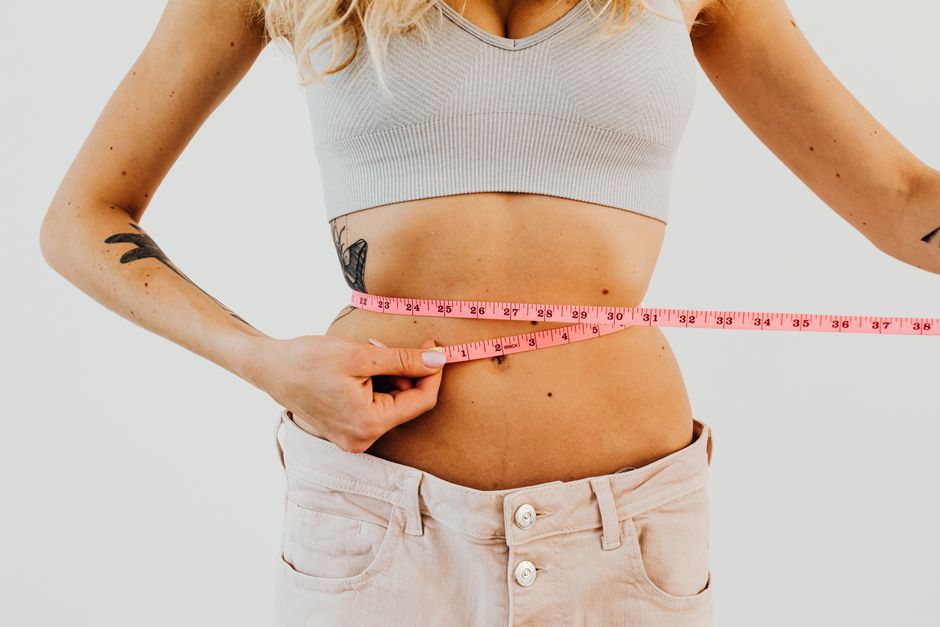
A simple tape measure around the waist is the most practical daily tool. Waist circumference correlates strongly with health risk. For men, a waist below 40 inches is generally considered lower risk. Above that, the risk of metabolic disease climbs.
How To Lower Body Fat Safely
Fat loss comes down to energy balance. You must consume fewer calories than you burn. No food, supplement, or exercise protocol bypasses this basic principle.
A sustainable deficit is 300–500 calories per day below maintenance. That produces about one to two pounds of fat loss per week. Faster losses often include muscle and water, not just fat.
Protein matters more than most people realize. Adequate protein — roughly 0.7 to 1 gram per pound of body weight — helps preserve muscle while losing fat. Without enough protein, a calorie deficit can break down muscle tissue along with fat.
Strength training is critical. Resistance exercise signals the body to keep muscle mass during a deficit. Cardio helps burn extra calories but does not protect muscle the way lifting does.
Crashes and extreme diets do not work long-term. Very low-calorie diets cause rapid weight loss, but much of it is muscle and water. The body adapts by slowing metabolism, making further loss harder and rebound more likely.
What If Your Body Fat Is Already Low?
Some men struggle with the opposite problem. They sit at 6–8% body fat and cannot gain weight. This is common in endurance athletes and men with naturally fast metabolisms.
Being too lean has real downsides. Hormone production suffers. Libido drops. Recovery from workouts slows. The immune system may not function as well. Many men find they perform worse athletically at very low body fat than at 12–15%.
If you are already lean, the goal shifts to body recomposition — building muscle while maintaining low fat. This requires a slight calorie surplus, adequate protein, and progressive strength training. The scale may barely move while your body composition improves.
What Is The Ideal Body Fat Percentage For A Man To Look Defined?
Visible abs typically appear around 10–12% body fat for most men. At this level, the abdominal muscles show through the skin with minimal fat covering. Some men see definition at 13–14%. Others need to drop below 10%.
Genetics play a large role in where fat is stored and how it is distributed. Some men store fat predominantly in the midsection. Others carry it in the chest, back, or legs. Two men at the same body fat percentage can look very different.
Muscle mass also affects appearance. A man with substantial muscle at 15% looks leaner than a man with little muscle at 12%. The muscle pushes the skin outward, making the fat layer appear thinner.
Chasing single-digit body fat for appearance alone is rarely worth it. The effort required is extreme, and the health costs can outweigh the aesthetic benefit. Most men look athletic and defined in the 10–15% range without sacrificing energy or well-being.
Can You Spot Reduce Fat?
No. Spot reduction is a myth. Doing hundreds of crunches will not specifically burn belly fat. Fat loss happens systemically — your body draws from all fat stores, not just the area you are exercising.
The order in which fat leaves different areas is genetically determined. Some men lose belly fat first. Others lose it last. You cannot override this pattern through exercise selection or targeted training.
The only reliable way to reduce fat in a specific area is to reduce overall body fat. As your total percentage drops, fat thins out across the body. The stubborn areas are simply the last to go.
Frequently Asked Questions
Is 15% body fat good for a man?
Yes, 15% is a healthy and attainable body fat percentage for most men. It sits comfortably within the fit category and typically allows visible muscle definition.
What body fat percentage is too low for men?
Below 8% is generally considered too low for sustained health. Essential fat for men is 2–5%, and staying near that floor can impair hormone production and energy levels.
Does age affect ideal body fat percentage?
Yes, slightly higher body fat percentages are more acceptable with age. Testosterone declines naturally, and muscle mass tends to decrease without deliberate strength training.
How fast can a man lose body fat?
A safe rate is about 1% of body fat per month, though this varies with starting point and effort. Faster loss usually involves losing muscle and water along with fat.
