
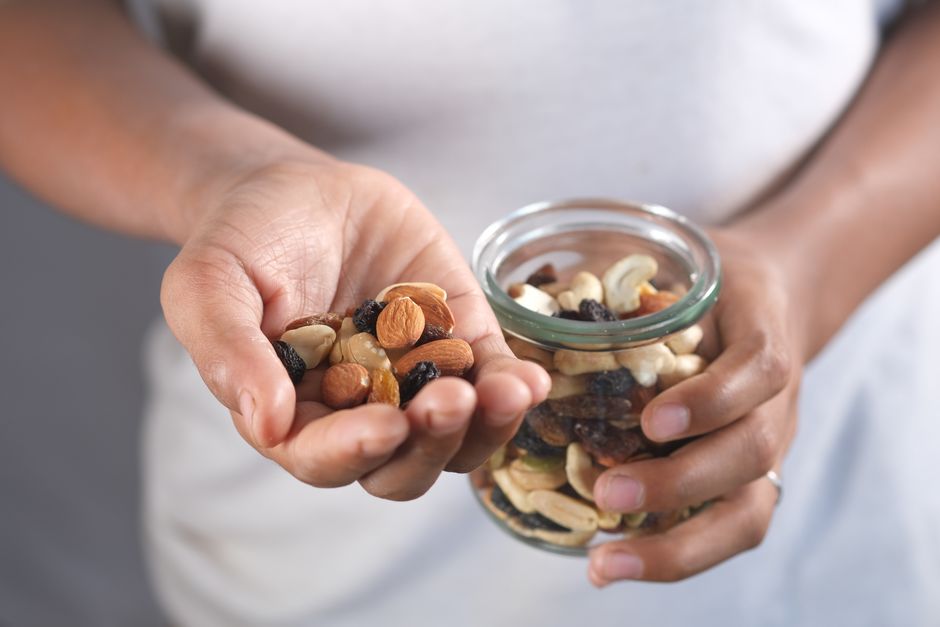
Nuts are one of the few snack foods that nutrition researchers actually agree on. Eaten in place of chips, crackers, or processed meat, they add protein, fiber, unsaturated fat, and minerals that most Americans do not get enough of. The strongest evidence points to walnuts, almonds, pistachios, and peanuts as everyday choices, with hazelnuts, pecans, cashews, and Brazil nuts close behind. The catch is portion size and sodium, not the nut itself.
What Is The Healthy Nuts To Eat?
There is no single healthiest nut. Each one has a slightly different fat profile, mineral content, and calorie density, and the differences between them matter less than the fact that you are eating nuts at all.
What they share is more important. Tree nuts and peanuts are low in saturated fat and high in unsaturated fat, which is the type of fat linked to healthier cholesterol levels when it replaces saturated fat in the diet. They also carry fiber, plant protein, vitamin E, magnesium, and potassium.
If you want a short list to build around, these have the most consistent research behind them:
- Walnuts — the highest in alpha-linolenic acid (ALA), a plant omega-3 fat
- Almonds — high in vitamin E and magnesium
- Pistachios — high in potassium and among the lower-calorie nuts per serving
- Peanuts — technically a legume, but nutritionally similar to tree nuts and far cheaper
- Hazelnuts, pecans, cashews — solid all-around choices with slightly different mineral profiles
One clarification worth making: peanuts are legumes, not tree nuts. Nutritionally they behave almost exactly like tree nuts, and the large population studies that link nut eating to better health outcomes generally include peanuts in the “nut” group. For anyone without a peanut allergy, they count.
How Much Should You Eat Per Day?
A serving of nuts is about 1 ounce, or roughly a small handful. That is the amount used in most nutrition research and the amount referenced in US dietary guidance.
One ounce looks like this in practice:
- About 23 almonds
- About 14 walnut halves
- About 49 pistachios
- About 28 peanuts
An ounce of most nuts lands somewhere between 160 and 200 calories. That number is the reason portion size matters. Nuts are nutrient-dense and calorie-dense at the same time. A bowl left on the counter can turn into three or four servings without anyone noticing.
That said, the calories on the label are not the full story. Research has found that the body does not absorb all the fat in whole nuts, because some of it stays trapped in cell walls that pass through digestion intact. Whole nuts also take more chewing, which tends to make people eat less. This is one reason nut eaters in long-term studies do not show the weight gain you might expect from the calorie math alone.
US dietary guidance places nuts and seeds in the protein foods group, and typical recommendations land around 4 to 5 ounces of nuts, seeds, and soy products per week for adults eating about 2,000 calories a day. Daily eating is fine. The weekly total is what counts.
Are Nuts Actually Good For Your Heart?
This is the area with the strongest evidence, and it has held up across many large studies and several randomized trials.
Research consistently shows that people who eat nuts regularly tend to have lower rates of heart disease than people who rarely eat them. That pattern appears in large observational studies conducted in the US and internationally. Observational data cannot prove cause and effect on its own.
The randomized trial evidence fills part of that gap. Feeding trials where people were given nuts showed improvements in LDL cholesterol and other blood lipid measures, particularly when nuts replaced sources of saturated fat like butter, cheese, or processed meat. That is a real physiological effect, measured directly.
What nuts do not do is cancel out a poor diet. A handful of almonds after a fast-food meal is not a fix. The benefit shows up when nuts take the place of something worse.
Which Nuts Have The Most Omega-3s?
Walnuts. They are the only common nut with a meaningful amount of alpha-linolenic acid, the plant form of omega-3 fat. An ounce provides roughly 2.5 grams of ALA.
ALA is not the same as the omega-3s found in fish. The body converts only a small fraction of ALA into EPA and DHA, the forms used most directly by the heart and brain. So walnuts are a useful source of plant omega-3s, but they are not a substitute for fatty fish if that is your goal.
Other nuts contain very little ALA. Pecans have a small amount. Most of the rest are primarily monounsaturated fat, which is why they get grouped together despite different fatty acid profiles.
Raw, Roasted, Or Salted — Does It Matter?
Roasting does not meaningfully change the fat profile of a nut. It does reduce water content slightly and can concentrate flavor, which makes roasted nuts easier to overeat. That is a behavior issue, not a nutrition one.
Salt is the bigger concern. Salted nuts can carry a substantial amount of sodium per serving, and most US adults already take in more sodium than recommended. If you eat nuts daily, unsalted or lightly salted versions are the better default.
Watch for these on the label:
- Honey roasted or candied — added sugar, sometimes several grams per serving
- Yogurt covered or chocolate covered — closer to candy than to nuts
- Trail mix — often mostly dried fruit and chocolate with a few nuts scattered in
- Dry roasted — usually fine, but check sodium
Raw and dry roasted unsalted nuts are the most straightforward choice. Oil roasted nuts are also fine. The oil adds a small amount of fat but does not change the overall picture much.
Do Nuts Cause Weight Gain?
Most people assume they do, and the evidence does not support that assumption.
In large observational studies, people who eat nuts regularly tend to weigh slightly less than people who do not, and they gain less weight over time. This is the opposite of what the calorie counts would predict.
Several factors explain it. Nuts are filling, so they tend to reduce how much you eat at the next meal. Whole nuts are incompletely digested, so some of the fat leaves the body unabsorbed. And the protein and fiber content slows eating and supports satiety.
None of this means calories do not count. Eating nuts on top of an otherwise full diet can still add up. Swapping them in for something else is where the benefit lives.
Are There Risks Or People Who Should Avoid Nuts?
Yes, and these are not minor.
Tree nut and peanut allergies can be severe and life-threatening. For anyone with a diagnosed allergy, avoidance is the standard of care, and the specific nuts to avoid should come from an allergist. This is not a topic for self-experimentation.
Brazil nuts deserve a separate mention. They are extremely high in selenium. A single Brazil nut can contain more than a day’s worth of selenium, and eating several daily over time can push intake into a range associated with selenium toxicity. Most people are fine with one or two occasionally. Making them a daily habit is not wise.
Nuts are also a choking hazard for young children. Whole nuts are generally not recommended for children under 4, and the guidance on when to introduce allergenic foods to infants has changed in recent years. Current clinical guidance from pediatric allergy organizations supports early introduction of peanut-containing foods for most infants, starting around 4 to 6 months, in an age-appropriate form and in consultation with a pediatrician. Parents should follow their pediatrician’s specific advice rather than older blanket-avoidance rules.
For everyone else, nuts are safe and well tolerated. Digestive discomfort from eating a large amount at once is common but not dangerous.
What About Nut Butters And Nut Milks?
Nut butters can be a good source of the same nutrients, with one condition: read the ingredient list. A jar of peanut butter should list peanuts and maybe salt. If it lists palm oil and sugar, it is a different product.
Nut milks are mostly water. Almond milk typically contains a small fraction of the almonds in a handful, plus added vitamins and minerals in the fortified versions. They are fine as a lower-calorie milk alternative, but they are not a substitute for eating nuts.
Nut flours, nut oils, and nut-based snacks vary widely. The closer a product is to the whole nut, the more the research applies to it.
The Bottom Line
The healthiest nuts are the ones you will actually eat, in a portion you can keep to, without a lot of added salt or sugar. Walnuts, almonds, pistachios, and peanuts have the deepest research base, but hazelnuts, pecans, and cashews are close enough that the difference is not worth arguing about.
An ounce a day, swapped in for something less nutritious, is the pattern that shows up again and again in the research. That is a small change with a lot of support behind it.
Frequently Asked Questions
What is the single healthiest nut to eat?
There is no single best nut, because each has a slightly different nutrient profile and the research does not rank them against each other. Walnuts, almonds, pistachios, and peanuts have the most consistent evidence behind them.
How many nuts should I eat per day?
About 1 ounce, or a small handful, is the serving size used in most nutrition research and US dietary guidance. That works out to roughly 23 almonds, 14 walnut halves, or 49 pistachios.
Do nuts make you gain weight?
Large observational studies have generally found that people who eat nuts regularly weigh slightly less and gain less weight over time than people who do not. Calories still count, so eating nuts on top of a full diet can add up.
Are salted or roasted nuts bad for you?
Roasting does not meaningfully change a nut’s fat profile, but salted versions can add a lot of sodium. Unsalted or lightly salted nuts are the better default if you eat them daily.
