
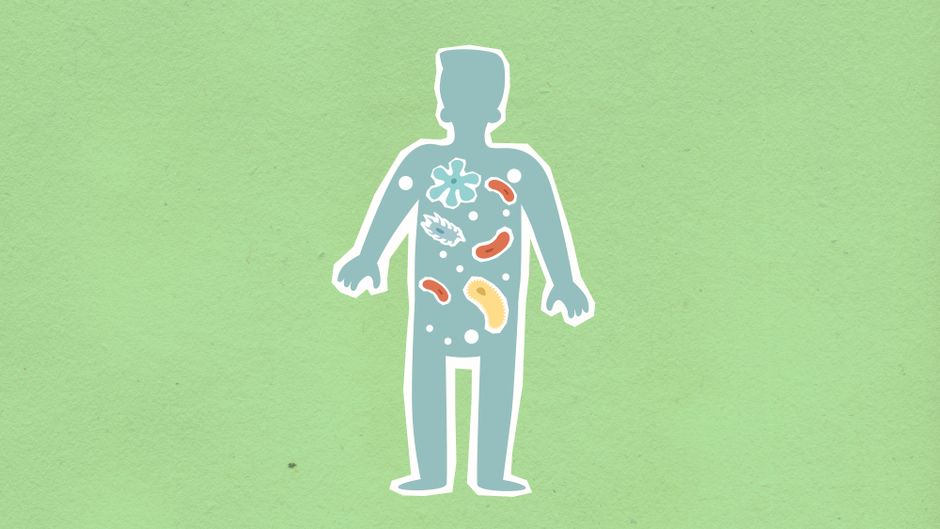
The human gut holds trillions of microorganisms — bacteria, viruses, fungi, and other single-celled life — that together weigh a few pounds and carry millions of genes. This community is called the gut microbiome. It is not a passive passenger. It helps break down food your own enzymes cannot digest, trains your immune system, produces compounds that affect your brain and metabolism, and competes with harmful microbes for space. Your microbiome is shaped from birth by genetics, diet, antibiotics, and environment, and it shifts throughout life.
What Is The Gut Microbiome How It Shapes Your Health?
The gut microbiome is the collection of microorganisms living in your digestive tract, mostly in the large intestine. Your body contains roughly as many microbial cells as human cells, though estimates vary by method and the old “10 to 1” ratio has been revised downward in recent years.
What matters more than the count is the function. These microbes ferment fiber into short-chain fatty acids, synthesize certain vitamins, metabolize bile acids and drugs, and interact continuously with your immune system. The gut lining is a single layer of cells separating trillions of microbes from your bloodstream. That barrier and the immune tissue just beneath it are in constant communication with the microbiome.
When that relationship is stable, the system tends to run smoothly. When the mix of microbes shifts — a state researchers call dysbiosis — the consequences can reach well beyond digestion.
How Does the Gut Microbiome Develop and Change Over Life?
Your microbiome begins forming at birth. Babies delivered vaginally are first exposed to vaginal and fecal microbes; babies delivered by cesarean section are first exposed to skin and environmental microbes. Some studies suggest these early differences exist, but the long-term health effects are still debated and the evidence is mixed.
Breastfeeding also influences the early microbiome. Human milk contains oligosaccharides — complex sugars that infants cannot digest but that feed beneficial bacteria, particularly Bifidobacterium. This is one of the clearer examples of how diet and microbes are linked.
By around age 3, the microbiome begins to resemble an adult’s. From there it stays fairly stable in composition but responds to what you eat, what medications you take, illness, stress, and age. Older adults tend to show reduced diversity, though researchers are still working out what that means for health.
Antibiotics are the single most disruptive common exposure. A course of antibiotics can knock back broad groups of bacteria within days. Many species recover, but some do not return to their prior levels, and recovery can take weeks to months. Repeated courses compound the effect. This is not a reason to avoid antibiotics when you need them — it is a reason to use them only when they are actually indicated.
How Does the Microbiome Affect Digestion and Nutrient Absorption?
Your small intestine absorbs most nutrients directly. The large intestine, where microbial density is highest, handles what your body could not break down — mainly dietary fiber and resistant starch.
Bacteria ferment these fibers and produce short-chain fatty acids, including acetate, propionate, and butyrate. Butyrate is the primary energy source for the cells lining your colon. This is well established. It is one of the strongest mechanistic links between fiber intake, microbial activity, and gut health.
The microbiome also contributes to vitamin production. Gut bacteria synthesize vitamin K and several B vitamins, though the amount absorbed and its contribution to your overall status is not fully clear. Your diet remains the main source.
Bile acids offer another example. Your liver makes them to digest fat, and gut bacteria chemically modify them. These modified bile acids feed back into metabolic signaling. The relationship is real, but the downstream health effects are still being studied.
How Does the Gut Microbiome Influence the Immune System?
Roughly 70 percent of your immune cells reside in the gut wall. The microbiome is a major reason why.
From early life, exposure to microbes trains the immune system to tell friend from foe. Germ-free animals raised without any microbes develop poorly formed immune tissue and weaker immune responses. This has been shown consistently in animal research. In humans, the picture is more complex but the general principle holds: a diverse microbiome is associated with a well-regulated immune system.
Dysbiosis has been linked to inflammatory conditions, allergies, and autoimmune disease. The direction of cause and effect is not always clear. Does a disrupted microbiome contribute to inflammation, or does inflammation disrupt the microbiome? Often both. Researchers describe it as a two-way relationship.
One clarification worth making: “boosting” your immune system is not a meaningful goal in the way marketing suggests. A healthy immune system is balanced, not maximally active. An overactive immune system is what drives allergies and autoimmune disease.
What Is the Gut-Brain Connection and How Strong Is the Evidence?
The gut and brain communicate through the vagus nerve, the immune system, hormones, and microbial metabolites. This bidirectional system is often called the gut-brain axis.
Some gut bacteria can produce or influence neurotransmitters, including serotonin and GABA. This sounds dramatic, but context matters. Most of your body’s serotonin is made in the gut, yet it does not cross into the brain in meaningful amounts. Gut microbes influence brain function indirectly, through nerve signaling and immune and metabolic pathways, not by directly supplying the brain with neurotransmitters.
The evidence for a gut-brain link in animals is strong. In humans, it is growing but still limited. Some studies suggest certain probiotic strains may influence stress response or mood, but results vary, strains differ, and effect sizes are generally modest. No probiotic is an established treatment for depression or anxiety. Anyone making that claim is ahead of the evidence.
What Does the Evidence Say About the Microbiome and Chronic Disease?
Associations between microbiome composition and chronic disease are well documented. Causation is much harder to prove.
- Obesity and metabolic disease: Gut bacteria influence how much energy you extract from food and how your body handles blood sugar. Studies in mice show that transferring microbes from obese donors can produce weight gain in lean recipients. In humans, the picture is far less clear, and no microbiome-based treatment for obesity is established.
- Inflammatory bowel disease: People with Crohn’s disease and ulcerative colitis show altered microbiomes. Whether this drives disease or results from it remains an open question.
- Type 2 diabetes: Changes in gut bacteria have been observed, but diet and body weight remain the dominant factors.
- Cardiovascular disease: Gut bacteria produce a compound called TMAO from certain dietary components. Higher TMAO levels have been associated with cardiovascular risk, but whether lowering TMAO improves outcomes has not been established.
The pattern across these conditions is consistent: the microbiome is involved, but it is one factor among many. Diet, genetics, physical activity, and environment remain the biggest levers.
What Actually Improves Your Gut Microbiome?
Diet is the most reliable lever. Fiber from a variety of plant foods feeds different bacterial groups. Research consistently shows that people eating more diverse plant foods tend to have more diverse microbiomes. Fermented foods like yogurt, kefir, and sauerkraut contain live microbes and have shown some benefits in small trials, though the evidence is not yet strong enough to make firm recommendations.
Probiotic supplements are a different story. They contain specific strains at specific doses, and their effects are strain-specific. Some have reasonable evidence for particular uses, such as reducing antibiotic-associated diarrhea. For general “gut health,” the evidence is weak and inconsistent. No supplement has been shown to broadly restore a healthy microbiome.
What to be skeptical of:
- Marketing claims that a product “balances” your microbiome. There is no agreed definition of a balanced microbiome.
- At-home microbiome tests that claim to diagnose problems or recommend personalized diets. The science is not there yet.
- Any product claiming to cure disease by fixing your gut bacteria.
What the evidence supports is less exciting but more solid: eat a variety of plant foods, limit ultra-processed foods, use antibiotics only when needed, and treat sleep, stress, and physical activity as part of the picture. The microbiome responds to these basics, and the basics are what the research keeps pointing back to.
Frequently Asked Questions
Can you change your gut microbiome?
Yes. Diet, antibiotics, illness, and lifestyle all shift microbial composition, and dietary changes can alter it within days to weeks. The changes are usually partial and may not last if the diet change does not.
Are probiotics worth taking?
For specific uses such as antibiotic-associated diarrhea, some strains have reasonable evidence. For general gut health, the evidence is weak and inconsistent, and effects are strain-specific.
What foods are best for gut bacteria?
Fiber-rich plant foods — vegetables, fruits, legumes, and whole grains — feed beneficial bacteria and are the best-supported choice. Diversity of plant foods appears to matter as much as quantity.
Does the gut microbiome affect mental health?
The gut and brain communicate through nerve, immune, and metabolic pathways, and animal studies show clear effects. In humans, the evidence is promising but limited, and no probiotic is an established treatment for any mental health condition.
