
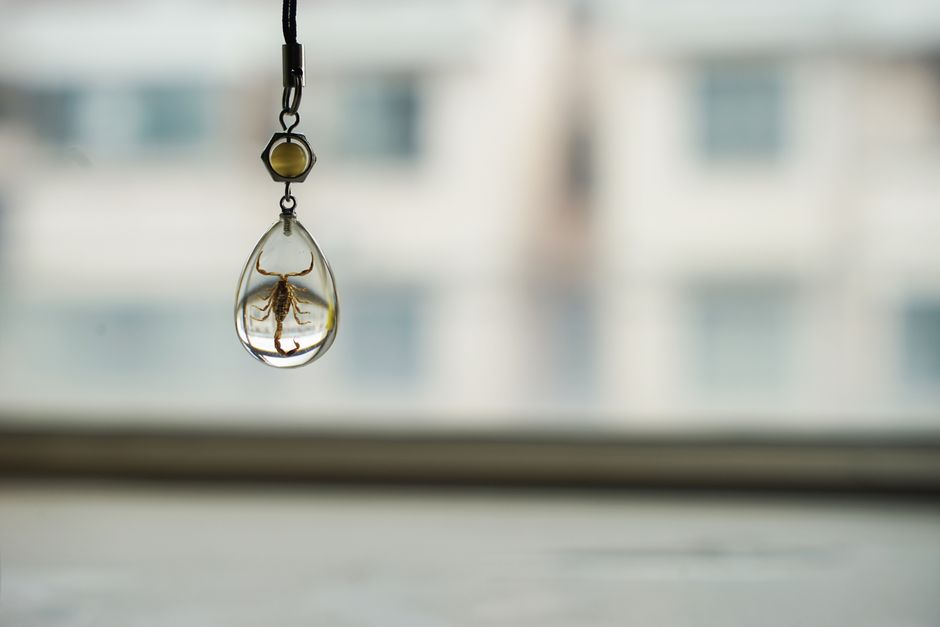
Blue scorpion venom is promoted online as a treatment for cancer, pain, and inflammation. The evidence does not support these claims. No large human trials have confirmed that blue scorpion venom treats any disease in people. What exists is a mix of laboratory studies, animal research, and anecdotal reports that are often overstated by sellers.
What Is Blue Scorpion Venom?
Blue scorpion venom comes from the Rhopalurus junceus scorpion, native to Cuba. It is sometimes called the blue scorpion or blue-tailed scorpion. The venom contains a complex mix of peptides and other compounds that act on cells in specific ways.
In Cuba, the venom is sold as a homeopathic remedy called Vidatox. Vidatox contains the venom in a heavily diluted form. Outside Cuba, unregulated products claiming to contain the venom are sold online as drops, capsules, and creams.
The distinction matters. A homeopathic dilution contains little to no active venom. An unregulated supplement may contain unknown amounts of raw venom. These are not the same product, and neither has strong clinical evidence behind it.
Does Blue Scorpion Venom Treat Cancer?
No clinical evidence confirms that blue scorpion venom treats cancer in humans. The claim comes from laboratory studies and animal experiments, not from patient trials.
Some laboratory research suggests that compounds in scorpion venoms can slow the growth of certain cancer cells in a dish. That does not mean the venom works as a medicine in the human body. Cells in a laboratory are not the same as a tumor inside a person. Many substances kill cancer cells in a lab and fail in humans.
Some studies indicate that specific peptides from scorpion venoms may have effects on tumor cells. Researchers are studying these peptides to understand their potential. This is early-stage science, not an established treatment.
The Cuban product Vidatox is registered as a homeopathic medicine in Cuba. Homeopathic registration is not the same as proof of effectiveness. No randomized controlled trials have shown that Vidatox improves cancer outcomes or extends survival.
What Does the Research Actually Show?
The research on blue scorpion venom is limited and mostly preliminary. Studies have examined the venom’s effects on cancer cell lines and in animal models. The results are mixed and do not translate into clinical recommendations.
A small number of studies have looked at the venom’s effect on pain. Some patients in Cuba report pain relief while using Vidatox. These reports are anecdotal. They have not been confirmed in controlled trials.
One challenge is that the venom is a complex mixture. Different batches may contain different amounts of active compounds. This makes standardizing research difficult. It also means that what is in one bottle may not be what is in another.
No peer-reviewed study has demonstrated that blue scorpion venom shrinks tumors in humans. No study has shown it improves survival rates. Claims that it cures cancer are not supported by the available evidence.





Is Blue Scorpion Venom Safe?
The safety of blue scorpion venom products is not well established. Raw scorpion venom can cause serious reactions. These include pain, swelling, allergic reactions, and in severe cases, effects on the nervous system.
Homeopathic dilutions like Vidatox are unlikely to cause direct toxicity because the venom is so diluted. But the product may contain other ingredients. Alcohol is commonly used as a preservative in homeopathic drops. This can interact with medications.
Unregulated supplements are a bigger concern. No agency verifies what is in these products. They may contain venom in unknown concentrations. They may also contain contaminants. Some products sold online have been found to contain no venom at all, meaning buyers pay for a product that is not what the label claims.
People with cancer should not replace standard treatment with blue scorpion venom. Delaying proven therapies can allow the disease to progress. This is a real risk, not a hypothetical one.
Why Do People Claim It Works?
Personal stories drive much of the demand for blue scorpion venom. Some people report improvement while using it. These reports are difficult to interpret.
People who use alternative treatments often continue their standard treatments at the same time. Improvement may come from the standard treatment, not the supplement. This makes it impossible to know what caused the change.
Placebo effects are real. Pain and other symptoms can improve when a person believes a treatment is working. This does not mean the treatment has a biological effect on the disease.
Some sellers profit from these products. Marketing materials often cite laboratory studies as if they were human trials. This is misleading. A laboratory finding is not evidence of a cure.
What Are the Risks of Using Unregulated Venom Products?
Unregulated venom products carry several risks. The most obvious is unknown content. You cannot know what is actually in the bottle.
Possible risks include:
- Allergic reactions ranging from mild skin irritation to life-threatening anaphylaxis
- Interactions with prescription medications
- Contamination with bacteria or other substances
- Doses of venom that are too high or too low
- Financial loss for products that contain no active ingredient
There is also the risk of missing the window for effective treatment. If a person delays surgery, chemotherapy, or radiation to try an unproven supplement, the cancer may advance. This is the most serious risk of all.
What Is the Scientific Consensus?
The scientific consensus is clear: blue scorpion venom is not an established treatment for cancer or any other disease. The evidence is preliminary at best.
Researchers continue to study scorpion venom peptides because they are biologically interesting. Some peptides show activity against certain cell types. This line of research may eventually lead to new drugs. But a drug derived from a venom compound is not the same as taking the venom itself.
Drug development takes years. Compounds that show promise in the lab must pass through multiple phases of testing in humans. Most do not make it. Blue scorpion venom has not completed this process for any condition.
What Should You Consider Before Buying It?
If you are considering blue scorpion venom, weigh the evidence carefully. There is no proof it treats cancer. There is no proof it is safe. There is no way to know what is in an unregulated product.
Ask yourself why you are considering it. If standard treatment is not working or causing difficult side effects, talk to your doctor about evidence-based options. Palliative care, pain management, and clinical trials are legitimate paths worth exploring.
If you choose to use a venom product despite the lack of evidence, tell your doctor. Some products can interfere with medications or anesthesia. Your medical team needs complete information to keep you safe.
No clinical guidelines currently exist for dosing blue scorpion venom. No reputable organization recommends it for any condition. These are important facts to consider before spending money on a product with no proven benefit.
Frequently Asked Questions
Can blue scorpion venom cure cancer?
No. No human studies have shown that blue scorpion venom cures cancer. Laboratory research on venom peptides is preliminary and does not translate into a proven treatment.
Is Vidatox the same as blue scorpion venom?
Vidatox is a homeopathic product made from blue scorpion venom. It is heavily diluted and registered as a homeopathic medicine in Cuba, not as a proven cancer treatment.
Are there any proven benefits of blue scorpion venom?
No proven benefits exist for any condition in humans. Some people report pain relief, but these reports are anecdotal and have not been confirmed in controlled trials.
Is it safe to take blue scorpion venom with chemotherapy?
No safety data exists for combining blue scorpion venom with chemotherapy. Unregulated products may interact with medications in unknown ways. Always tell your oncologist about any supplement you take.
