
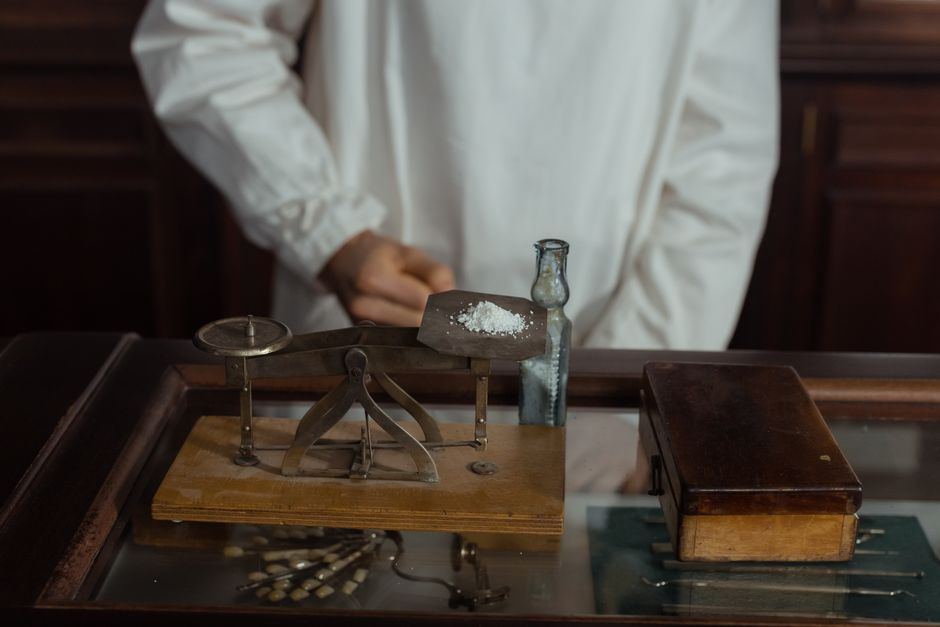
Salt is one of the most common substances on Earth, yet most people cannot name its chemical structure. The chemical compound for table salt is sodium chloride, with the formula NaCl. This means each molecule of salt contains exactly one sodium atom and one chlorine atom bonded together. This simple formula drives everything from how salt tastes to how it preserves food and conducts electricity in water.
What Is The Chemical Compound For Salt?
The chemical compound for salt is sodium chloride (NaCl). It forms when sodium, a highly reactive metal, and chlorine, a toxic gas, combine through an ionic bond. The sodium atom donates one electron to the chlorine atom, creating a positively charged sodium ion and a negatively charged chloride ion.
This specific 1:1 ratio of sodium to chlorine is what makes table salt chemically distinct from other salts. In chemistry, the word “salt” actually refers to a broad category of compounds formed from acids and bases. But in everyday language, salt means NaCl — the white crystals on your kitchen table.
Why Is Salt Called Sodium Chloride?
The naming comes from standard chemical conventions. The metal component, sodium, keeps its name. The non-metal component, chlorine, changes its ending to “-ide” when it becomes an ion. So chlorine becomes chloride, and the compound is sodium chloride.
This naming system distinguishes sodium chloride from other salts you might encounter. Potassium chloride (KCl) is a common salt substitute. Calcium chloride (CaCl₂) is used for de-icing roads. Each has a different chemical formula and different effects on the human body. Only NaCl is what we call table salt.
How Does the NaCl Bond Work?
The bond between sodium and chlorine is called an ionic bond. This type of bond forms when one atom transfers electrons to another. Sodium has one electron in its outermost shell and wants to get rid of it. Chlorine has seven electrons in its outermost shell and wants one more to reach a stable eight.
When sodium gives its electron to chlorine, both atoms become stable. The sodium atom becomes a positive ion (Na⁺) because it lost a negatively charged electron. The chlorine atom becomes a negative ion (Cl⁻) because it gained one. Opposites attract, so these ions hold together strongly.
This electron transfer explains why sodium and chlorine are dangerous alone but safe together. Pure sodium explodes in water. Chlorine gas is toxic to breathe. But bonded together as NaCl, they form a stable crystal that is essential for human life.




What Does Salt Look Like at the Molecular Level?
Salt does not exist as individual NaCl pairs in solid form. Instead, it forms a crystal lattice structure. Each sodium ion is surrounded by six chloride ions, and each chloride ion is surrounded by six sodium ions. This repeating three-dimensional pattern extends in all directions.
This lattice structure explains why salt forms perfect cubes when it crystallizes. It also explains salt’s high melting point of 801°C (1,474°F). Breaking those ionic bonds requires significant energy. The strong attraction between ions is also why salt is brittle — when you strike a crystal, the layers shift and similar charges end up next to each other, repelling and causing the crystal to shatter.
Why Does Salt Dissolve in Water?
Water molecules are polar, meaning they have a slightly positive end and a slightly negative end. When you add salt to water, the negative ends of water molecules surround the positive sodium ions. The positive ends surround the negative chloride ions.
These water molecules pull the ions apart from the crystal lattice. Each ion becomes surrounded by a shell of water molecules in a process called hydration. This is why salt dissolves so easily in water but not in oil — oil molecules are nonpolar and cannot pull the ions apart.
This dissolving process is also why ocean water is salty. Rain and rivers wash sodium and chloride ions from rocks and soil into the sea. Over millions of years, these ions have accumulated to make seawater about 3.5% salt.
Is Sea Salt Chemically Different from Table Salt?
Chemically, sea salt and table salt are both primarily sodium chloride. The core compound is identical. The differences come from additional trace minerals and processing methods.
Sea salt is produced by evaporating seawater and undergoes minimal processing. It retains small amounts of other minerals like magnesium, calcium, and potassium. These trace minerals can affect the color and flavor slightly. Table salt is mined from underground salt deposits and heavily processed to remove impurities.
Table salt often contains anti-caking agents to prevent clumping. Many commercial table salts also have iodine added. Iodized salt was introduced in the 1920s to prevent iodine deficiency, which causes goiter and developmental problems. The amount of iodine added is small but has dramatically reduced iodine deficiency disorders in the United States.
By weight, both salts contain roughly the same amount of sodium. The trace minerals in sea salt are present in such tiny amounts that they provide no meaningful nutritional benefit. The choice between them is about taste and texture, not chemistry or health.
Why Does the Body Need Sodium Chloride?
Sodium and chloride are both electrolytes. Electrolytes are minerals that carry an electrical charge when dissolved in body fluids. This charge is essential for nerve signaling, muscle contraction, and maintaining fluid balance.
Sodium helps regulate blood pressure and blood volume. It works with potassium to maintain the balance of fluids inside and outside your cells. Chloride helps maintain proper pH levels in your blood and is a component of stomach acid, which is needed for digestion.
The human body cannot produce sodium or chloride on its own. Both must come from the diet. However, the typical American diet contains far more sodium than the body needs. Most health organizations recommend limiting sodium intake to about 2,300 milligrams per day, with many people advised to aim for 1,500 milligrams or less.
What Happens When You Consume Too Much or Too Little?
Too much sodium causes your body to retain water. This increases blood volume, which raises blood pressure. Over time, high blood pressure damages blood vessels and increases the risk of heart disease, stroke, and kidney disease. Most sodium in the American diet comes from processed and restaurant foods, not from the salt shaker.
Sodium deficiency, called hyponatremia, is less common but can be dangerous. It can occur from excessive sweating, prolonged vomiting or diarrhea, or drinking too much water without replacing electrolytes. Symptoms range from headache and confusion to seizures and coma in severe cases.
Most healthy people do not need to worry about sodium deficiency. The kidneys are highly efficient at conserving sodium when levels drop. Unless you are an endurance athlete or have a medical condition that causes salt loss, your body will maintain balance on a normal diet.
Can Other Compounds Replace Sodium Chloride?
Salt substitutes often use potassium chloride to replace some or all of the sodium. Potassium chloride has a similar salty taste but contains potassium instead of sodium. This can be helpful for people who need to reduce sodium for blood pressure control.
However, potassium chloride is not safe for everyone. People with kidney disease may not be able to clear excess potassium from their blood. This can lead to dangerously high potassium levels, which can cause irregular heart rhythms. Anyone with kidney problems should consult a doctor before using potassium-based salt substitutes.
Other salty-tasting compounds exist, such as lithium chloride and ammonium chloride, but these are not used as food products. Lithium chloride is toxic in large amounts. Ammonium chloride has a sharp, salty taste but is used primarily in licorice and some cough medicines rather than as a table salt replacement.
Frequently Asked Questions
What is the chemical formula for table salt?
Table salt is sodium chloride with the chemical formula NaCl. It contains one sodium atom and one chlorine atom per unit.
Is salt the same as sodium?
No. Salt is sodium chloride, which is about 40% sodium by weight. Pure sodium is a highly reactive metal that is dangerous to handle.
Why is salt ionic and not covalent?
Salt is ionic because sodium transfers an electron to chlorine rather than sharing electrons. This transfer creates charged ions that attract each other.
Does sea salt have a different chemical formula than table salt?
No. Both are primarily sodium chloride with the same NaCl formula. Sea salt only differs in trace minerals and processing.
