
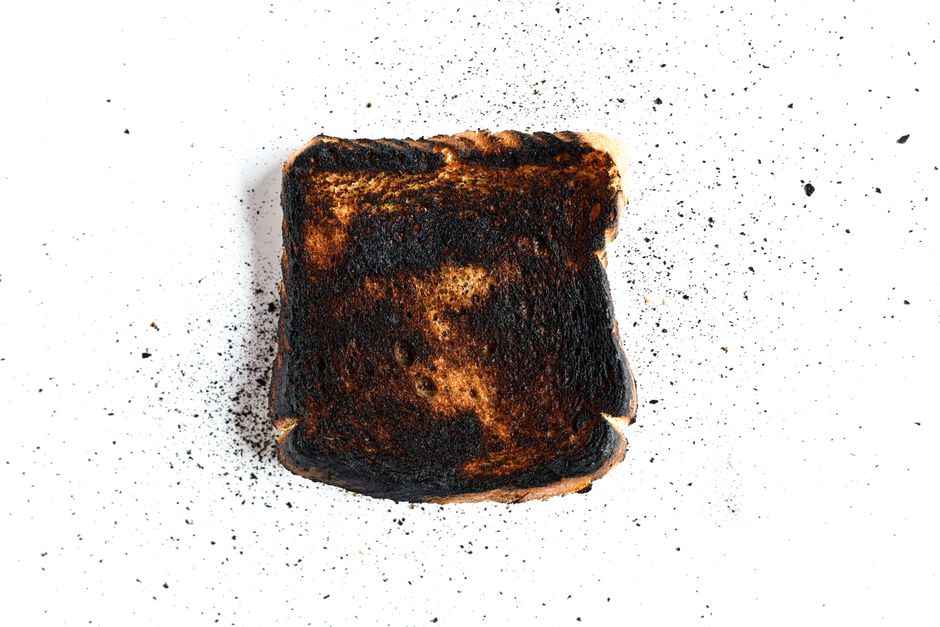
The burnt toast theory is a social media mindset trend that suggests small, frustrating delays or inconveniences may be protecting you from something worse. The idea is simple: if you burn your toast and have to make a new slice, that extra minute might be the exact moment that keeps you from being in an accident or missing a life-changing opportunity. It frames negative moments as hidden safeguards rather than random bad luck. The theory has gone viral across TikTok and Instagram, but it is a psychological coping strategy, not a scientific fact.
Where Did the Burnt Toast Theory Come From?
The theory gained widespread popularity in 2023 and 2024, primarily through social media videos and personal anecdotes. Users shared stories of missed trains that later crashed or canceled plans that led them to meet a partner. These stories spread quickly because they offer comfort and a sense of order in a chaotic world.
There is no single originator of the theory. It appears to have evolved from older ideas about fate, destiny, and “everything happens for a reason.” The name itself is a metaphor for everyday minor annoyances — the burnt toast being the small setback that delays you just enough to change your path.
While the theory is popular online, it has no roots in established psychological research or clinical literature. It is best understood as a modern retelling of ancient philosophical ideas about providence and meaning-making.
How Does the Burnt Toast Theory Work Psychologically?
The theory works because human brains are wired to find patterns. When something bad happens, your mind searches for an explanation. If you later experience something good, or avoid something bad, your brain connects those dots — even when no real connection exists.
Psychologists call this “narrative bias” or “hindsight bias.” You look backward at events and weave them into a story with meaning. The burnt toast theory gives people a sense of control. It transforms helpless moments into purposeful ones.
This mindset can reduce anxiety about the future. If you believe delays are protective, you worry less about being late or facing unexpected problems. Some therapists note that reframing negative events in a positive light can be a useful coping tool, similar to cognitive reappraisal techniques used in cognitive behavioral therapy.
However, the theory does not hold up to logical scrutiny. For every story where a delay prevented a tragedy, there are countless stories where a delay caused one. The theory only works in hindsight because you cannot see the alternative path — the one where your toast did not burn.
What Are the Benefits of Adopting This Mindset?
Used wisely, the burnt toast theory can improve emotional resilience. It encourages people to let go of small frustrations instead of dwelling on them. When you spill coffee or hit every red light, telling yourself “maybe this is protecting me” can lower your stress response in that moment.
This approach aligns with what psychologists call “benefit finding” — the practice of identifying positive outcomes in negative experiences. Research has shown that people who engage in benefit finding after stressful events often report better mental health outcomes than those who ruminate on the negatives.
The theory also promotes acceptance of things you cannot control. Traffic, weather, and other people’s behavior are outside your influence. Accepting that reality — rather than fighting it — reduces daily frustration.
Some people use the theory to reduce catastrophizing. If you miss a deadline and assume your career is over, the burnt toast mindset offers an alternative: maybe this setback redirects you toward something better. That shift in perspective can be genuinely helpful for anxious thinkers.





What Are the Risks and Downsides?
The burnt toast theory has a significant downside: it can discourage personal responsibility. If you believe every mistake is secretly protecting you, you may stop learning from errors. A missed job interview is not fate protecting you from a bad workplace — it may simply be a missed opportunity caused by poor planning.
There is also a risk of toxic positivity. Forcing a positive spin on genuinely harmful events — like a car accident or a serious illness — can prevent people from processing real grief and trauma. Some situations are just bad. They are not lessons, and they are not protections.
Clinicians warn that the theory should not replace professional help for anxiety or depression. If you find yourself constantly needing to explain away negative events, that may signal an underlying struggle with uncertainty or control. The theory is a coping tool, not a treatment.
Another concern is that the theory can reduce proactive behavior. If you believe delays are protective, you might stop being punctual or prepared. You might skip safety precautions because you assume “everything works out.” That is a dangerous assumption. Seatbelts, smoke detectors, and vaccines work because they address real risks — not because of fate.
How Is the Burnt Toast Theory Different From Related Concepts?
The burnt toast theory overlaps with several established psychological concepts, but they are not the same. Understanding the differences helps you use each idea appropriately.
- Learned optimism: This is a research-backed approach developed by psychologist Martin Seligman. It teaches people to challenge negative thoughts and find realistic explanations for setbacks. Unlike the burnt toast theory, learned optimism does not claim that bad events are secretly good — it simply helps you avoid catastrophic thinking.
- Radical acceptance: This comes from dialectical behavior therapy. It involves accepting reality as it is without judging it. The burnt toast theory adds a layer of meaning that radical acceptance deliberately avoids.
- Magical thinking: This is the belief that your thoughts or actions can influence unrelated events. The burnt toast theory edges toward magical thinking when it suggests your burned toast directly caused you to avoid an accident. There is no evidence that such causal connections exist.
- Meaning-making: This is a psychological process where people find significance in life events. It is a healthy, normal human activity. The burnt toast theory is one form of meaning-making, but it is not the only — or necessarily the most accurate — form.
The key difference is evidence. Learned optimism and radical acceptance are supported by decades of clinical research. The burnt toast theory is supported only by personal anecdotes shared online.
Should You Use the Burnt Toast Theory in Your Daily Life?
Using the theory occasionally as a mental reset is harmless. If a small delay frustrates you and you tell yourself “maybe this is for the best,” that is a reasonable coping strategy. It helps you move forward instead of stewing in irritation.
The problem arises when the theory becomes your primary way of interpreting events. If you start ignoring real problems because you believe they are protective, you are no longer coping — you are avoiding. That avoidance can have real consequences for your health, finances, and relationships.
A more balanced approach is to acknowledge the frustration of a bad moment without needing to explain it away. You can feel annoyed about a flat tire and still recognize that the delay has no cosmic meaning. Both things can be true at once.
If you enjoy the comfort the theory provides, use it as a gentle reframe — not as a belief system. The evidence does not support the idea that burned toast saves lives. The evidence does support the idea that how you interpret events shapes how you feel about them. That is the real takeaway.
Frequently Asked Questions
Is the burnt toast theory backed by science?
No. The burnt toast theory is a social media trend with no direct scientific research supporting it. It draws on psychological concepts like benefit finding and cognitive reframing, which do have research support, but the theory itself is not a clinical concept.
Can the burnt toast theory help with anxiety?
It may temporarily reduce stress by reframing negative events as protective, but it is not a treatment for anxiety. If anxiety is persistent or interfering with daily life, professional support from a licensed therapist is the appropriate step.
What is the difference between the burnt toast theory and toxic positivity?
Burnt toast theory frames a specific bad event as protective, while toxic positivity demands that all negative emotions be suppressed and replaced with optimism. The burnt toast theory can become toxic positivity if it is used to dismiss genuine pain or grief.
Does the burnt toast theory mean I should stop being careful?
No. The theory offers a way to interpret events after they happen, but it should never replace practical safety measures. Seatbelts, helmets, and cautious planning protect you through evidence-based mechanisms — not through fate or timing.
