
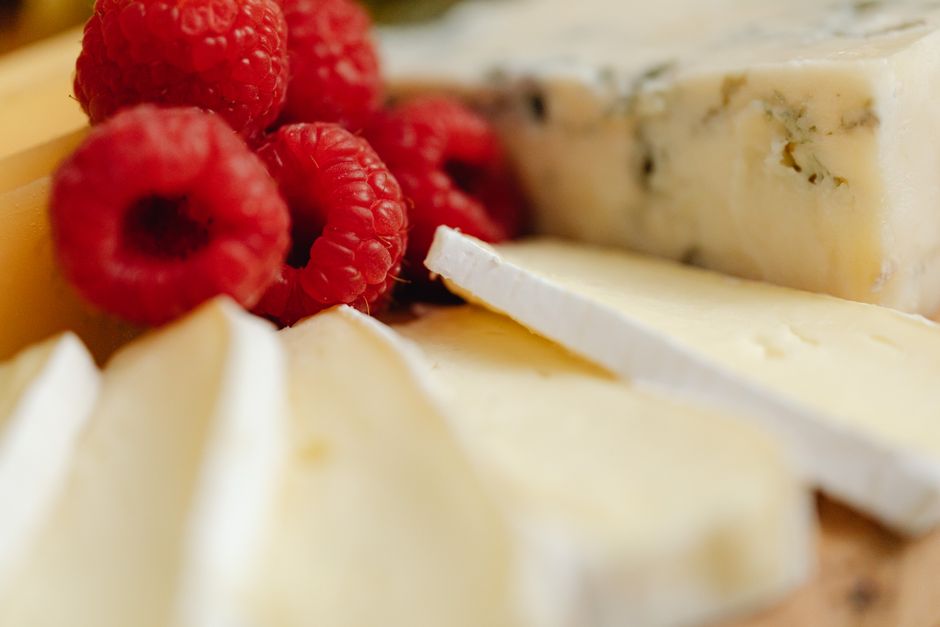
That blue-green veining in your blue cheese is a living fungus called Penicillium, and yes, it is completely safe to eat. These are the same types of molds used to make other beloved foods and life-saving antibiotics. The mold is intentionally added during production, and it does not produce the toxins that dangerous molds on old bread or forgotten leftovers can create. The result is a sharp, tangy cheese that is as safe as it is flavorful.
What Is The Blue In Blue Cheese And Is It Safe To Eat?
The blue in blue cheese is a specific, food-grade mold from the Penicillium family. Two main strains are used: Penicillium roqueforti for most blue cheeses like Roquefort, Gorgonzola, and Stilton, and Penicillium glaucum for cheeses like Gorgonzola and Fourme d’Ambert.
Cheesemakers add this mold to the milk or curds deliberately. After the cheese forms, they pierce it with needles. These small tunnels let oxygen reach the mold, which allows it to grow and create the signature blue veins. The mold is not a contaminant. It is a controlled ingredient, just like the bacterial cultures that turn milk into yogurt.
The safety comes down to the specific strain. The molds used in cheese production have been selected over centuries because they are safe for human consumption. They do not produce mycotoxins at harmful levels. The same family of molds even gave us penicillin, the antibiotic that revolutionized medicine.
How Is The Blue Mold Different From The Mold On Old Food?
Not all mold is equal. The mold that grows on a forgotten loaf of bread is usually a different species, like Aspergillus or Penicillium strains that were never meant for food. These wild molds can produce mycotoxins, which are toxic compounds that can make you sick.
Cheese mold is cultivated and monitored. Producers use specific strains that have a long history of safe use. They control the temperature, humidity, and acidity during aging to keep the mold healthy and prevent unwanted bacteria or toxin-producing molds from taking hold.
This is why you should never scrape mold off regular cheese and eat the rest. The mold you see on the surface may only be the visible part. The roots, called hyphae, can extend deep into the cheese, and you cannot see any toxins they may have produced.
Is Blue Cheese Safe For Everyone To Eat?
Most healthy adults can eat blue cheese without any problem. However, some groups need to be careful. Pregnant women are often advised to avoid blue cheese unless it is made from pasteurized milk. The concern is not the mold itself but the risk of Listeria, a bacteria that can grow in soft, aged cheeses.
People with weakened immune systems, such as those undergoing chemotherapy or living with chronic conditions, should also talk to their doctor about soft-ripened and blue-veined cheeses. The same applies to older adults and young children, whose immune systems may not fight off foodborne illness as effectively.
If you have a true mold allergy, blue cheese can trigger a reaction. This is different from a food intolerance. A mold allergy is an immune response to fungal spores, and blue cheese contains live mold. Symptoms can include nasal congestion, sneezing, or in rare cases, more serious reactions. If you know you are allergic to mold, it is best to avoid blue cheese entirely.



What Does The Mold Actually Do To The Cheese?
The mold does more than change the color. It is responsible for the entire character of blue cheese. Penicillium roqueforti breaks down proteins and fats in the cheese during aging. This process, called proteolysis and lipolysis, creates the sharp, peppery, and slightly earthy flavors that blue cheese fans love.
The breakdown of fats also changes the texture. The mold’s enzymes soften the cheese and give it that creamy, crumbly quality. Without the mold, blue cheese would just be a mild, dense white cheese. The mold transforms it into something entirely different.
The veins themselves are not just surface coloring. They run through the entire wheel of cheese. When you see blue-green streaks in a slice, you are looking at millions of mold cells growing together. This is completely normal and expected. The intensity of the flavor often matches the density of the veins.
Can You Eat The Rind Or The Mold If It Looks Different?
Blue cheese rinds are edible but not always pleasant. The rind is the outer layer that dries during aging. It can be tough and bitter compared to the creamy interior. Many people choose to remove it. That is a texture preference, not a safety issue.
Sometimes you may notice white or gray patches of mold on the outside of blue cheese that look different from the blue veins inside. This can be a different type of mold that settled on the surface during aging. If the cheese is otherwise firm and smells normal, you can cut away the surface mold with a knife. Cut at least one inch beyond the visible mold to be safe.
If the cheese has turned slimy, smells like ammonia, or has pink or black spots, throw it away. These signs indicate spoilage or unwanted bacterial growth. The same rules apply to any cheese, not just blue varieties.
How Should You Store Blue Cheese At Home?
Proper storage keeps blue cheese safe and tasty for longer. The mold in blue cheese is alive, and it will continue to grow slowly even in your refrigerator. You cannot stop it completely, but you can slow it down.
Wrap blue cheese loosely in wax paper or parchment paper first. Then place it in a plastic container or a resealable bag. The paper lets the cheese breathe while the container prevents it from drying out and stops the mold from spreading to other foods in your fridge. Avoid wrapping it tightly in plastic wrap alone, which can trap moisture and cause the cheese to become slimy.
Blue cheese can last for three to four weeks when stored properly in the refrigerator. If you see a bit of white mold on the cut surface, you can scrape it off. The cheese underneath is still fine to eat if it looks and smells normal.
Frequently Asked Questions
Can you eat blue cheese if you are allergic to penicillin?
Most people with a penicillin allergy can safely eat blue cheese, but you should ask your doctor first. The mold in blue cheese is related to the penicillin family, but it does not contain the antibiotic itself at clinically relevant levels.
Is it safe to eat blue cheese that has grown extra mold?
It depends on the color and condition of the new mold. White or blue mold on a firm wedge can be cut away safely, but pink, black, or slimy growth means the cheese should be thrown out.
Can pregnant women eat blue cheese?
Pregnant women should only eat blue cheese made from pasteurized milk. Check the label, and when eating out, ask the restaurant to confirm the cheese is pasteurized before you order it.
Why does blue cheese smell so strong?
The strong smell comes from the same mold that creates the blue veins. As Penicillium breaks down fats and proteins, it releases compounds that produce the pungent, earthy aroma characteristic of blue cheese.
