
Blood type Rh negative means your red blood cells do not carry the Rhesus D (RhD) antigen — a protein found on the surface of red blood cells in most people. If you have the RhD antigen, you are Rh positive. If you don’t, you are Rh negative. This is separate from your ABO blood type (A, B, AB, or O), so a full blood type actually has two parts: something like A negative or O positive.
About 15% of people in the United States are Rh negative, though the number varies a lot by ancestry. It matters most in pregnancy and in blood transfusions, for reasons explained below.
What Is The Blood Type Rh Negative?
Your blood type is determined by which antigens — proteins or sugars — sit on the outside of your red blood cells. The two main systems are ABO and Rh.
The Rh system is more complex than most people realize. It involves many antigens, but the one that causes the most clinical concern is called RhD. When a lab says you are “Rh negative,” it means your red blood cells lack the RhD antigen.
This is inherited. You get one RhD gene from each parent. If both copies are the “negative” version, you are Rh negative. If even one copy carries the RhD antigen, you are Rh positive.
Rh type does not affect how you feel day to day. It does not cause fatigue, headaches, or any symptoms. Most people only learn their Rh status through a blood test — often during pregnancy, a blood donation, or a routine pre-surgical workup.
How Common Is Rh Negative Blood?
Rh negative is uncommon worldwide but far more common in some populations than others. The difference is largely genetic and tied to ancestry.
Roughly 15% of people in the United States and about 17% of people in Europe are Rh negative. In parts of Asia and among many Indigenous populations, the rate is much lower — often under 1%. Among people of Basque descent, the rate is unusually high.
The distribution of Rh negative varies by blood type as well. It is most common with O negative and A negative, and least common with AB negative, which is one of the rarest blood types overall.
Here is a point that surprises many people: Rh negative is not a disease, a disorder, or a deficiency. It is simply one normal variation in human biology, like eye color or height.
Why Does Rh Negative Matter in Pregnancy?
Pregnancy is where Rh status matters most. The concern arises when an Rh negative mother carries an Rh positive baby.
During pregnancy, a small amount of the baby’s blood can cross into the mother’s bloodstream. If the mother is Rh negative and the baby is Rh positive, the mother’s immune system may recognize the RhD antigen as foreign and begin making antibodies against it.
This process is called Rh sensitization. It usually does not harm a first pregnancy, because the mother’s immune system needs time to build up those antibodies. The real risk is in a subsequent pregnancy with another Rh positive baby. If antibodies are already present, they can cross the placenta and attack the baby’s red blood cells, causing a condition called hemolytic disease of the fetus and newborn (HDFN).
HDFN can range from mild to severe. In serious cases it can cause anemia, jaundice, heart problems, or other complications in the baby.
This is why Rh status is checked early in pregnancy. When an Rh negative mother is not already sensitized, clinicians typically give a medication called Rh immune globulin (often known by the brand name RhoGAM). It works by preventing the mother’s immune system from making antibodies in the first place. This is a well-established, standard part of prenatal care and has dramatically reduced cases of HDFN.
Rh immune globulin is generally given at specific points during pregnancy and again after delivery if the baby is Rh positive. The exact timing and dosing follow established obstetric guidelines and should always be managed by a clinician.




Does Rh Negative Blood Affect Transfusions?
Yes, and this is the second major reason Rh status matters.
If an Rh negative person receives Rh positive blood, their immune system may develop antibodies against the RhD antigen — the same sensitization process that happens in pregnancy. This is why blood banks carefully match donor and recipient blood types.
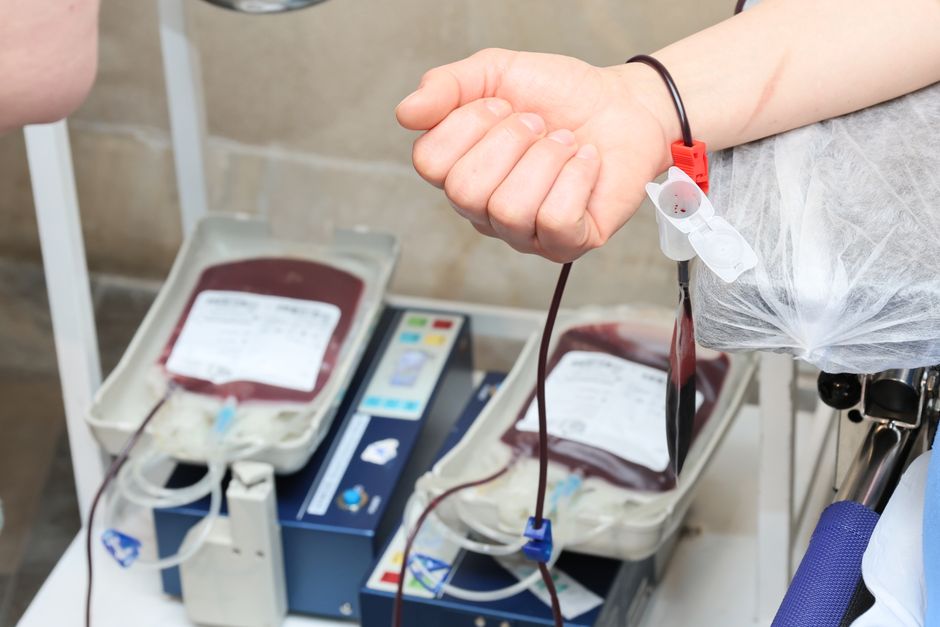
Rh negative patients are generally given Rh negative blood whenever possible. O negative blood is especially important because it can be given to almost anyone, which is why it is often called the universal donor type and is used in emergencies when there is no time to check a patient’s full blood type.
For most people, a single transfusion of mismatched Rh blood does not cause an immediate reaction. The bigger concern is sensitization for future transfusions or pregnancies. This is why matching is taken seriously even when the first exposure seems harmless.
Is Rh Negative Blood Rare or Special?
Rh negative blood is uncommon, but it is not magical. A persistent internet claim says Rh negative people are somehow different — descended from aliens, gifted with special traits, or immune to certain things. None of this is supported by evidence.
There is no scientific basis for claims that Rh negative people have different personalities, higher intelligence, psychic abilities, or unique health powers. These ideas circulate widely online but have no backing in medical research.
What is true is more practical: Rh negative blood can be harder to match in emergencies, and it carries specific implications for pregnancy and transfusion. Those are the real reasons it matters.
Some people also ask whether Rh negative blood is “better” or “worse” for health. It is neither. Rh status does not make you healthier or sicker in general. It is simply a genetic trait that requires attention in a few specific medical situations.
How Do You Find Out Your Rh Type?
You cannot tell your Rh type by looking at yourself or guessing from symptoms. The only way to know is through a blood test.
A blood type test, sometimes called a type and screen, checks both your ABO type and your Rh type. It is a simple blood draw, and results are usually available within a day.
You might have your blood typed if you:
- Are pregnant or planning to become pregnant
- Are donating blood
- Are having surgery or may need a transfusion
- Have a condition that affects red blood cells
- Are curious and want to know for your own records
Some people learn their blood type from a home test kit, but these vary in reliability. A lab test ordered by a clinician is the most dependable way to confirm your Rh status.
If you are Rh negative and pregnant, your clinician will guide you through the steps that reduce the risk of sensitization. If you are Rh negative and need a transfusion, the blood bank handles matching. In everyday life, being Rh negative requires no special diet, no supplements, and no lifestyle changes.
Frequently Asked Questions
What does it mean to be Rh negative?
It means your red blood cells do not have the RhD antigen, a protein found on the surface of red blood cells in most people. This is separate from your ABO blood type, so your full type is something like A negative or O positive.
Is Rh negative blood rare?
It is uncommon but not extremely rare — about 15% of people in the United States are Rh negative. The rate varies widely by ancestry and is much lower in many parts of Asia.
Can an Rh negative mother have a healthy baby?
Yes. With standard prenatal care, including Rh immune globulin when appropriate, most Rh negative mothers have healthy pregnancies and healthy babies. The key is early testing and following your clinician’s guidance.
Does being Rh negative affect your health?
No, Rh status does not affect your general health or how you feel day to day. It matters mainly in pregnancy and blood transfusions, where matching is important.
