
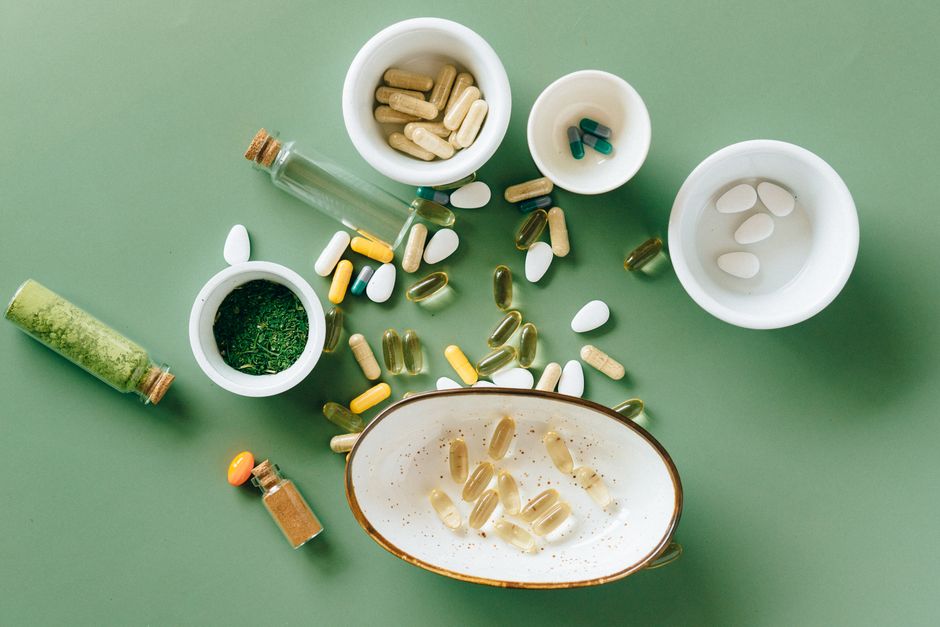
If you search for a supplement to lower cortisol, you will find shelves of bottles promising calm, balance, and stress relief. The honest answer is that no supplement has been proven to reliably lower cortisol in healthy people in a way that changes how they feel. A handful have modest evidence behind them, but the effect sizes are small, the studies are often short, and in some cases the supplement raises cortisol rather than lowering it.
Cortisol is a hormone your adrenal glands release in a daily rhythm, with levels highest in the early morning and lowest around midnight. It is not a toxin to be flushed out. It rises when you need energy, when you exercise, when you are sick, and when you are under stress. The best-supported way to influence it is not a pill. It is sleep, physical activity, and managing ongoing stress. Supplements sit far down the list.
What Is The Best Supplement To Reduce Cortisol?
No single supplement has strong evidence for lowering cortisol in generally healthy adults. If you are asking which one has the most human data behind it, the answer is ashwagandha, but even that evidence is limited.
Ashwagandha (Withania somnifera) is an adaptogenic herb used in Ayurvedic medicine. Several small randomized controlled trials in adults under stress have reported lower morning or daytime cortisol in the group taking ashwagandha compared with placebo. The trials are generally small, run for a few weeks to a few months, and use different extracts and doses, which makes them hard to compare. Some reviews of this research note that the overall quality is low and that results are inconsistent across studies.
That does not make the findings meaningless. It means the honest position is: some evidence suggests a modest effect in stressed adults, but no large, long-term trial has confirmed it, and no supplement is established as a treatment for high cortisol.
It is worth being clear about what “lowering cortisol” would even mean. A single blood or saliva reading is a snapshot. Cortisol naturally swings widely across the day. A supplement that nudges an average number down slightly is not the same as fixing a hormone problem.
Does Ashwagandha Actually Lower Cortisol?
Some studies suggest it can lower cortisol modestly in people reporting stress, but the evidence is not strong enough to call it proven.
The pattern in the research looks like this: participants who report chronic stress take ashwagandha or a placebo for several weeks. Researchers measure cortisol, usually in blood or saliva, and sometimes ask about stress and sleep. Some trials show lower cortisol in the ashwagandha group. Others show little difference.
A few points matter here.
- The trials are small, often with a few dozen participants each.
- Extract types and doses vary, so results do not stack neatly.
- Many are funded or supplied by manufacturers, which is a conflict worth noting.
- Effects on how people feel are often modest and not always matched by cortisol changes.
Ashwagandha is generally tolerated in short-term studies, but it is not risk-free. There are case reports of liver injury associated with ashwagandha products, and it is not recommended in pregnancy. It can interact with thyroid medication, sedatives, and immunosuppressants. If you take prescription medication, talk to your clinician before starting it.
What About Other Supplements Marketed For Cortisol?
Several other supplements appear in cortisol products. Most have far less human evidence than ashwagandha, and a few may do the opposite of what the label implies.
Rhodiola rosea is another adaptogen. Some small studies report reduced fatigue under stress, but findings on cortisol specifically are mixed and the trials are limited.
Magnesium is involved in hundreds of body processes, including stress response pathways. People with low magnesium intake may benefit from correcting that, but magnesium is not established as a cortisol-lowering supplement in people who already have normal levels.
Omega-3 fatty acids have been studied for many health outcomes. Effects on cortisol are inconsistent and generally small in the research available.
Phosphatidylserine has some older small studies suggesting it may blunt the cortisol rise from intense exercise. This is a narrow finding and has not translated into a general stress treatment.
Vitamin C is sometimes included in cortisol products. The evidence for it lowering cortisol in healthy adults is weak.
One thing worth knowing: some products sold for “adrenal support” contain glandular extracts or botanicals with stimulant effects. A few have been associated with raising cortisol or blood pressure rather than lowering it. The label does not always match the biology.



Why Do Cortisol Supplements Sell So Well?
Because stress is real, and people want something they can do today. That is understandable. The problem is that “cortisol” has become a marketing word rather than a medical one.
Social media posts often describe symptoms like fatigue, belly fat, and trouble sleeping as signs of “high cortisol.” In reality, those symptoms have many possible causes, and most people with them do not have a cortisol disorder. Diagnosing a genuine cortisol problem requires specific testing ordered by a clinician, usually because there are signs pointing to it.
There is also a category confusion worth naming. A supplement that slightly changes an average cortisol number in a stressed study group is not the same as treating a medical condition. Those are different claims with different evidence standards, and the second one is not supported for any over-the-counter supplement.
What Actually Affects Cortisol Levels?
Sleep, exercise, and stress management have more consistent effects on cortisol than any supplement. This is not a motivational statement. It reflects how the hormone works.
Cortisol follows a daily rhythm tied to your sleep-wake cycle. Disrupted sleep, shift work, and irregular schedules disturb that rhythm. Regular sleep and wake times support it.
Physical activity affects cortisol in a dose-dependent way. Moderate exercise can help regulate the stress response over time. Very intense or very long training sessions raise cortisol in the short term, which is normal and part of how the body adapts.
Psychological stress is the biggest lever most people have. Chronic stress keeps the cortisol system activated. Approaches with reasonable evidence for reducing stress include cognitive behavioral therapy, mindfulness-based stress reduction, and regular physical activity. These are not supplements, but they are where the stronger evidence sits.
Caffeine and alcohol both influence the stress response. Heavy caffeine intake can raise cortisol, particularly in people who are already stressed. Alcohol disrupts sleep, which in turn affects the next day’s cortisol rhythm.
When Cortisol Is Actually a Medical Problem
Genuine cortisol disorders exist, but they are uncommon and they are not treated with supplements.
Cushing’s syndrome is a condition of sustained excess cortisol, often from a tumor or from long-term use of steroid medications. It has recognizable features that a clinician evaluates with specific tests. Adrenal insufficiency is the opposite problem, where the body does not make enough cortisol, and it requires prescription hormone replacement.
If you have persistent symptoms that concern you, the right step is a medical evaluation, not a supplement. Self-treating a suspected cortisol problem with an over-the-counter product can delay a real diagnosis.
How Should You Think About Cortisol Supplements?
Treat them as low-evidence options, not solutions. If you decide to try one, know what you are and are not getting.
- No supplement is proven to lower cortisol in healthy adults in a way that reliably improves how you feel.
- Ashwagandha has the most human data, but the studies are small and results vary.
- Some cortisol products may raise cortisol or blood pressure rather than lower it.
- Supplements can interact with medications and are not appropriate in pregnancy without clinical guidance.
- Sleep, activity, and stress management have stronger evidence than any pill.
If you take medication, are pregnant or breastfeeding, or have a diagnosed health condition, talk to your clinician before starting any supplement. That is not a disclaimer. It is the same advice a pharmacist would give you at the counter.
Frequently Asked Questions
What is the best supplement to reduce cortisol?
Ashwagandha has the most human research behind it, but the evidence is limited and no supplement is proven to reliably lower cortisol in healthy adults. Sleep, exercise, and stress management have stronger support than any supplement.
Does ashwagandha lower cortisol?
Some small studies suggest it may lower cortisol modestly in stressed adults, but results are inconsistent and no large long-term trial has confirmed it. It can also interact with thyroid medication and sedatives.
Can supplements fix high cortisol?
No over-the-counter supplement is established as a treatment for a genuine cortisol disorder such as Cushing’s syndrome or adrenal insufficiency. Those conditions require medical evaluation and, when confirmed, prescription treatment.
What lowers cortisol naturally?
Regular sleep and wake times, moderate physical activity, and evidence-based stress approaches like cognitive behavioral therapy and mindfulness-based stress reduction have more consistent effects than any supplement. Reducing heavy caffeine and alcohol intake can also help.
