
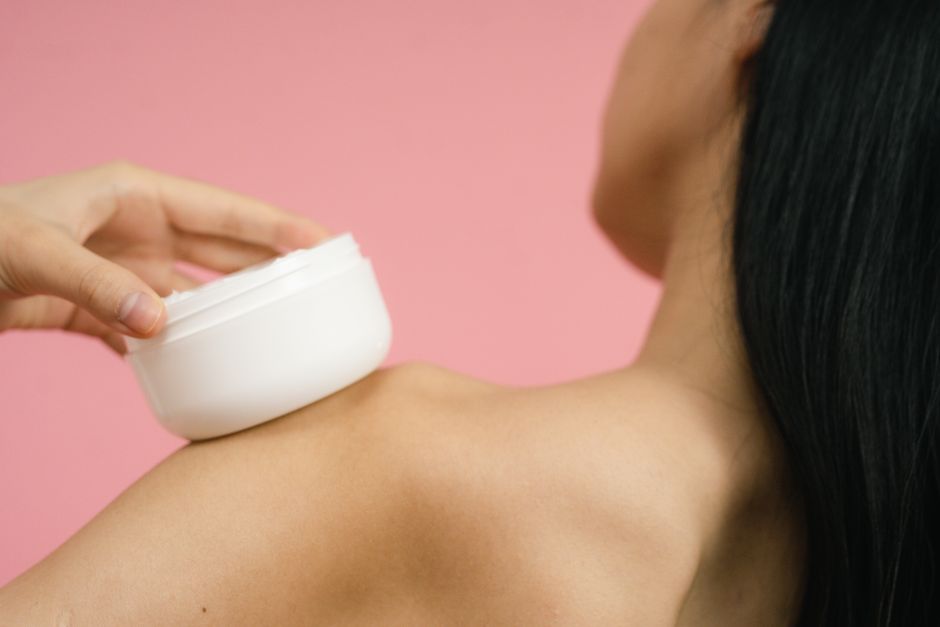
Menopause itching has less to do with your skin and more to do with a hormone shift that thins tissue and drains moisture from the surface. There is no single cream that works for everyone, but the most consistently effective option for most women is a fragrance-free moisturizer that supports the skin barrier, often combined with a low-potency topical steroid for flare-ups. If the itch is centered on the vulva or vagina, a plain skin cream will not fix it — that kind of itching usually needs estrogen therapy, not moisturizer.
Why Does Menopause Cause Itching?
Estrogen does more than regulate the menstrual cycle. It helps keep skin thick, hydrated, and able to repair itself. When estrogen drops during perimenopause and menopause, several things happen at once.
Skin loses collagen and elastin, the proteins that give it structure and stretch. It also produces less sebum, the natural oil that seals in moisture. The result is skin that is thinner, drier, and more easily irritated. That irritation shows up as itching.
This is not a small effect. Some research suggests that a meaningful share of postmenopausal women experience persistent skin dryness and itching, though estimates vary widely depending on how the question is asked. What is clear is the mechanism: less estrogen means a weaker skin barrier, and a weaker barrier means more water escapes and more irritants get in.
There is a second, often overlooked factor. Itching in the genital area during menopause is frequently not a skin problem at all. It is a tissue problem. The vulvar and vaginal tissues also depend on estrogen, and when it drops, they thin, dry out, and become fragile. This condition is called genitourinary syndrome of menopause, or GSM. It affects a large share of postmenopausal women, and it is a separate issue from dry skin on your arms or legs.
Knowing which type of itching you have is the first step, because the right treatment depends entirely on the answer.
What Is the Best Cream for Menopause Itching?
For itching on the body — arms, legs, back, torso — the best cream is a fragrance-free, dye-free moisturizer designed for sensitive or eczema-prone skin. These products do not cure the underlying dryness, but they reduce the itch by rebuilding the skin barrier and holding water in.
Look for ingredients that mimic what healthy skin already makes:
- Ceramides — fats that fill the gaps between skin cells
- Glycerin — pulls water into the outer layer of skin
- Hyaluronic acid — holds water at the surface
- Petrolatum or dimethicone — forms a seal that slows water loss
- Colloidal oatmeal — has documented anti-itch properties
Thicker creams and ointments generally work better than thin lotions for very dry skin. Lotions are mostly water and evaporate quickly. Creams and ointments stay on the skin longer and do more to stop moisture loss.
For active flare-ups — when the skin is red, inflamed, and intensely itchy — a low-potency topical corticosteroid such as hydrocortisone can calm the inflammation. These are available over the counter in strengths up to 1%. They are meant for short-term use on small areas, not for daily long-term application. Using a steroid cream continuously for weeks can thin the skin, which is the opposite of what menopausal skin needs.
What does not work well: heavily fragranced body creams, products with alcohol high on the ingredient list, and “anti-aging” lotions that prioritize marketing over barrier repair. Fragrance is one of the most common triggers for contact irritation, and menopausal skin is more reactive than it used to be.
Does Estrogen Cream Help Menopause Itching?
For itching in the vulva or vagina, low-dose vaginal estrogen is the treatment with the strongest evidence behind it. It is not the same as a body moisturizer, and it is not the same as systemic hormone therapy taken by pill or patch.
Vaginal estrogen comes as a cream, a tablet, or a ring. It delivers estrogen directly to the tissue that needs it, with minimal absorption into the bloodstream. Research consistently shows it improves vaginal dryness, irritation, and itching in postmenopausal women. It also helps with recurrent urinary tract infections and painful sex, which often travel alongside the itching.
This is a prescription treatment, not something you buy off a shelf. If your itching is internal or centered on the vulva, a drugstore moisturizer is unlikely to help. Many women spend months trying creams that were never going to work because the problem was tissue thinning, not surface dryness.
For women who cannot or prefer not to use estrogen, a non-hormonal vaginal moisturizer used regularly can reduce dryness and irritation. The evidence for these is generally weaker than for vaginal estrogen, but some women find them helpful. Vaginal lubricants are a different product — they are for comfort during sex and do not treat ongoing tissue changes.
If you are being treated for breast cancer or have a history of estrogen-sensitive cancer, talk to your oncologist before using any estrogen product, even low-dose vaginal forms.




What Else Causes Itching During Menopause?
Not all itching in midlife is hormonal. Several other conditions become more common around the same time, and some of them look identical to menopausal dryness at first.
Contact dermatitis is a reaction to something touching the skin — soap, detergent, fabric softener, scented pads, or even the cream you are using to treat the itch. It causes redness, burning, and itching that can worsen with each exposure.
Eczema and psoriasis can appear for the first time in midlife or flare up after years of quiet. Both cause itching and both need specific treatment beyond moisturizer.
Lichen sclerosus is a chronic inflammatory skin condition that affects the vulva. It causes intense itching, white patches, and fragile skin. It is not caused by menopause, but it is more common after menopause and is frequently mistaken for simple dryness. It needs prescription treatment and, in some cases, long-term monitoring because of a small associated cancer risk.
Infections such as yeast or bacterial vaginosis can cause itching, and the risk of some of these rises after menopause because lower estrogen changes the vaginal environment.
Medical conditions including thyroid disease, diabetes, kidney disease, and liver problems can cause generalized itching. Iron deficiency and some medications also cause itching as a side effect.
If itching is severe, widespread, or does not improve with basic moisturizing, it is worth seeing a doctor. Itching that is truly all over the body, rather than in one area, deserves a medical workup rather than another cream.
How Should You Choose a Cream?
Match the product to the location and the cause. This is the part most people get wrong.
| Type of itching | What usually helps | What usually does not |
|---|---|---|
| Dry, itchy skin on body | Fragrance-free barrier cream with ceramides or petrolatum | Thin, scented lotions |
| Inflamed, red, itchy patches | Short-term low-potency hydrocortisone plus moisturizer | Long-term daily steroid use |
| Vulvar or vaginal itching | Prescription vaginal estrogen; non-hormonal moisturizer as an alternative | Body lotion or scented creams |
| Itching with white patches or fragile skin | Medical evaluation; prescription treatment | Over-the-counter creams |
| Widespread itching with no rash | Medical workup | Any cream alone |
A few practical rules apply to almost everyone. Apply moisturizer within a few minutes of showering, while skin is still damp, to trap water in. Use lukewarm water, not hot. Choose fragrance-free everything — soap, detergent, and cream. And give a new product a fair trial of a couple of weeks before deciding it does not work, unless it causes burning or a rash, in which case stop.
If a cream stings or burns when you apply it, that is a signal, not a normal part of treatment. Stop using it and consider whether the skin barrier is damaged enough to need medical attention.
When Should You See a Doctor?
See a doctor if the itching does not improve after a few weeks of consistent barrier care. That timeline is a reasonable rule of thumb, not a hard cutoff, but persistent itching that resists basic treatment usually means the cause is not simple dryness.
Also seek care if you notice:
- White, shiny, or thickened patches on the vulva
- Bleeding, sores, or cracks in the skin
- Itching that interferes with sleep or daily life
- Itching that spreads across the whole body
- Discharge, odor, or pain with urination
- Any new lump, growth, or skin change
These signs point toward conditions that need diagnosis and prescription treatment, not another trip down the drugstore aisle. Getting the right diagnosis early usually means faster relief and less time spent on creams that were never going to work.
Frequently Asked Questions
What is the best over-the-counter cream for menopause itching?
A fragrance-free moisturizer with ceramides, glycerin, or petrolatum is the best over-the-counter choice for dry, itchy skin on the body. For vulvar or vaginal itching, over-the-counter creams rarely help because the cause is tissue thinning, not surface dryness.
Does vaginal estrogen cream help with menopause itching?
Yes, for itching caused by genitourinary syndrome of menopause, low-dose vaginal estrogen has the strongest evidence behind it and is a prescription treatment. It is not the same as a body moisturizer and does not treat itching on your arms or legs.
Why does menopause make my skin so itchy?
Falling estrogen reduces collagen, sebum, and the skin’s ability to hold water, which weakens the skin barrier and allows irritants in. In the genital area, the same hormone drop thins and dries the tissue, causing a separate type of itching.
How long should I use hydrocortisone cream for itching?
Over-the-counter hydrocortisone is intended for short-term use on small areas, generally no more than a couple of weeks without medical advice. Prolonged daily use can thin the skin, which is especially problematic for already-thin menopausal skin.
