
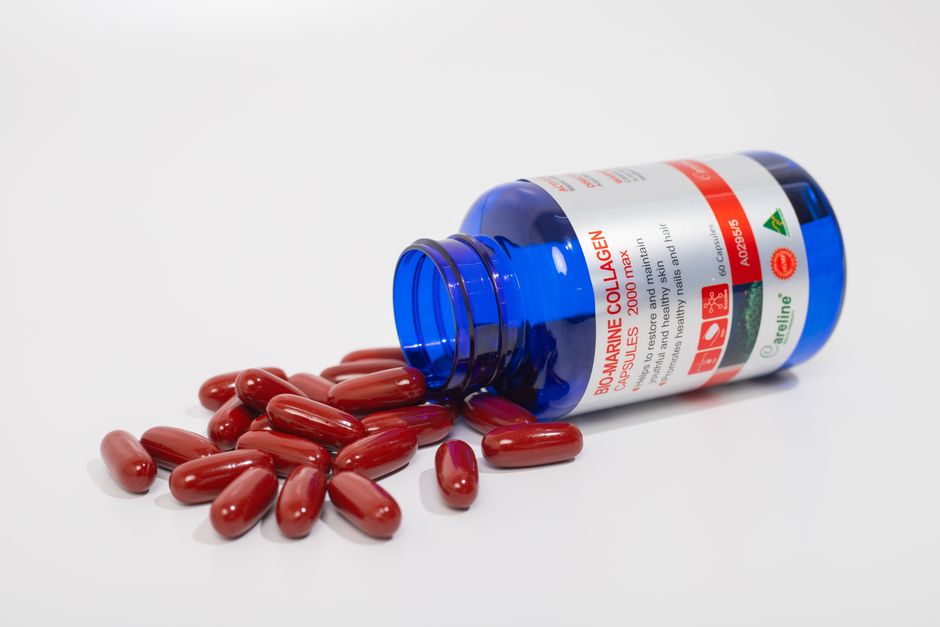
Collagen supplements are not one thing. They are a category of products built from different collagen types, sourced from different animals or made in labs, and broken into different molecular sizes. The best type to take depends on your goal. Type I is the most studied for skin and bone. Type II is the one researched for joint cartilage. Type III often comes bundled with Type I. There is no single “best” collagen — only the best match for what you are trying to support.
Most people searching for a collagen supplement are really asking three questions at once. Which type does what? Does the source matter? And does any of it actually work? This guide separates the established physiology from the marketing, so you can read a label and understand what you are buying.
What Are the Different Types of Collagen?
Scientists have identified at least 28 types of collagen in the human body. Three of them account for the vast majority of collagen in your tissues, and those are the ones you will see on supplement labels.
Type I is the most abundant. It forms the scaffolding of skin, bone, tendons, and ligaments. It gives skin its tensile strength and bone its resistance to pulling forces.
Type II is the main collagen of cartilage. Cartilage is the smooth tissue that cushions the ends of bones in joints. Type II fibers are arranged differently from Type I and are built to handle compression.
Type III is found alongside Type I in skin, blood vessels, and internal organs. It is often described as “reticular” collagen because it forms fine mesh networks.
Other types, including IV, V, and X, exist in small amounts and are not typically the focus of supplements. When a product says “multi-collagen” or “Types I, II, III, V, and X,” it is usually a blend of animal tissues — often bovine hide, bovine cartilage, chicken sternum, fish skin, and eggshell membrane.
Collagen Types Compared: What Each Type Is Studied For
The evidence base differs sharply by type and by outcome. Some of this is well supported. Some is early. It helps to know which is which before you spend money.
| Type | Main Sources | Primary Tissue in Body | What Research Suggests |
|---|---|---|---|
| Type I | Bovine hide, fish skin, eggshell membrane | Skin, bone, tendon, ligament | Most studied for skin elasticity and hydration; some evidence for bone density when combined with calcium and vitamin D |
| Type II | Bovine cartilage, chicken sternum | Joint cartilage | Studied for joint discomfort and stiffness; results are mixed and often modest |
| Type III | Bovine hide, fish skin | Skin, blood vessels, organs | Usually taken with Type I; less studied on its own |
| Multi-type blends | Combinations of the above | Various | Marketed broadly; fewer direct trials than single-type products |
One point that gets lost in marketing: collagen type in a pill does not automatically become that type in your body. Digestion breaks collagen into short chains of amino acids called peptides, and your body decides what to build from them. The type on the label tells you what went in, not what your body will make.
Which Collagen Type Is Best for Skin?
Type I has the strongest research support for skin. That is not surprising, since Type I is the dominant collagen in the dermis, the layer that gives skin its firmness.
Several randomized controlled trials have tested collagen peptides — mostly Type I from fish or bovine sources — on skin hydration, elasticity, and the appearance of wrinkles. Results have generally been positive but modest. A common pattern in this research is small improvements measured by instruments rather than dramatic visible changes.
Two practical details matter more than the type label alone. First, most skin research uses hydrolyzed collagen peptides — collagen broken into small fragments that are easier to absorb. Second, doses in these studies typically ranged from about 2.5 to 10 grams per day. That range reflects the studied doses, not an official recommendation. No regulatory body has set a recommended daily intake for collagen.
Type III is often included with Type I in fish and bovine products, and some evidence suggests the two work together in skin. Whether Type III adds anything beyond Type I on its own has not been well established.
Which Collagen Type Is Best for Joints?
Type II is the collagen of cartilage, and it is the type most studied for joint health. The research here is more mixed than the skin research.
Some trials of hydrolyzed Type II collagen have reported reductions in joint pain and stiffness in people with activity-related joint discomfort. Other trials have found little difference from placebo. Study designs, doses, and populations vary widely, which makes it hard to draw one firm conclusion.
An important distinction: undenatured Type II collagen (sometimes called UC-II) is a different product from hydrolyzed collagen. It is not broken down and is thought to interact with the immune system in the gut. Some studies suggest benefits at very small doses, but the evidence is not consistent, and the mechanism is not fully settled. If you are comparing products, know that these are not interchangeable.
No clinical evidence currently confirms that a collagen supplement can rebuild cartilage or reverse joint damage. The research focuses on symptoms — discomfort and stiffness — not structural repair.
Does the Source Matter: Marine, Bovine, or Eggshell?
Source affects the type profile and the peptide size, and it can affect how well you tolerate a product. It does not appear to change the fundamental biology.
- Marine (fish) collagen is mostly Type I. It tends to have smaller peptides, which some manufacturers argue improves absorption. Most skin research uses marine collagen, so it has the strongest evidence for that outcome.
- Bovine (cattle) collagen typically contains both Type I and Type III. It is common in joint and multi-type products and is generally the most affordable source.
- Chicken sternum and bovine cartilage are the usual sources of Type II for joint products.
- Eggshell membrane contains Type I plus other matrix proteins. It has its own small body of research, mostly on joint comfort, but it is not the same as plain collagen peptides.
For people who avoid beef or fish for dietary or religious reasons, the source matters practically even if the science does not rank one above another. Collagen is an animal product, so vegan collagen does not exist in the traditional sense — products marketed as “vegan collagen” usually contain amino acids or nutrients that support your own collagen production, not collagen itself.
Peptides, Hydrolysate, and Undenatured: Why the Form Matters
The form of collagen may matter more than the type. Whole collagen is a large, tough protein that your body struggles to absorb intact. Processing changes that.
Hydrolyzed collagen (also called collagen peptides or collagen hydrolysate) has been broken into short amino acid chains. This is the form used in most skin and joint research, and it is the most common form on store shelves.
Gelatin is partially hydrolyzed collagen. It gels when cooled and is the base of bone broth and gummy supplements. It is absorbed, but it is not the same as the peptides used in most trials.
Undenatured Type II collagen is left intact on purpose. It is used in small doses and studied mainly for joints, with the theory that intact collagen interacts with immune cells in the gut. The evidence for this is interesting but not conclusive.
One non-obvious point: a product can list “Type I and III” and still be poorly absorbed if it is not hydrolyzed. The type on the front of the label tells you less than the form and dose on the back.
How to Compare Collagen Products Honestly
Reading a label well is more useful than chasing the newest marketing claim. A few things are worth checking before you buy.
- Look for the word “hydrolyzed” or “peptides” if your goal is skin or general use. That is the form most studied.
- Check the dose per serving. Many skin studies used 2.5 to 10 grams per day. A product with 500 mg per serving is far below the studied range.
- Match the type to the goal. Type I (often marine) for skin. Type II for joints. Multi-type blends are fine but usually have less direct evidence.
- Third-party testing matters. Collagen is an animal product, and heavy metal contamination has been reported in some supplements. Look for testing from an independent lab.
- Ignore “grass-fed,” “wild-caught,” and “anti-aging” claims unless they come with testing data. They describe sourcing, not proven benefit.
It is also fair to say that collagen is not essential. Your body makes its own collagen, and it gets the amino acids it needs from protein in your diet. A supplement is optional, not a requirement. If you eat adequate protein, you are already supplying the raw materials.
What the Evidence Does and Does Not Show
The honest summary is that collagen supplements have real but modest supporting evidence for a few outcomes, and weak or absent evidence for others.
The strongest evidence is for skin hydration and elasticity, where multiple randomized trials point in the same direction with small effects. Evidence for joint comfort is mixed. Evidence for bone density is early and mostly limited to specific populations, such as postmenopausal women, often in combination with calcium and vitamin D.
What the evidence does not show: that collagen reverses aging, rebuilds cartilage, cures arthritis, or replaces a balanced diet. No large trial has confirmed those claims. Supplements are also not tightly regulated in the US, so what is on the label is not always what is in the bottle.
If you decide to try one, give it a reasonable window — several weeks to a few months — and judge by how you feel and function, not by marketing promises. And if you have a medical condition or take medication, talk to your clinician first. Collagen is generally well tolerated, but that is not the same as being right for everyone.
Frequently Asked Questions
What is the best collagen type for skin?
Type I collagen has the strongest research support for skin hydration and elasticity. Marine collagen is mostly Type I and is the form used in most skin studies.
Is Type I or Type II collagen better for joints?
Type II is the collagen of cartilage and is the type most studied for joint discomfort. The evidence is mixed, and no collagen has been shown to rebuild cartilage.
Does marine collagen work better than bovine collagen?
Marine collagen is mostly Type I and has more research behind it for skin. Bovine collagen usually contains Types I and III and is common in joint products, but head-to-head comparisons are limited.
How much collagen should I take per day?
There is no official recommended daily intake for collagen. Skin studies commonly used about 2.5 to 10 grams of hydrolyzed collagen per day, but that reflects studied doses, not a guideline.
