
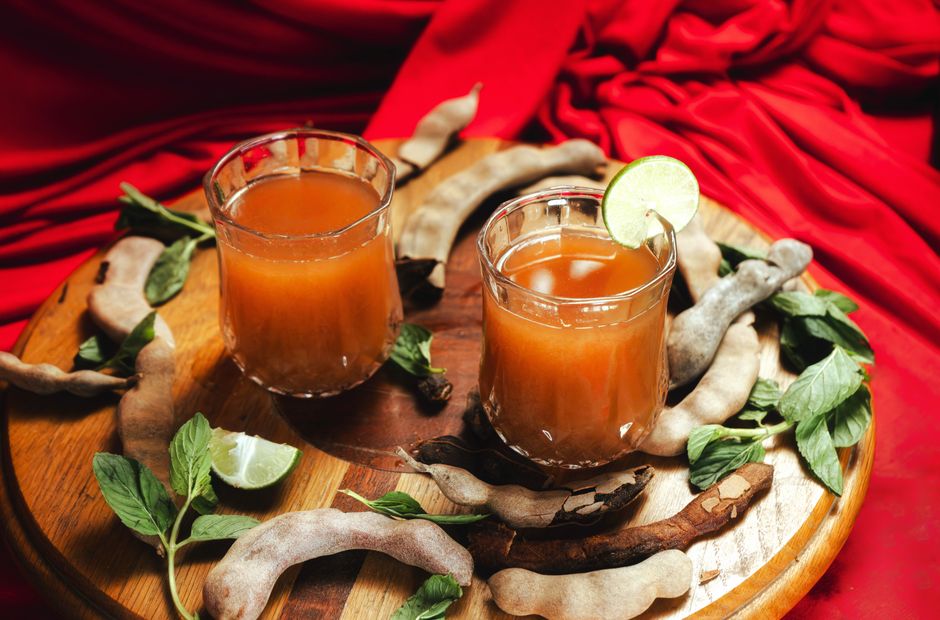
Tamarind pulp is the sticky, brown, fibrous fruit flesh inside the pods of the tamarind tree, Tamarindus indica. It is a genuinely nutrient-dense food, high in sugar and acid, and it supplies meaningful amounts of magnesium, potassium, iron, and thiamine. It is sold as whole pods, pressed blocks, paste, concentrate, and powder, and it is used mostly as a souring and flavoring ingredient in cooking around the world.
What Is Tamarind Pulp Nutrition?
Tamarind pulp is roughly two-thirds carbohydrate, and most of that carbohydrate is sugar. That single fact shapes almost everything else about how it behaves in the body and how it is best used.
According to USDA nutrient data, tamarind pulp provides about 239 calories per 100 grams, with roughly 57 grams of carbohydrate, of which around 38 grams is sugar. It contains very little fat and only about 3 grams of protein per 100 grams. Those numbers describe the raw pulp, not a sweetened commercial paste or a drink made from it.
The mineral content is where tamarind stands out among fruits. Per 100 grams, USDA data lists roughly 92 milligrams of magnesium, 628 milligrams of potassium, and 2.8 milligrams of iron. It also supplies thiamine (vitamin B1), niacin, and small amounts of calcium and phosphorus.
Two things are worth separating here. First, those mineral figures are per 100 grams of pulp. Most people use a tablespoon or two at a time, not 100 grams, so a typical serving delivers a fraction of those amounts. Second, tamarind is not a low-calorie food. It is concentrated. A little goes a long way, both for flavor and for sugar.
Tamarind also contains tartaric acid, which is what gives it its sharp sour taste, along with smaller amounts of other organic acids. That acidity is the main reason it works as a souring agent in cooking.
What Is Tamarind Pulp Used For?
In most of the world, tamarind is a food ingredient first and everything else second.
It is the sour backbone of many South Asian, Southeast Asian, Mexican, and Middle Eastern dishes. It flavors chutneys, curries, lentil soups, noodle dishes, and marinades. In Mexico and parts of Latin America it is used in candies, drinks, and sauces. In the Caribbean and West Africa it appears in drinks and rice dishes. The pattern is consistent: tamarind adds sourness and body where lemon, lime, or vinegar would otherwise be used.
Beyond cooking, tamarind has a long history of use in traditional medicine in several cultures, often for digestive complaints. It is worth being clear about the difference between traditional use and demonstrated effect. Tamarind has been used this way for centuries, but that history is not the same as clinical proof that it treats any condition. Some small studies have looked at tamarind and various health measures, but the human evidence base is thin and the results are not consistent enough to support specific health claims.
One non-food use is genuinely well established. Tamarind seed kernel powder is used industrially in textile sizing and as a natural thickening and stabilizing agent, and tamarind derivatives appear in some cosmetics and cleaning products. That is a materials use, not a health use.
What Forms Does Tamarind Pulp Come In?
Tamarind is sold in several forms, and they are not interchangeable in the kitchen. The form you buy changes the water content, the sugar-to-acid balance, and how much you need to use.
Whole pods are the least processed form. You crack the brittle shell, pull out the fibrous veins, and the pulp is what remains. This is the freshest and most aromatic option, and also the most work.
Pressed blocks or bricks are the most common form in many markets. These are blocks of pulp, sometimes with seeds and fiber still mixed in, sometimes cleaned. They keep well and are easy to break apart.
Seedless or cleaned pulp is the block with seeds and most fiber removed. It is easier to use and slightly more expensive.
Paste and concentrate are ready-to-use products, often sold in jars or tubes. These are convenient but frequently contain added sugar, preservatives, or both. Reading the ingredient list matters here, because added sugar can substantially change the sugar content compared with raw pulp.
Powder is made from dried, ground pulp. It reconstitutes with water and is the most shelf-stable form, though it loses some aroma.
There is also tamarind syrup and tamarind-based drinks, which are a different category. These are typically heavily sweetened and should be thought of as sugar-sweetened beverages rather than as a source of tamarind’s nutrients.
How Does Tamarind Pulp Compare Across Forms?
The table below compares the main forms on the qualities that matter most for cooking and for nutrition. The nutrition figures apply to raw pulp; processed forms vary widely by brand.
| Form | Processing | Typical Added Sugar | Convenience | Shelf Life |
|---|---|---|---|---|
| Whole pods | Minimal | None | Low | Long if dry |
| Pressed block | Low | None | Medium | Long |
| Seedless pulp | Low to medium | None | Medium to high | Long |
| Paste or concentrate | Medium to high | Often yes | High | Medium |
| Powder | High (dried) | Usually none | High | Very long |
| Syrup or drinks | High | Usually yes | High | Varies |
The practical takeaway: if you want tamarind’s minerals without extra sugar, choose whole pods, blocks, or plain powder. If you want convenience, check the label on pastes and concentrates.
Does Tamarind Pulp Have Health Benefits?
Tamarind is a real source of several nutrients, but it is not a therapeutic food, and claims that it treats disease are not supported by strong human evidence.
What is well established is its nutrient contribution. It supplies magnesium and potassium, two minerals that most people do not get enough of from typical diets, and it contains iron and thiamine. Used as part of a varied diet, it can contribute to meeting needs for these nutrients. That is a modest, honest benefit.
What is not well established is any specific medicinal effect. Some studies have examined tamarind and markers like blood sugar or cholesterol, and some traditional uses center on digestion, but the human evidence is limited and mixed. No clinical evidence currently confirms that eating tamarind pulp treats or prevents any specific disease.
There is one mechanism worth understanding, because it is often misread. Tamarind is acidic, and some older research explored whether tamarind or its extracts affect how the body handles fluoride. That line of inquiry is not the same as a health benefit, and it does not support any general claim about tamarind and health. If you encounter confident statements that tamarind “detoxifies” or “flushes” anything, treat them as unsupported.
One practical note: because tamarind is high in sugar and acid, it is best treated as a flavoring rather than a food to eat in large amounts. The acid can also affect tooth enamel with frequent exposure, the same way other sour foods do.
Who Should Be Careful With Tamarind Pulp?
For most people, tamarind as a food ingredient is not a concern. The cautions that exist are mostly about amount and context, not about tamarind being dangerous.
The sugar content is the main practical consideration. At roughly 38 grams of sugar per 100 grams of raw pulp, tamarind is a concentrated sugar source. People managing blood sugar, or anyone watching sugar intake, should account for it. Sweetened pastes and tamarind drinks add more sugar on top of that.
Because tamarind is acidic, people with acid sensitivity or reflux may notice it. This is a common-sense caution rather than a documented universal effect.
For pregnancy, breastfeeding, infants, and young children, no specific clinical guidelines exist for tamarind pulp as a supplement or concentrated product. As a normal food ingredient in typical amounts, it is used widely, but concentrated extracts and supplements are a different matter and should not be assumed safe in these groups without professional guidance.
Tamarind can also interact with how the body handles certain substances, and some sources raise questions about tamarind and certain medications. If you take prescription medication and are considering concentrated tamarind products or supplements, talk to a clinician or pharmacist rather than relying on general information.
How Do You Store and Use Tamarind Pulp?
Tamarind keeps well if you respect its two enemies: moisture and heat.
Whole pods store for months in a cool, dry place. Blocks and seedless pulp keep for a long time wrapped tightly, and they can be refrigerated or frozen to extend shelf life further. Paste in an opened jar should be refrigerated and used within the timeframe on the label. Powder should be kept sealed and dry.
To use block or whole pulp, soak it in warm water for about 10 to 20 minutes, then work it with your fingers and strain out the seeds and fiber. The resulting liquid or paste is what goes into the dish. This step is why tamarind is often described as high-effort but high-reward.
A small amount delivers a lot of sourness, so start with less than you think you need. You can always add more, and you cannot take it back out.
Frequently Asked Questions
Is tamarind pulp good for you?
Tamarind pulp supplies useful amounts of magnesium, potassium, iron, and thiamine, so it can contribute to a varied diet. It is also high in sugar, so it works best as a flavoring rather than a food eaten in large amounts.
How much sugar is in tamarind pulp?
Raw tamarind pulp contains roughly 38 grams of sugar per 100 grams, according to USDA nutrient data. Sweetened pastes, concentrates, and tamarind drinks contain more because of added sugar.
What is tamarind pulp used for in cooking?
Tamarind pulp is used mainly as a souring agent in curries, chutneys, soups, marinades, sauces, and drinks. It adds acidity and body where lemon, lime, or vinegar might otherwise be used.
Is tamarind the same as tamarind paste?
No. Tamarind paste is a processed, often ready-to-use product made from tamarind pulp, and it frequently contains added sugar or preservatives. Plain pulp from pods or blocks contains no added sugar.
