
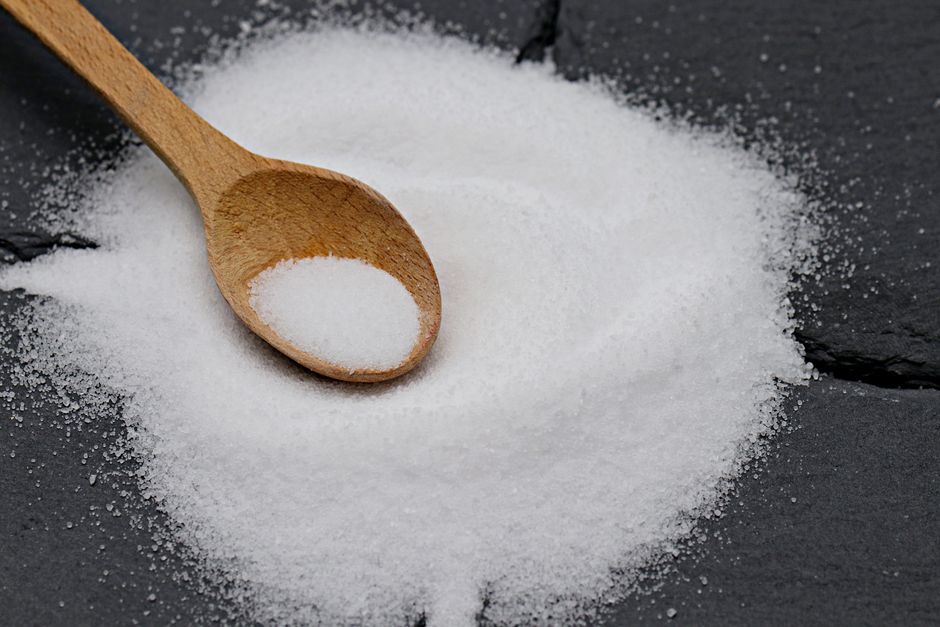
Sodium aluminum phosphate is a synthetic food additive made from sodium, aluminum, and phosphate. It is best known as a leavening acid in baking powder, where it helps baked goods rise. It is also used in processed cheese, meat products, and some convenience foods. The FDA classifies it as Generally Recognized As Safe (GRAS) for these uses, though questions about aluminum intake from food additives continue to draw research attention.
What Is Sodium Aluminum Phosphate?
Sodium aluminum phosphate is an inorganic compound with the chemical formula NaAl3H14(PO4)8·4H2O. It is a white powder that occurs in two main forms: acidic and basic. The acidic form is the one most commonly used in food.
In baking, it works as a leavening acid. When it reacts with baking soda (sodium bicarbonate), it produces carbon dioxide gas. That gas forms bubbles in dough, which makes cakes, biscuits, and pancakes rise. Unlike some faster-acting leavening acids, sodium aluminum phosphate reacts slowly and mainly during the baking process. This delayed reaction is useful for products that sit as batter before they hit the oven.
The compound was first developed in the early 20th century as a replacement for other leavening agents. Today it appears in many commercial baking powders and pre-mixed baking products.
Where Is Sodium Aluminum Phosphate Found in Food?
It shows up in more products than most people realize. The most common sources are:
- Commercial baking powders (often labeled as “double-acting”)
- Self-rising flour and biscuit mixes
- Pancake and waffle mixes
- Cake mixes and frosting mixes
- Processed cheese slices and spreads
- Some processed meats and poultry products
- Certain brands of frozen dough and ready-to-bake items
In processed cheese, it acts as an emulsifying salt. It helps the cheese melt smoothly and prevents fat from separating. In meat products, it can help bind water and improve texture.
The amount used in food is typically small. In baking powder, it might make up 10 to 30 percent of the product by weight. In the final baked good, the concentration is much lower.
How Does It Work as a Leavening Agent?
Leavening is the process that makes baked goods light and airy. It relies on a simple chemical reaction: an acid meets a base, and carbon dioxide gas is released.
Sodium aluminum phosphate is the acid. Baking soda is the base. When they meet in the presence of moisture and heat, they react. The carbon dioxide they produce gets trapped in the dough’s structure, creating bubbles that expand during baking.
What makes sodium aluminum phosphate different from other leavening acids is its timing. Some acids, like cream of tartar, react immediately when mixed with liquid. That means the gas escapes before the batter even goes in the oven. Sodium aluminum phosphate reacts more slowly. It releases most of its gas during baking, when heat triggers the reaction. This is why it is often called a “slow-acting” or “heat-activated” leavening acid.
This slow release gives bakers more control. Batters can sit longer without losing their rise. The final product tends to have a more consistent texture.





Is Sodium Aluminum Phosphate Safe to Eat?
The FDA lists sodium aluminum phosphate as GRAS, meaning it is considered safe for its intended use in food. This status is based on decades of use and available safety data.
The main question with this additive is aluminum. Aluminum is a metal that occurs naturally in the environment. It is present in soil, water, and many foods, including fruits, vegetables, and grains. The human body absorbs very little aluminum from food — typically less than 1 percent of what is consumed.
However, aluminum can accumulate in the body over time, particularly in the bones and brain. Very high aluminum exposure has been linked to health problems in people with kidney disease, who cannot clear aluminum efficiently. For people with healthy kidneys, the body removes most absorbed aluminum through urine.
Some research has looked at whether long-term aluminum exposure from food additives contributes to neurodegenerative diseases like Alzheimer’s. The evidence here is mixed and no causal link has been established. The Alzheimer’s Association and other health organizations state that no definitive connection has been found between aluminum in food or cookware and Alzheimer’s disease.
That said, regulatory bodies in other countries have taken a more cautious approach. The European Food Safety Authority has set a tolerable weekly intake for aluminum of 1 milligram per kilogram of body weight per week. This applies to all sources of aluminum, not just food additives. The FDA has not established a similar limit for aluminum in food.
How Much Aluminum Are You Actually Consuming?
Most people consume small amounts of aluminum daily from food, water, and air. The average adult in the US takes in roughly 7 to 9 milligrams of aluminum per day from food, according to estimates from the Agency for Toxic Substances and Disease Registry.
Sodium aluminum phosphate contributes a fraction of that. The amount used in a batch of baked goods is small, and only a portion of the aluminum is absorbed. For context, a single antacid tablet can contain 200 milligrams or more of aluminum hydroxide — far more than what you would get from a serving of pancakes.
People who eat a lot of commercially baked goods or processed cheese may get more aluminum from additives than those who cook from scratch. But even then, the amounts are generally well below levels that have been associated with health problems in people with normal kidney function.
The bigger concern is for people with chronic kidney disease. Their kidneys cannot filter aluminum effectively, so it can build up in the body. For this group, limiting aluminum intake from all sources, including food additives, is often recommended by healthcare providers.
What Are the Alternatives?
If you want to avoid sodium aluminum phosphate, you have options. Not all baking powders contain it. Some brands use different leavening acids.
Common alternatives include:
- Calcium acid pyrophosphate — another slow-acting leavening acid
- Monocalcium phosphate — a fast-acting acid often used in combination with slower ones
- Sodium acid pyrophosphate — used in some commercial baking powders
- Cream of tartar — a fast-acting acid used in home baking
Aluminum-free baking powders are widely available. They typically use a combination of monocalcium phosphate and sodium acid pyrophosphate, or cream of tartar. These products work well for most home baking, though the timing of the rise may differ slightly.
If you are concerned about aluminum intake, reading ingredient labels is the most direct approach. Sodium aluminum phosphate will be listed by name. It may also appear as “sodium aluminum phosphate” or “SALP” on some labels.
What Does the Research Say About Aluminum and Health?
Aluminum has been studied for decades. The research has looked at its potential role in several conditions, including Alzheimer’s disease, breast cancer, and bone disorders.
For Alzheimer’s disease, the evidence does not support a direct causal link. Some studies have found higher aluminum levels in the brains of people who died with Alzheimer’s, but others have not. The Alzheimer’s Association notes that the link remains unproven. The complexity of the disease and the many factors involved make it difficult to isolate any single cause.
For bone health, high aluminum intake can interfere with bone mineralization. This is mainly a concern for people with kidney disease or those receiving long-term intravenous nutrition. For the general population, normal dietary aluminum is not considered a significant risk to bone health.
The World Health Organization has evaluated aluminum and concluded that the available data do not indicate a health risk from aluminum in food for healthy people. The organization has not set a formal acceptable daily intake for aluminum, but it continues to monitor the research.
It is worth noting that aluminum is one of the most abundant elements in the Earth’s crust. It is impossible to eliminate it from the diet entirely. The question is not whether aluminum is present, but whether the amounts consumed from food additives pose a meaningful risk. Current evidence suggests they do not for most people.
Frequently Asked Questions
What is sodium aluminum phosphate used for?
It is used as a leavening acid in baking powder and as an emulsifying salt in processed cheese. It helps baked goods rise and keeps cheese smooth.
Is sodium aluminum phosphate bad for you?
The FDA considers it safe for its intended use in food. It does contain aluminum, but the amount absorbed from food is very small for people with healthy kidneys.
Does sodium aluminum phosphate contain aluminum?
Yes, aluminum is part of its chemical structure. The compound is made from sodium, aluminum, and phosphate.
Is aluminum-free baking powder better?
Aluminum-free baking powder works well for most baking needs and is a reasonable choice if you want to reduce aluminum intake. The evidence does not show that aluminum from baking powder causes harm in healthy people, but some prefer to avoid it.
