
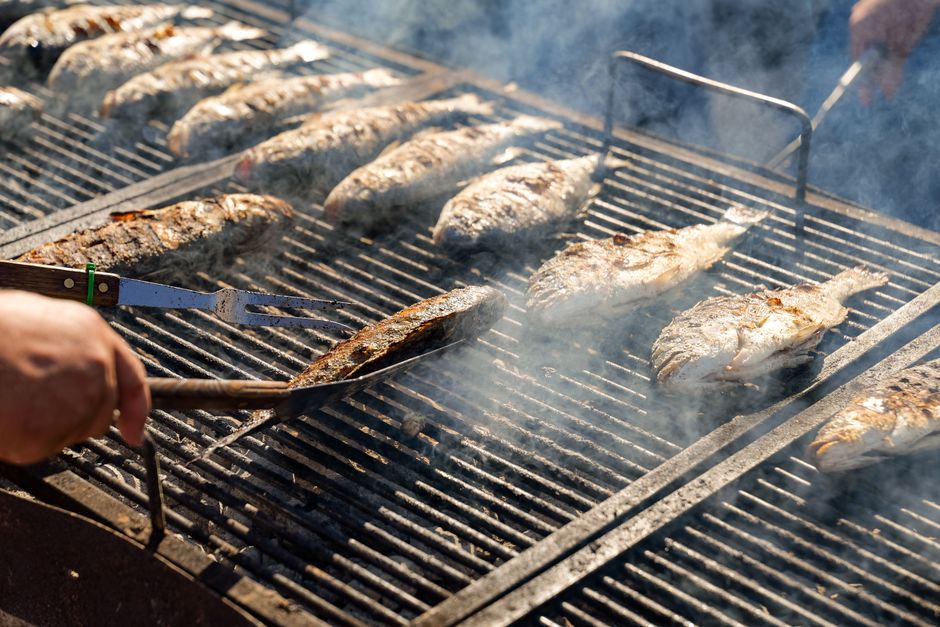
Smoking food is one of the oldest ways to preserve and flavor meat, fish, and other foods. It works by drying the food’s surface and coating it with smoke compounds that slow bacterial growth and add a distinct flavor. Wood safety matters because the same smoke that preserves food can also carry harmful chemicals, and the type of wood you burn changes what ends up on your plate.
This guide covers how smoking works, which woods are safe, which are not, and what the science does and does not show about the health effects of smoked food.
What Is Smoking Food and How Does It Work?
Smoking is a method of cooking and preserving food by exposing it to smoke from burning or smoldering wood. The smoke does two jobs at once: it dries the surface of the food, and it deposits compounds that slow the growth of bacteria and add flavor.
There are two main approaches. Hot smoking cooks the food at the same time, usually somewhere between roughly 225°F and 300°F, depending on the food. Cold smoking stays below about 85°F and does not cook the food at all. Cold smoking adds flavor but does not make food safe on its own. Cold-smoked foods still need refrigeration or another preservation step.
The smoke itself contains hundreds of compounds. Some of them, like phenols and certain organic acids, help preserve food and create the taste people associate with barbecue. Others, like polycyclic aromatic hydrocarbons (PAHs), are the reason wood safety and smoke exposure deserve attention.
What Is Smoking Food Methods Wood Safety?
Wood safety in smoking means two things: using wood that will not introduce toxic chemicals into your food, and managing how much harmful smoke compound ends up on the surface. Both matter, and both are within your control.
The wood is the starting point. Hardwoods like hickory, oak, apple, cherry, and maple are the standard choices. They burn cleanly and produce the flavor people expect. Softwoods like pine, fir, and spruce contain high levels of resins and can produce harsh, sooty smoke. They are generally avoided for smoking food.
The second part is smoke management. Smoke that is too thick, too dirty, or too cool deposits more harmful compounds and can leave food tasting bitter. A clean-burning fire with thin, blue-gray smoke is what experienced smokers aim for. Thick white or black smoke signals incomplete combustion, which produces more of the compounds you want to limit.
Woods that are generally considered safe for smoking
- Hickory, oak, and mesquite (strong flavor)
- Apple, cherry, and pecan (milder, sweeter flavor)
- Maple and alder (light flavor, good for fish)
- Any hardwood that has not been treated, painted, or glued
Woods and materials to avoid
- Softwoods like pine, fir, and spruce (resinous, harsh smoke)
- Treated lumber, plywood, and particleboard (contain glues and chemical preservatives)
- Painted or stained wood
- Wood from unknown sources, including some pallets and scrap
- Wood that has been stored near chemicals or in damp conditions where mold can grow
One point that catches people out: “kiln-dried” does not mean “safe.” Kiln-dried lumber can still be treated or glued. What matters is that the wood is untreated hardwood intended for cooking, not construction scrap.
Is Smoked Food Bad for You?
Smoked food is not automatically harmful, but the smoke does deposit compounds that health agencies have flagged. The main concern is polycyclic aromatic hydrocarbons (PAHs), a group of chemicals formed when organic material burns incompletely. Some PAHs are classified as probable human carcinogens.
This is a real finding, not a scare story. The evidence linking high PAH exposure to cancer risk is well established in occupational settings, where workers breathe smoke daily. The picture for people who eat smoked food occasionally is less clear. No large human trial has measured cancer risk from backyard smoking specifically, and the doses involved are far lower than occupational exposure.
The honest position is this: smoked food is generally fine as part of a varied diet, but heavy, frequent consumption of heavily smoked or charred foods is worth moderating. That is a reasonable, evidence-informed stance rather than a proven threshold.
There is also a practical side. Smoked foods can be high in sodium, because salt is often part of the curing process. People watching their blood pressure should read labels on store-bought smoked products. Home smoking gives you control over how much salt goes in.
How Can You Reduce Harmful Compounds When Smoking Food?
You can lower PAH levels in smoked food with a few practical steps. None of them eliminate the compounds entirely, but they reduce how much forms and how much sticks to the food.
- Keep the fire clean. Thin, blue-gray smoke means good combustion. Thick, dark smoke means the opposite.
- Avoid direct flame contact. Fat dripping onto hot coals creates flare-ups and more PAHs. Use indirect heat or a drip pan.
- Trim excess fat. Less fat means fewer flare-ups and less smoke compound formation.
- Keep temperatures moderate. Very high heat and long exposure to dirty smoke both increase PAH deposition.
- Remove the skin or outer layer where appropriate. Some PAHs concentrate on the surface.
- Do not oversmoke. More smoke is not better. A light, steady smoke often gives better flavor and fewer unwanted compounds.
These steps reflect general food-science principles about combustion and smoke deposition. They are sensible precautions, not a guarantee of safety, and no study has shown that following them makes smoked food risk-free.
Does Smoking Food Preserve It Safely?
Smoking alone does not make food safe to store at room temperature. This is one of the most common misunderstandings about smoking, and it matters for food safety.
Traditional preservation relied on smoking combined with heavy salting and drying, often over days or weeks. That combination lowered the water content and raised the salt level enough to slow bacterial growth. Modern hot smoking usually cooks the food but leaves it moist, which means it still needs refrigeration.
Cold-smoked foods like salmon and cheese are not cooked at all during smoking. They require refrigeration and, for some products, careful curing before smoking to control bacteria. Home cold smoking without proper curing is genuinely risky, and food safety guidance generally treats it as a process that requires specific controls rather than a casual project.
For anyone smoking food at home, the reliable rule is to treat smoked food like any perishable food unless it has been properly cured and dried to a documented safe level. When in doubt, refrigerate.
What About Liquid Smoke and Smoke Flavoring?
Liquid smoke is made by condensing real wood smoke and dissolving it in water. It contains the same flavor compounds as wood smoke, and it also contains some of the same PAHs, though typically at lower levels than heavy traditional smoking.
It is a convenient option and far easier to control than a live fire. It is not a health food, and it is not a substitute for proper cooking and storage. Used in small amounts as a flavoring, it is a reasonable choice for people who want smoke flavor without managing a smoker.
Smoke flavorings added to commercial foods are regulated, and their use is common. The evidence on their long-term health effects is limited, so moderation is the sensible approach rather than treating them as either harmless or dangerous.
Frequently Asked Questions
What wood is unsafe for smoking food?
Treated lumber, plywood, particleboard, painted or stained wood, and softwoods like pine and fir are unsafe or unsuitable for smoking food. Treated and glued woods can release chemical compounds into the smoke, and softwoods produce harsh, resinous smoke.
Is smoked food a cancer risk?
Smoked food contains PAHs, some of which are classified as probable human carcinogens, but no large human study has measured cancer risk from typical backyard smoking. The evidence supports moderation of heavily smoked and charred foods rather than avoiding smoked food entirely.
Can you smoke food without a smoker?
Yes, you can smoke food on a covered grill using indirect heat and wood chips, or use liquid smoke as a flavoring. Any method still requires proper cooking temperatures and refrigeration afterward.
Does smoking food kill bacteria?
Hot smoking cooks food and can kill bacteria on the surface, but it does not sterilize the food or make it shelf-stable. Cold smoking does not cook the food at all, so cold-smoked foods need refrigeration and proper curing.
