
Walk down the skincare aisle and you will see the word “therapy” on products that promise to fix acne, erase wrinkles, and repair your skin barrier. Most of them cannot legally make those claims. That gap between marketing language and medical reality is the whole story here.
Skin therapy splits into two broad categories. Cosmetic options improve the look of skin — texture, tone, fine lines, hydration. Medical options diagnose and treat skin disease — acne, eczema, psoriasis, skin cancer, infections. The difference is not about how strong a product feels or how much it costs. It comes down to what the treatment is allowed to claim, what evidence supports it, and who is qualified to provide it.
Understanding which category a treatment falls into tells you what it can realistically do, what it cannot, and when you need a doctor instead of a serum.
What Is Skin Therapy Cosmetic Vs Medical Options?
A cosmetic skin treatment targets appearance. A medical skin treatment targets disease. That is the dividing line, and regulators enforce it.
In the United States, the FDA classifies products as cosmetics or drugs based on intended use. A cosmetic cleans, beautifies, or alters appearance. A drug diagnoses, cures, mitigates, treats, or prevents disease. Some products are both — a moisturizer with sunscreen is regulated as a drug because it prevents sun damage, which is a disease process.
This matters because cosmetics cannot legally claim to treat acne, eczema, or any diagnosed condition. When you see “helps clear breakouts” on a drugstore bottle, that wording exists specifically to avoid crossing into drug territory. It is not an accident of phrasing.
Medical skin therapy includes prescription topicals like tretinoin and antibiotics, oral medications like isotretinoin, procedures like excisions and laser treatments for skin cancer, and biologics for conditions like psoriasis. These require a diagnosis, a prescriber, and in most cases ongoing monitoring.
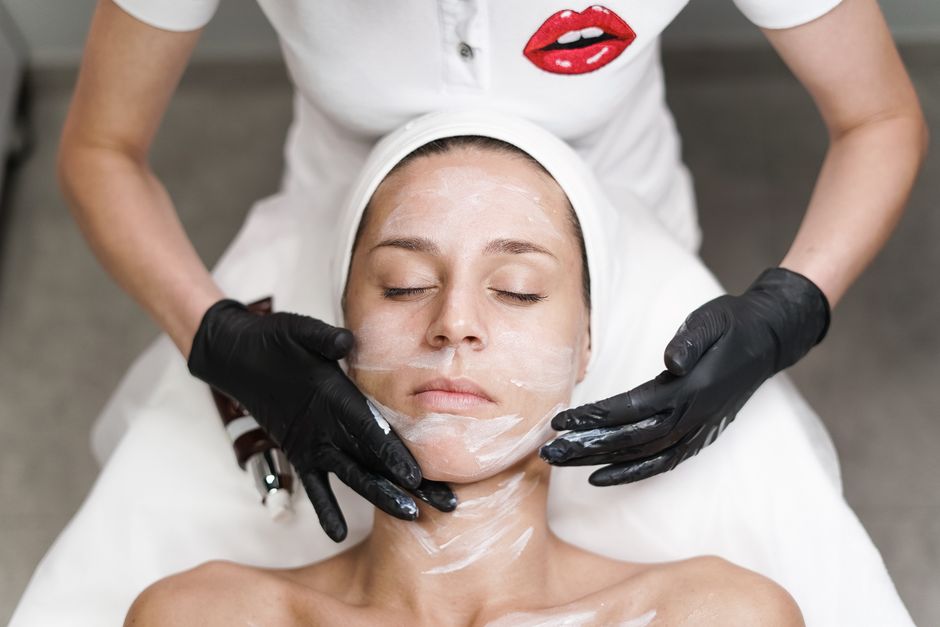
Cosmetic skin therapy includes moisturizers, serums, chemical peels performed for appearance, botulinum toxin injections for wrinkles, dermal fillers, and laser treatments for pigmentation or texture. These can be performed without a medical diagnosis, though some carry real risks and are best done by trained professionals.
Where Does the Line Actually Fall?
The line falls at the presence of disease. If your skin has a diagnosed condition, you are in medical territory. If your skin is healthy and you want it to look different, you are in cosmetic territory.
This sounds clean. In practice, it gets blurry. Consider these situations:
- Acne. Occasional pimples are cosmetic. Acne vulgaris — the inflammatory condition with comedones, papules, and potential scarring — is medical. The same skin concern can sit on either side depending on severity and whether it meets diagnostic criteria.
- Hyperpigmentation. Sun spots and melasma can be treated cosmetically with brightening agents. But some pigmented lesions are melanoma or other skin cancers. A cosmetic approach to a medical lesion delays diagnosis.
- Hair removal. Laser hair removal for appearance is cosmetic. Laser treatment for hirsutism caused by an endocrine condition is part of medical management.
- Wrinkles. Fine lines from sun exposure and aging are cosmetic. Changes in a mole or new growths are medical until proven otherwise.
The practical rule: if a healthcare provider needs to diagnose something before treating it, the treatment is medical. If no diagnosis is required, it is cosmetic.
How Do Cosmetic and Medical Skin Treatments Differ in Evidence?
Medical treatments must demonstrate efficacy in controlled trials before regulators approve them. Cosmetic products generally do not. That is the core difference in evidence standards.
A prescription retinoid for acne has been tested against placebo in randomized controlled trials. Its approval rests on demonstrated reduction in lesion counts. A cosmetic serum with a “retinol-like” ingredient has no such requirement. It needs to be safe, not effective.
This does not mean cosmetic ingredients never work. Some do, and some have reasonable evidence behind them. But the burden of proof is entirely different.
Here is how the two categories compare on the factors that matter most:
| Factor | Cosmetic Skin Therapy | Medical Skin Therapy |
|---|---|---|
| Primary goal | Improve appearance | Treat or manage disease |
| Regulatory standard | Safety only | Safety and efficacy |
| Can claim to treat disease | No | Yes |
| Requires diagnosis | No | Usually yes |
| Who provides it | Estheticians, cosmetic providers, self-use | Physicians, dermatologists, nurse practitioners |
| Insurance coverage | Rarely | Often, when medically necessary |
| Evidence required for claims | Minimal | Substantial |
One nuance worth knowing: a treatment can be medical in nature but used cosmetically. Botulinum toxin is a prescription drug with real medical uses — it treats cervical dystonia and chronic migraine, among others. When injected to soften frown lines, it is being used for a cosmetic purpose. The drug is medical. The intent is cosmetic.
Does Cosmetic Skin Therapy Actually Work?
Some cosmetic treatments have solid evidence behind them. Others do not. The category is too broad to answer with one verdict.
Cosmetic treatments with reasonable supporting evidence include:
- Sunscreen. Regulated as a drug in the US because it prevents sun damage. Broad-spectrum sunscreen reduces the risk of skin cancer and photoaging. This is one of the most well-supported interventions in all of dermatology.
- Topical retinoids for photoaging. Prescription tretinoin has been studied for decades for reducing fine lines and improving skin texture. Some over-the-counter retinol products have smaller but real evidence.
- Botulinum toxin for dynamic wrinkles. Multiple trials support its effect on frown lines and crow’s feet. Effects are temporary and require repeat treatment.
- Dermal fillers for volume loss. Hyaluronic acid fillers have evidence for restoring facial volume. Results vary by product, technique, and provider skill.
- Chemical peels for pigmentation and texture. Evidence varies widely by agent and concentration. Superficial peels have modest effects. Deeper peels carry more risk and require more expertise.
Cosmetic treatments with weak or absent evidence include most of what fills the skincare aisle. Collagen creams cannot replace collagen in the dermis — the molecule is too large to penetrate. Stem cell creams contain no living stem cells. “Detoxifying” masks do not remove toxins, because skin does not eliminate toxins that way. These claims are marketing, not science.
This is not cynicism. It is how the regulatory system works. Cosmetic products are not required to prove they do what the label implies.
When Should You See a Doctor Instead of Buying a Product?
See a doctor when your skin has a symptom that suggests disease, not just dissatisfaction with appearance. The distinction matters because delay can cause harm.
Signs that point to medical evaluation rather than cosmetic treatment:
- A mole or spot that is new, changing, asymmetric, or bleeding
- Persistent redness, scaling, or itching that does not respond to basic moisturizing
- Acne that is deep, painful, or leaving scars
- Sudden hair loss or changes in hair texture
- Rashes that spread, blister, or come with fever
- Any sore that does not heal within a few weeks
These symptoms have multiple possible causes, and only a clinician can sort them out. A cosmetic product cannot diagnose melanoma. It cannot distinguish eczema from psoriasis from a fungal infection. Treating a medical condition with a cosmetic product delays the correct treatment.
Conversely, not every skin concern needs a doctor. Dryness, mild texture, and wanting smoother skin are cosmetic goals. A good moisturizer and sun protection are reasonable first steps. If those do not help and the concern persists, that is when medical input becomes useful.
Can the Two Categories Overlap?
Yes, and the overlap is where most confusion happens. Many treatments serve both purposes depending on context.
Laser therapy is the clearest example. The same laser platform can remove a port-wine stain — a medical vascular condition — or reduce sun spots for cosmetic reasons. The device is identical. The indication is not.
Prescription-strength ingredients also cross over. Tretinoin treats acne, which is medical. It also reduces fine lines, which is cosmetic. Azelaic acid treats rosacea and acne, and is sometimes used for brightening. The ingredient does not change. The reason for using it does.
Insurance follows the intent. If your dermatologist prescribes a treatment for a diagnosed condition, it may be covered. If the same treatment is used for appearance, it usually is not. This is not arbitrary. It reflects the difference between treating disease and enhancing appearance.
Some providers offer both cosmetic and medical services. A dermatologist might remove a skin cancer in the morning and perform cosmetic botulinum toxin injections in the afternoon. The training is the same. The regulatory and billing frameworks are not.
What Should You Know Before Choosing?
Know what you are trying to change, and whether it is a disease or an appearance concern. That single question determines which path makes sense.
If you have a diagnosed skin condition, cosmetic products will not treat it. They may help with symptoms like dryness or irritation alongside medical treatment, but they are not a substitute. If you are unsure whether something is medical, that uncertainty itself is a reason to get it checked.
If your goal is appearance and your skin is healthy, cosmetic options are reasonable. Set expectations based on evidence, not marketing. Sunscreen and prescription retinoids have the strongest support for photoaging. Most other cosmetic products have far less.
Cost and risk do not track together. An expensive serum with no evidence is not safer or more effective than a basic moisturizer. An inexpensive prescription retinoid may outperform both. Price reflects marketing, formulation, and brand positioning — not clinical proof.
One more thing: the person performing a treatment matters as much as the treatment itself. Injectables, lasers, and peels carry real risks when done poorly. Training and experience vary widely across providers and states. Asking about credentials is not rude. It is reasonable.
Frequently Asked Questions
Is skincare considered medical or cosmetic?
Most skincare products are cosmetic because they are intended to improve appearance, not treat disease. Products that claim to treat a condition like acne or eczema are regulated as drugs and require evidence of effectiveness.
Can a cosmetic product treat acne?
No. Cosmetics cannot legally claim to treat acne, which is a medical condition. Products that do treat acne are classified as drugs and must meet efficacy standards.
Do I need a prescription for medical skin therapy?
Many medical skin treatments require a prescription, including topical retinoids, antibiotics, and oral medications. Some procedures are performed in a clinic without a prescription but still require a medical diagnosis.
How do I know if a skin concern is cosmetic or medical?
If a healthcare provider needs to diagnose the condition before treating it, it is medical. If no diagnosis is required and the goal is appearance, it is cosmetic.
