
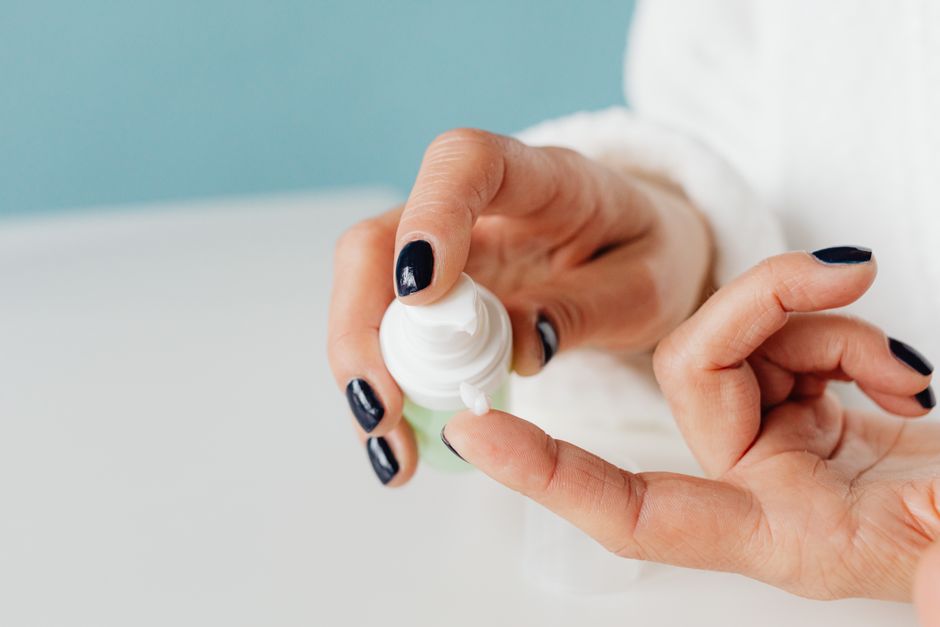
An emulsion is what you get when you force two liquids that normally refuse to mix — oil and water — into a stable blend. Nearly every lotion, cream, and cleanser on your shelf is one. A skin care emulsion is simply a topical product built on that oil-and-water structure, which is why it can carry both water-loving and oil-loving ingredients in a single bottle.
The short answer: an emulsion is a delivery system, not an ingredient. It determines how a product feels, how it spreads, and how quickly it absorbs. Understanding that structure explains most of what you notice when comparing one moisturizer to another.
What Is a Skin Care Emulsion Made Of?
Every emulsion contains three things: a water phase, an oil phase, and an emulsifier that holds them together. The water phase carries humectants like glycerin. The oil phase carries emollients and occlusives that slow water loss from the skin surface.
The emulsifier is the part most people never think about. These molecules have one end that attracts water and one end that attracts oil. They sit at the boundary between the two, physically preventing the droplets from merging back together. Without them, your moisturizer would separate into oil floating on water within days.
Manufacturers also add thickeners, preservatives, and pH adjusters. Preservatives matter more than people realize — any product with significant water content can support microbial growth, so preservation is a safety requirement, not a marketing choice.
How Is a Skin Care Emulsion Different From a Cream or Serum?
The difference comes down to the ratio of oil to water and the thickness of the final product. There is no sharp line between a lotion and a cream. It is a continuum, and the industry labels along that continuum are not standardized.
Broadly, the categories break down like this:
- Serum: Usually water-based or oil-based but not a true emulsion. Thin, fast-absorbing, low in occlusives.
- Lotion: An emulsion with more water than oil. Light, spreads easily, absorbs quickly.
- Cream: An emulsion with more oil than water, or a higher total solids content. Richer, stays on the surface longer.
- Ointment: Mostly oil or petrolatum with little or no water. Not an emulsion at all. The strongest barrier of the group.
This is where a common misconception lives. Many people assume “cream” always means more moisturizing than “lotion.” That is usually true, but not guaranteed. A well-formulated lotion with strong occlusive ingredients can outperform a poorly formulated cream. The category name tells you the texture, not the performance.
Why Does Emulsion Structure Matter for Your Skin?
The structure controls how ingredients reach your skin and how long they stay there. This is the practical reason emulsions exist rather than just selling plain oil or plain water.
Water alone evaporates quickly and can actually draw moisture out of the skin as it dries. Oil alone is heavy, greasy, and hard to spread. Combining them lets a product deliver water-based humectants and oil-based occlusives at the same time, in a texture people will actually use consistently.
The oil phase also forms a thin film on the skin surface that slows transepidermal water loss — the constant evaporation of water from deeper skin layers. This is the core function of any moisturizer, and emulsions are the most common way to achieve it without pure grease.
One clarification worth making: the skin barrier is not a wall you “repair” with a single product. It is a layered structure of skin cells surrounded by a lipid matrix, and it constantly rebuilds itself. Emulsions support that process by reducing water loss and supplying lipids, but they do not rebuild the barrier directly. Your skin does that.
What Are Oil-in-Water and Water-in-Oil Emulsions?
These two types behave very differently on your skin, and the distinction explains a lot about product feel.
In an oil-in-water emulsion, tiny oil droplets are suspended in a water base. The product feels light, spreads easily, and rinses off with water. Most everyday lotions and light moisturizers fall here.
In a water-in-oil emulsion, water droplets are suspended in an oil base. These feel heavier, resist washing off, and leave more residue. Many sunscreens, barrier creams, and heavy night creams use this structure because it holds up better against sweat, water, and rubbing.
You can often tell the difference by feel alone. If a product disappears into the skin quickly and leaves almost no film, it is likely oil-in-water. If it leaves a slight sheen or feels protective, it is likely water-in-oil. Neither is better. The right one depends on your skin type and what you need the product to do.
Does Emulsion Skin Care Actually Work?
Moisturizing with emulsion-based products reduces water loss from the skin surface, and this is well established. That basic function — slowing evaporation and softening the skin surface — is not in dispute.
What is more limited is evidence that specific emulsion formulations do more than that. Claims about boosting collagen, “reversing” aging, or repairing damage at a cellular level are often built on ingredient-level studies, not on trials of the finished product. An ingredient showing activity in a lab dish does not mean the emulsion you buy delivers it to the right layer of skin at a useful concentration.
For barrier support and everyday dryness, emulsions are a reasonable and widely used approach. For treating a diagnosed skin condition, they are supportive rather than therapeutic. If you have eczema, rosacea, or another condition, a moisturizer can help manage symptoms, but it is not a substitute for treatment a clinician recommends.
How Should You Choose and Use One?
Match the product to your skin and your environment, not to the label. Someone with oily skin in a humid climate usually does well with a light oil-in-water lotion. Someone with dry skin in winter usually needs a richer water-in-oil cream.
Order matters less than people think. The general rule is thinnest to thickest, so a serum goes on before a moisturizer. But if you only use one product, there is no order to worry about.
Apply moisturizer to slightly damp skin after cleansing. This is a widely recommended practice because it traps existing water on the skin surface along with the product’s own humectants. It is a sensible technique rather than a rigorously proven one, but the reasoning is sound and the risk is zero.
A few practical points:
- Patch test new products on a small area for a few days if your skin is reactive.
- Check expiration dates. Preservatives lose effectiveness over time once a product is opened.
- Store products away from direct heat and sunlight, which can degrade the emulsion and separate the phases.
- If a product separates, changes smell, or changes color, stop using it.
Emulsion-based products are not complicated, but they are not interchangeable either. The structure tells you what to expect. The ingredient list tells you what it might do. Reading both is more useful than reading the front of the bottle.
Frequently Asked Questions
What does emulsion mean in skin care?
It means the product is a stable blend of oil and water held together by an emulsifier. Nearly all lotions and creams are emulsions.
Is emulsion the same as moisturizer?
Most moisturizers are emulsions, but not all emulsions are moisturizers. Some cleansers and sunscreens are also emulsions.
Is emulsion good for oily skin?
Light oil-in-water emulsions generally suit oily skin well. Heavier water-in-oil products may feel greasy and are usually better for dry skin.
How do I know if a product is an emulsion?
If the ingredient list includes both water and an oil or lipid, plus an emulsifier, it is an emulsion. Most lotions and creams list water as the first ingredient.
