
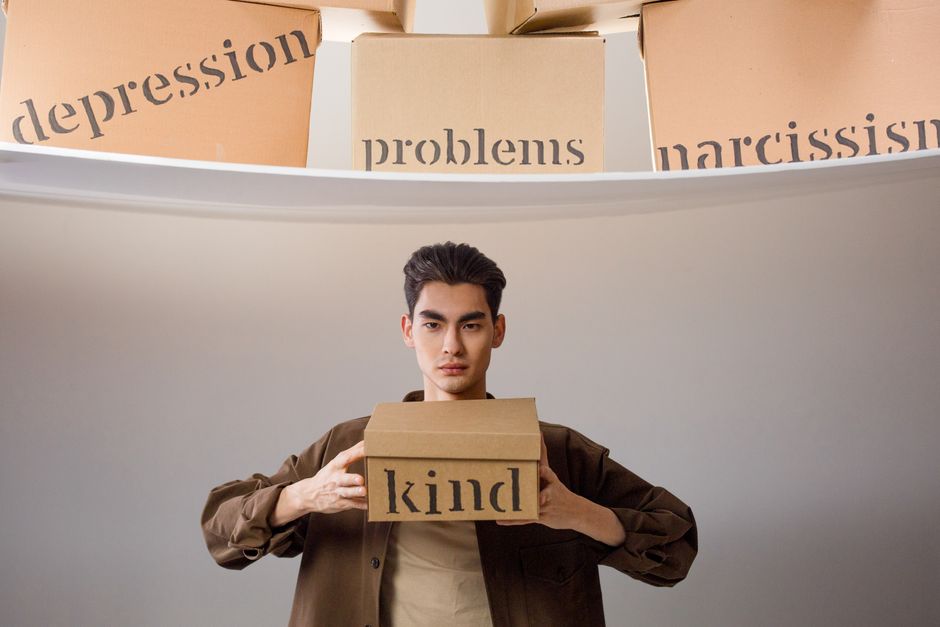
Self-serving bias is the habit of taking personal credit for your successes while blaming outside factors for your failures. If you get a promotion, you earned it through hard work. If you get a poor performance review, the boss was unfair or the system was stacked against you. This mental shortcut protects your self-esteem, but it also distorts how you see reality. It affects how you argue with your partner, how you learn from mistakes, and even how entire organizations function.
What Is Self Serving Bias In Psychology?
In psychology, self-serving bias is a cognitive pattern where people attribute positive events to their own character or actions and negative events to external circumstances. The term comes from attribution theory, which studies how people explain the causes of behavior and events.
When you succeed, you say “I am good at this.” When you fail, you say “The test was unfair” or “I was tired.” This is not always a conscious choice. It is often an automatic process that protects your sense of self-worth. The bias shows up across cultures, ages, and situations, though its strength varies depending on the person and the context.
This bias serves a real psychological purpose. It helps you maintain a positive self-image, which supports mental health and motivation. But it also blocks honest self-assessment. If you cannot see your own role in a failure, you cannot fix the problem.
Why Does the Brain Do This?
The brain is wired to preserve a stable sense of identity. When something threatens that identity, the brain looks for an explanation that keeps your self-image intact. This is why you feel a flash of defensiveness when someone criticizes your work. Your brain treats the criticism as an attack, not just information.
There are two main explanations for why this bias exists. The first is the self-esteem motive. You want to feel good about yourself, so you interpret events in ways that support that feeling. The second is the self-presentation motive. You want others to see you in a positive light, so you shape your explanations to look competent and capable.
Both motives work together. You genuinely believe you deserve the credit, and you also want other people to agree. This combination makes the bias particularly stubborn. It is not just a private thought pattern. It shapes how you talk about yourself in job interviews, at family dinners, and in social media posts.
Some research also suggests a memory component. People tend to remember positive feedback more clearly than negative feedback. They also recall their own contributions to a group project more vividly than the contributions of others. This selective memory reinforces the bias over time.
How Self-Serving Bias Shows Up in Daily Life
The bias appears in almost every area of life where success and failure are possible. In school, a student who gets an A says the exam was easy and they studied well. A student who gets an F says the exam was unfair or the teacher did not explain the material. Both students may be partially right, but both are also protecting their egos.
In relationships, the bias creates conflict. When a couple argues, each partner tends to see their own behavior as reasonable and the other person’s behavior as the problem. Research on married couples has found that partners consistently take more credit for positive relationship events and blame their partner for negative ones. This pattern erodes trust because each person feels misunderstood.
In the workplace, the bias shows up in performance reviews. Managers often take credit for team successes and blame external factors for team failures. Employees do the same in reverse. This creates a cycle where no one learns from mistakes because no one accepts responsibility for them.
In sports, athletes who win praise their training and focus. Athletes who lose blame the referees, the weather, or bad luck. Coaches see this constantly. The players who improve fastest are the ones who can honestly say “I made a mistake” after a loss. That honesty is rare because it goes against the brain’s default setting.





Is Self-Serving Bias Always Bad?
No. The bias has real psychological benefits. People who maintain a positive self-image tend to have lower rates of depression and anxiety. They recover faster from setbacks. They approach new challenges with confidence rather than fear.
Studies have found that people with mild depression often have a more accurate view of their own abilities than people without depression. This is called depressive realism. Depressed individuals are less likely to inflate their own contributions or blame others for their problems. They see the world more clearly, but that clarity comes at a cost.
The problem is not the bias itself. The problem is when the bias becomes so strong that it blocks learning. If you always blame external factors, you never change your behavior. You stay stuck in the same patterns while believing the world is against you.
The healthiest approach is flexible. You can protect your self-esteem while still accepting responsibility when it is genuinely yours. This is not easy. It requires deliberately questioning your first reaction to failure.
How Self-Serving Bias Affects Mental Health
Self-serving bias is a normal part of human psychology. But in extreme forms, it contributes to serious problems. People with narcissistic traits often have an exaggerated form of this bias. They take credit for everything good and blame everyone else for anything bad. This makes it difficult for them to maintain healthy relationships or accept feedback.
At the other extreme, people with depression often show a reduced self-serving bias. They take too much responsibility for failures and not enough credit for successes. This is not healthy either. The goal is balance, not elimination.
Therapy can help people recognize their own attribution patterns. Cognitive behavioral therapy, in particular, helps people examine the automatic explanations they give for events. A therapist might ask: “What evidence supports your belief that the failure was not your fault? What evidence contradicts it?” This kind of questioning helps people see their own bias without destroying their self-esteem.
Mindfulness practices also help. When you notice yourself immediately blaming external factors, you can pause and ask whether that explanation is accurate. This pause creates space between the automatic reaction and a more thoughtful response.
Can You Reduce Your Own Self-Serving Bias?
You cannot fully eliminate self-serving bias. It is wired into how the brain protects itself. But you can reduce its influence with deliberate practice.
Start by asking a simple question after any failure: “What part of this was mine?” Not all of it. Just the part that was yours. This question forces you to look for your own contribution without requiring you to take all the blame.
After a success, ask the opposite question: “What external factors helped me?” This keeps success in perspective. It also makes you more grateful and more aware of the people and systems that support you.
Another strategy is to seek feedback from people you trust. Ask a coworker or friend to describe your role in a recent project. Their perspective is less biased than yours. This is not about accepting everything they say. It is about hearing an alternative view.
Writing in a journal can also help. When you write about a failure, your first draft will likely be full of blame. Rewrite the entry from a neutral perspective. What happened, step by step, without interpretation? This exercise makes the bias visible.
Finally, practice self-compassion. People who are kind to themselves are better able to admit mistakes. If you do not need to defend your ego so fiercely, you can afford to see the truth. Self-compassion is not the same as self-indulgence. It is treating yourself with the same fairness you would offer a friend.
Self-Serving Bias in Groups and Organizations
Self-serving bias does not just affect individuals. It affects teams, companies, and governments. When a group succeeds, leaders often claim the credit. When a group fails, the blame gets distributed outward to competitors, regulators, or market conditions.
This creates a serious problem for organizations. If leaders cannot see their own mistakes, they repeat them. Companies that fail to learn from their errors tend to make the same strategic mistakes again and again. This is why some organizations have institutionalized processes for after-action reviews. These reviews force participants to examine their own contributions to a failure before looking at external factors.
Teams that openly discuss mistakes tend to perform better over time. They build a culture of psychological safety where people can say “I got that wrong” without fear of punishment. This does not mean eliminating accountability. It means separating blame from learning.
One useful practice is to hold a “pre-mortem” before starting a major project. The team imagines the project has failed and then works backward to identify all the reasons it might have failed. This exercise bypasses self-serving bias because the failure is hypothetical. It allows people to name potential problems without feeling defensive.
When to Seek Professional Help
Self-serving bias is normal. But when it becomes extreme, it can damage relationships, careers, and mental health. If you notice that you consistently blame others for your problems, or if people close to you repeatedly tell you that you never accept responsibility, it may be worth exploring this pattern with a therapist.
Similarly, if you find yourself taking responsibility for everything that goes wrong, even when it is clearly not your fault, professional support can help. Both extremes are distortions. A therapist can help you find a more accurate middle ground.
Therapy is not about eliminating self-serving bias entirely. It is about understanding when the bias is helping you and when it is hurting you. A good therapist will not shame you for your defense mechanisms. They will help you see them clearly so you can choose how to respond.
Frequently Asked Questions
What is an example of self-serving bias?
A student who gets an A on an exam says it is because they studied hard and are smart, while a student who fails says the test was unfair or the teacher was bad. Both explanations protect the student’s self-image.
Is self-serving bias a mental illness?
No, self-serving bias is a normal cognitive pattern, not a mental illness. However, an extreme form of it can contribute to relationship problems and is often seen in people with narcissistic traits.
How do you overcome self-serving bias?
Ask yourself after a failure what part of it was your responsibility, and after a success what outside factors helped you. Seeking honest feedback from trusted people and practicing self-compassion also reduce the bias.
Why is self-serving bias important to understand?
Understanding it helps you see why you react defensively to criticism and why you repeat the same mistakes. Recognizing the bias is the first step toward more accurate self-assessment and better decision-making.
