
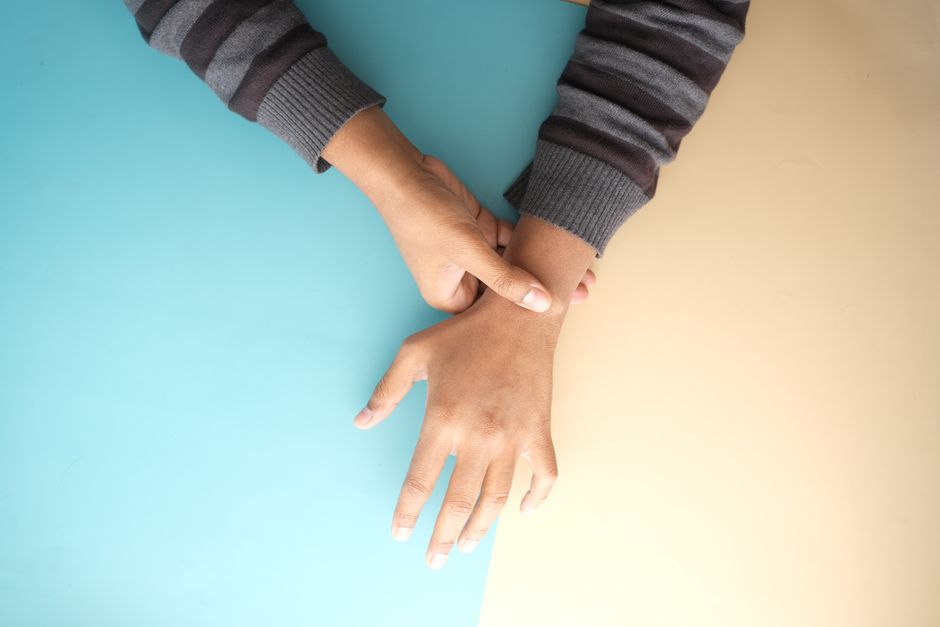
Scapholunate dissociation is a tear or complete rupture of the scapholunate ligament, the small band of tissue that holds two wrist bones together. When that ligament fails, the scaphoid and lunate bones separate and the wrist loses a key part of its structural support. Left untreated, the condition often leads to wrist arthritis over time.
What Is Scapholunate Dissociation Causes Treatment?
Scapholunate dissociation is an injury to the ligament connecting the scaphoid and lunate bones in the wrist. The most common cause is a fall onto an outstretched hand. Treatment ranges from casting for mild partial tears to surgery for complete ruptures and cases that have already caused arthritis.
The wrist is not one solid joint. It is a set of eight small bones arranged in two rows. The scaphoid and lunate sit in the row closest to the forearm. They rely almost entirely on ligaments to stay in place, because the bones themselves do not fit together like a ball and socket.
The scapholunate ligament is the most important link in that chain. When it tears, the scaphoid rotates forward and the lunate tilts backward. Doctors call this pattern dorsal intercalated segmental instability, or DISI. Once the bones shift out of alignment, they no longer glide smoothly against each other. That abnormal motion is what eventually wears down the cartilage.
This is why scapholunate injuries are treated seriously even when the initial pain seems minor. The ligament does not heal well on its own, and the damage tends to progress.
What Causes a Scapholunate Ligament Tear?
A fall onto an outstretched hand is by far the most common cause. The force travels up through the palm and stresses the ligament beyond what it can stretch.
Other causes include:
- Sports injuries, especially from contact sports or falls while skiing, cycling, or skating
- Motor vehicle accidents where the hand is braced against the steering wheel or dashboard
- Repetitive loading of the wrist over time, which can weaken the ligament
- Previous wrist fractures, particularly of the scaphoid or the radius
- Inflammatory conditions that affect connective tissue
Some people have a naturally weaker ligament or a variant in how the bones are shaped, which may make them more prone to injury. This is an area researchers continue to study, and the evidence is not fully settled.
Age matters. These injuries are more common in younger and middle-aged adults who take falls at higher energy. They are less common in older adults, though they do occur.
What Are the Symptoms of Scapholunate Dissociation?
Pain on the back of the wrist, especially when bearing weight through the hand, is the most common symptom. Many people notice it most when pushing up from a chair or doing a push-up.
Other symptoms include:
- Swelling that appears soon after the injury
- A clicking, popping, or clunking sensation with wrist movement
- Weakness when gripping or lifting
- Reduced range of motion, particularly bending the wrist backward
- Pain that worsens with activity and eases with rest, at least early on
Here is a detail that matters. A complete scapholunate tear can hurt intensely at first and then quiet down within days or weeks. The pain fading does not mean the ligament healed. The wrist can still be unstable, and the damage can keep progressing even when it feels better. That gap between how the wrist feels and what is happening inside is one reason these injuries get missed.
Many scapholunate tears are initially mistaken for a wrist sprain. A plain X-ray taken right after the injury may look normal, because the bones may not have shifted yet. This is a well-recognized problem in wrist care.





How Is Scapholunate Dissociation Diagnosed?
Diagnosis starts with a physical exam and specific tests that stress the ligament, followed by imaging. No single test is perfect, so doctors often combine several.
During the exam, a doctor may press on the space between the scaphoid and lunate to check for tenderness. They may also perform a provocation test, such as the Watson scaphoid shift test, where they apply pressure to the scaphoid while moving the wrist. A painful clunk during this test can point to instability.
Imaging options include:
- X-ray. A standard X-ray can show a gap between the scaphoid and lunate, called a scapholunate gap, or an abnormal angle between the bones. Early injuries may not show up.
- Stress X-rays. Views taken while the wrist is loaded or gripped can reveal instability that a resting X-ray misses.
- MRI. An MRI can show the ligament itself and is useful for detecting partial tears.
- Arthroscopy. A small camera inserted into the wrist is considered the most reliable way to see the ligament directly. It is a surgical procedure, so it is usually reserved for cases where the diagnosis remains unclear or surgery is already planned.
Because early imaging can look normal, a doctor who suspects this injury may recommend repeat imaging or refer you to a hand specialist. Getting a second look is reasonable when pain and clicking persist after a wrist injury.
How Is Scapholunate Dissociation Treated?
Treatment depends on how severe the tear is, how long ago it happened, and whether arthritis has already developed. The single most important factor is whether the injury is acute or chronic.
Non-Surgical Treatment
For partial tears with no instability, doctors may recommend immobilization in a cast or splint, along with anti-inflammatory medication and physical therapy. This approach is most likely to work for minor injuries caught early.
The evidence for non-surgical treatment of complete tears is limited. Casting does not repair a fully torn ligament, and most complete ruptures will not heal with immobilization alone.
Surgical Treatment
Surgery is generally recommended for complete tears and for injuries that have not responded to other treatment. The goal is to restore stability before arthritis develops. Several approaches exist:
- Ligament repair. Directly stitching the torn ligament back together. This works best when done soon after the injury, typically within weeks.
- Ligament reconstruction. Rebuilding the ligament using a tendon graft. This is often used for chronic injuries where the ligament can no longer be repaired directly.
- Wrist fusion. For wrists that already have significant arthritis, surgeons may fuse specific bones to reduce pain. This trades some motion for stability.
Recovery timelines vary widely depending on the procedure. After ligament repair or reconstruction, the wrist is usually immobilized for a period, followed by months of physical therapy. Full recovery often takes several months, and some loss of motion is common.
One point worth stating plainly. Surgery can improve stability and reduce pain, but it does not always restore a normal wrist. Outcomes depend on the specific procedure, the surgeon’s experience, and how much damage existed before surgery.
What Happens If Scapholunate Dissociation Is Left Untreated?
Untreated scapholunate dissociation usually progresses to wrist arthritis. This is the main reason the condition is treated rather than watched.
When the scaphoid and lunate separate, the scaphoid rotates abnormally and the bones no longer distribute force evenly across the wrist. Over years, this abnormal loading wears down the cartilage. The end result is a specific pattern of arthritis called scapholunate advanced collapse, or SLAC wrist.
SLAC wrist typically develops over years, not months. The timeline varies from person to person. Some people with a partial tear never progress to arthritis. Others with a complete tear develop it within a decade.
This is why catching the injury early matters. Once arthritis sets in, treatment shifts from repairing the ligament to managing the joint damage, and options become more limited.
Can Scapholunate Dissociation Be Prevented?
There is no proven way to prevent the injury itself, because it usually results from an accident. But some steps may reduce risk or catch problems earlier.
- Wear wrist guards during activities with a high risk of falls, such as skating or snowboarding.
- Strengthen the muscles around the wrist and forearm, which may offer some support.
- Seek medical evaluation after any significant wrist injury, even if pain fades.
- Follow up if clicking, weakness, or pain persists weeks after a fall.
Wrist guards and strengthening have not been proven in large trials to prevent scapholunate tears specifically. They are reasonable precautions, not guarantees.
When Should You See a Doctor?
See a doctor after any wrist injury that causes swelling, pain with gripping, or a clicking sensation, especially if it followed a fall. Do not wait for the pain to disappear on its own.
Because early X-rays can look normal, tell your doctor exactly how the injury happened and mention any clicking or weakness. If symptoms continue despite a normal X-ray, ask about further imaging or a referral to a hand specialist.
Scapholunate dissociation is a mechanical problem. The ligament holds the wrist together, and when it fails, the wrist changes. Understanding that helps explain why this injury is taken seriously and why early evaluation matters.
Frequently Asked Questions
Can scapholunate dissociation heal on its own?
A partial tear may heal with immobilization, but a complete tear generally does not heal on its own. The ligament has poor blood supply, and the bones stay unstable without it.
How serious is a scapholunate ligament tear?
A complete tear is serious because it can lead to wrist arthritis over time if left untreated. Partial tears are less serious but still need evaluation.
What is the most common cause of scapholunate dissociation?
A fall onto an outstretched hand is the most common cause. The force travels through the palm and tears the ligament that connects the scaphoid and lunate.
How long does recovery take after scapholunate surgery?
Recovery usually takes several months, including a period of immobilization followed by physical therapy. Some loss of wrist motion is common after surgery.
