
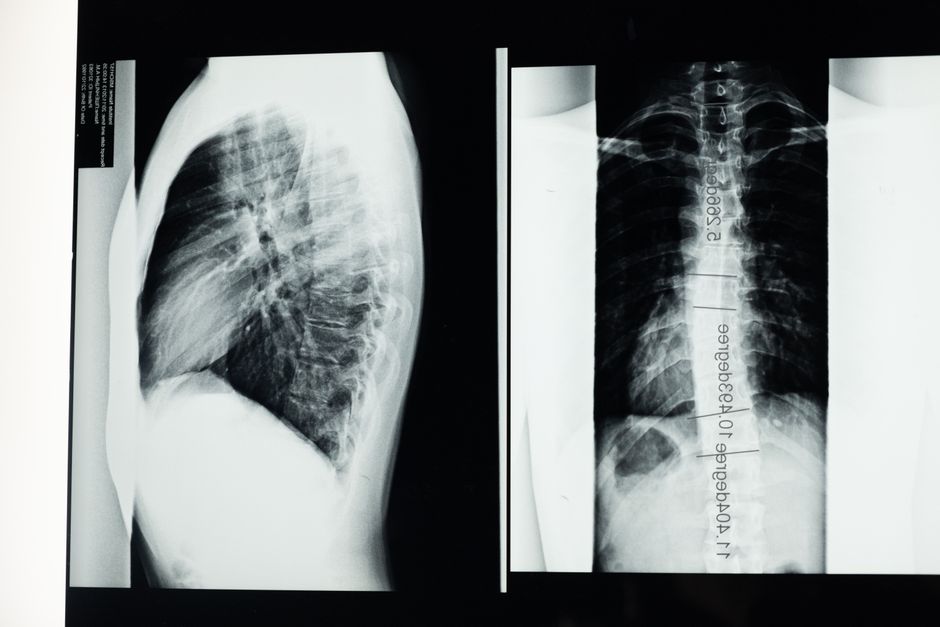
Reverse scoliosis is a curve in the spine that bends to the left instead of the right. Most scoliosis curves go to the right, so a leftward curve is less common and often gets less attention. The exact cause depends on the type — some are present at birth, some develop during growth, and some result from other medical conditions.
What Does a Reverse Scoliosis Curve Look Like?
A normal spine curves gently from front to back. Scoliosis adds a sideways curve. In reverse scoliosis, that sideways curve bends to the left. Doctors call this a levoconvex curve — the spine curves toward the left side of the body.
This matters because the heart is on the left. A leftward curve can put pressure on the chest cavity differently than a rightward curve. The ribs on the left side may become more prominent. The left shoulder may sit higher. The waist may look uneven.
Not all left curves are the same. Some are small, under 20 degrees, and cause no symptoms. Others are large, over 40 degrees, and can affect breathing or movement. The curve angle is measured on an X-ray using the Cobb method. That measurement tells doctors how serious the curve is.
What Causes Reverse Scoliosis?
There is no single cause. Research published in the Journal of Bone and Joint Surgery has identified several types, each with different origins.
Idiopathic scoliosis is the most common type. “Idiopathic” means the cause is unknown. It usually appears during the growth spurt before puberty. Most idiopathic curves go right, but left curves happen too. The exact reason one person gets a left curve and another gets a right curve is not well understood.
Congenital scoliosis happens when the spine bones do not form correctly before birth. A vertebra may be shaped like a wedge instead of a rectangle. This can cause a left curve from the start. Congenital curves are present at birth and may get worse as the child grows.
Neuromuscular scoliosis results from conditions that affect the nerves and muscles. Cerebral palsy, muscular dystrophy, and spinal muscular atrophy can cause the spine to curve. These curves can go left or right depending on muscle imbalances.
Degenerative scoliosis develops in adults. Arthritis, disc wear, and bone thinning can make the spine tilt sideways over time. Left curves in adults are often caused by uneven wear on the left side of the spine.
Is Reverse Scoliosis More Dangerous Than Right Scoliosis?
Some people claim left curves are always worse. The evidence does not support that blanket statement. Research in Spine journal found that curve direction alone does not predict complications. What matters more is the curve size, location, and the person’s age.
There is one real concern. A left curve in the upper back, called the thoracic spine, can compress the heart and lungs differently. The heart sits on the left side of the chest. A severe left thoracic curve can reduce the space the heart needs to pump. This is rare and usually only happens with curves over 60 degrees.
Right curves in the same area can compress lung function too. The risk is similar for both directions when the curve is large enough. No study has shown that left curves are inherently more dangerous at the same degree of curvature.





What Does Research on Reverse Scoliosis Treatment Show?
Treatment approaches are based on curve size and progression risk, not curve direction. The Scoliosis Research Society, a major medical organization, publishes guidelines that apply to both left and right curves.
For curves under 20 degrees, observation is standard. The doctor checks the curve every 4 to 6 months. If it does not get worse, no treatment is needed.
For curves between 20 and 40 degrees in growing children, bracing is the main treatment. A back brace does not straighten the spine. It holds the spine in position to stop the curve from getting worse during growth. The Boston brace and the Charleston bending brace are common types. Studies show bracing works best when worn 16 to 20 hours per day.
For curves over 40 degrees that continue to worsen, surgery may be recommended. Spinal fusion is the standard procedure. Metal rods and screws are attached to the spine to hold it straight while the bones fuse together. This is major surgery with a recovery time of months. The decision to operate is based on curve size, pain level, and impact on daily life — not on whether the curve goes left or right.
Comparison of Treatment Approaches by Curve Size
| Curve Size | Recommended Approach | Goal |
|---|---|---|
| Under 20 degrees | Observation | Monitor for progression |
| 20 to 40 degrees (growing child) | Bracing | Prevent curve from worsening |
| 40+ degrees (worsening) | Surgery | Fuse spine in straighter position |
| Any size (adult with pain) | Physical therapy, pain management | Improve function, reduce discomfort |
What Nonsurgical Treatments Have Evidence?
Physical therapy has the strongest evidence for symptom relief. The Schroth method is a specific exercise program designed for scoliosis. It focuses on strengthening muscles on the curved side and stretching tight muscles on the other side. A 2018 study in Clinical Rehabilitation found that Schroth exercises reduced pain and improved posture in adults with scoliosis.
Chiropractic adjustments are widely used but the evidence is mixed. Some people report less pain after adjustments. However, a 2019 review in Chiropractic and Manual Therapies found no strong evidence that chiropractic care changes the curve itself. It may help with discomfort but it does not reverse the curve.
Acupuncture and massage are used for pain management. Some people find them helpful. No high-quality studies show they change the spine structure. They are best viewed as supportive treatments, not cures.
Supplements are often promoted for scoliosis. Calcium and vitamin D are important for bone health generally. But no supplement has been shown to prevent or reverse scoliosis curves. The National Institutes of Health states that there is no evidence that any dietary supplement treats scoliosis.
What Common Misconceptions Should You Ignore?
One viral claim is that reverse scoliosis is caused by sleeping on one side. There is zero evidence for this. The spine curves because of structural or developmental factors, not sleep position.
Another claim is that exercises can reverse the curve completely. This is not true. Exercise can strengthen muscles, improve posture, and reduce pain. But it cannot change the shape of the bones. Once a vertebra is wedge-shaped or rotated, no exercise makes it rectangular again.
Some online sources say reverse scoliosis always requires surgery. This is false. Most people with scoliosis never need surgery. The CDC reports that only about 0.1% of scoliosis cases require surgical treatment. The vast majority are managed with observation, bracing, or physical therapy.
A persistent myth is that scoliosis is caused by carrying heavy backpacks. The American Academy of Orthopaedic Surgeons states that backpacks do not cause scoliosis. They can cause back pain but not a structural curve.
- Scoliosis is not caused by backpacks — heavy bags cause muscle strain, not spinal curvature.
- Exercises do not reverse curves — they help with symptoms but cannot change bone structure.
- Most cases do not need surgery — only severe, progressing curves require it.
- Sleep position does not cause reverse scoliosis — this claim has no scientific basis.
What Should You Do If You Suspect Reverse Scoliosis?
See a doctor for an X-ray. That is the only way to know for sure. The X-ray will show the curve angle, location, and direction. A primary care doctor can order this or refer you to an orthopedic specialist.
If the curve is small, the doctor will likely recommend watching it over time. If it is larger or in a child who is still growing, a specialist will discuss bracing or other options.
Do not wait for pain to appear. Many people with scoliosis have no pain at all. The curve can get worse silently. Early detection gives you the best chance to manage it without surgery.
If you already have a diagnosis, ask your doctor about physical therapy. A therapist trained in the Schroth method can teach you exercises tailored to your specific curve. This is the most evidence-backed nonsurgical option for symptom management.
Frequently Asked Questions
Can reverse scoliosis be reversed?
No. The word “reverse” describes the direction of the curve, not a treatment outcome. No treatment can completely straighten a scoliotic spine back to normal.
Is reverse scoliosis genetic?
There is a genetic component. Family history increases the risk, especially in idiopathic scoliosis. But no single gene has been identified as the cause.
Does reverse scoliosis get worse with age?
It can. Curves may worsen during growth spurts in children and during bone density loss in adults. Regular monitoring is important to catch progression early.
Can adults with reverse scoliosis avoid surgery?
Most adults do. Surgery is only recommended when the curve causes severe pain, breathing problems, or continues to worsen despite other treatments.
